

1742 - 1815
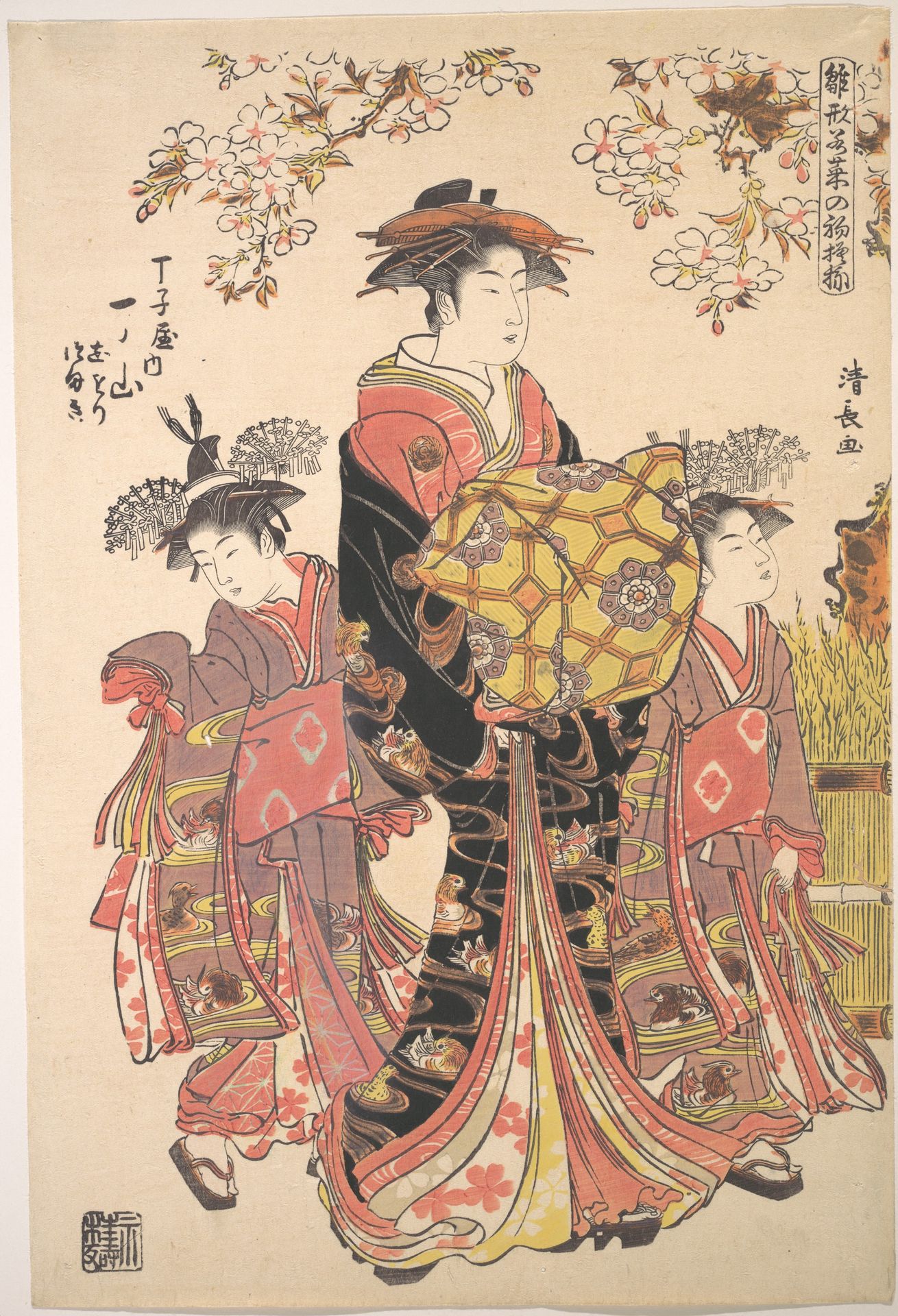
An Oiran Accompanied by Two Kamuro


Listen to curator's interpretation
Curatorial notes
This woodblock print by Torii Kiyonaga depicts an oiran, a high-ranking courtesan, accompanied by two young kamuro, or child attendants. Note the cherry blossoms overhead, a poignant symbol of ephemeral beauty and the fleeting nature of life. Such symbolism is not unique to Japanese art; the vanitas paintings of 17th-century Europe similarly employed flowers and other objects to remind viewers of mortality. Here, the oiran's elaborate attire and serene composure, juxtaposed with the transient cherry blossoms, evoke a complex emotional landscape. It reminds us of the precarious balance between beauty and decay, pleasure and sorrow. Consider how the blossoms reflect a universal human consciousness, the perennial cycle of life and death, blooming and fading. This timeless motif engages viewers on a subconscious level, drawing us into a deeper contemplation of our own existence. The oiran and her attendants, framed by these blossoms, become potent symbols of life's transient beauty, a theme that continues to resonate across cultures and epochs.