About this artwork
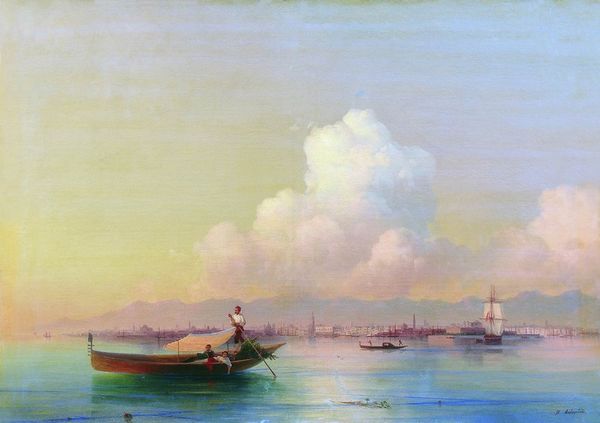
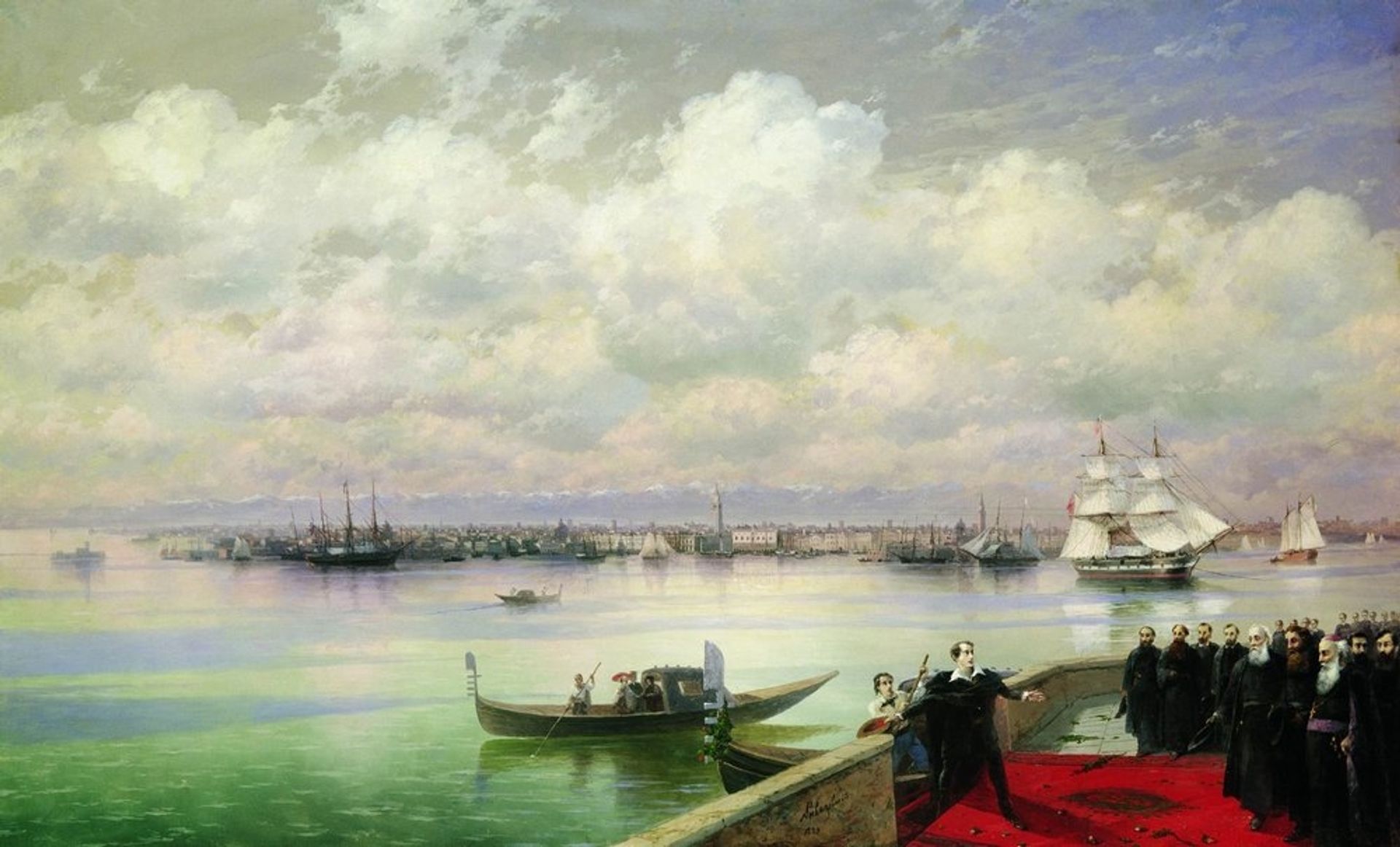
Ivan Konstantinovich Aivazovsky painted "Byron visits the Mkhitarists on the island of St. Lazarus in Venice" with oil on canvas. Aivazovsky, who was of Armenian descent, likely created this work to explore themes of cultural identity and historical connection. Lord Byron's visit to the Armenian monks on San Lazzaro Island was a moment of cultural exchange. Byron, seeking refuge from societal pressures and personal turmoil, found solace in learning Armenian language and culture. The Mkhitarists, who had established a center of learning and preservation of Armenian heritage on the island, welcomed Byron, and this encounter symbolized a meeting of East and West. Byron's presence and engagement with Armenian culture challenged prevailing Orientalist stereotypes and fostered a sense of pride and recognition within the Armenian diaspora. Aivazovsky himself explored his heritage through his art, contributing to the articulation and preservation of Armenian identity. The painting captures the emotional and intellectual exchange between Byron and the Mkhitarists, and reflects how individual encounters can transcend cultural boundaries and contribute to broader narratives of identity, history, and belonging.
Byron visits the Mkhitarists on the island of St. Lazarus in Venice
1899

Ivan Konstantinovich Aivazovsky
1817 - 1900Location
National Gallery of Armenia, Yerevan, ArmeniaArtwork details
- Dimensions
- 133 x 218 cm
- Location
- National Gallery of Armenia, Yerevan, Armenia
- Copyright
- Public domain
Comments
Share your thoughts
About this artwork
Ivan Konstantinovich Aivazovsky painted "Byron visits the Mkhitarists on the island of St. Lazarus in Venice" with oil on canvas. Aivazovsky, who was of Armenian descent, likely created this work to explore themes of cultural identity and historical connection. Lord Byron's visit to the Armenian monks on San Lazzaro Island was a moment of cultural exchange. Byron, seeking refuge from societal pressures and personal turmoil, found solace in learning Armenian language and culture. The Mkhitarists, who had established a center of learning and preservation of Armenian heritage on the island, welcomed Byron, and this encounter symbolized a meeting of East and West. Byron's presence and engagement with Armenian culture challenged prevailing Orientalist stereotypes and fostered a sense of pride and recognition within the Armenian diaspora. Aivazovsky himself explored his heritage through his art, contributing to the articulation and preservation of Armenian identity. The painting captures the emotional and intellectual exchange between Byron and the Mkhitarists, and reflects how individual encounters can transcend cultural boundaries and contribute to broader narratives of identity, history, and belonging.
Comments
Share your thoughts