About this artwork
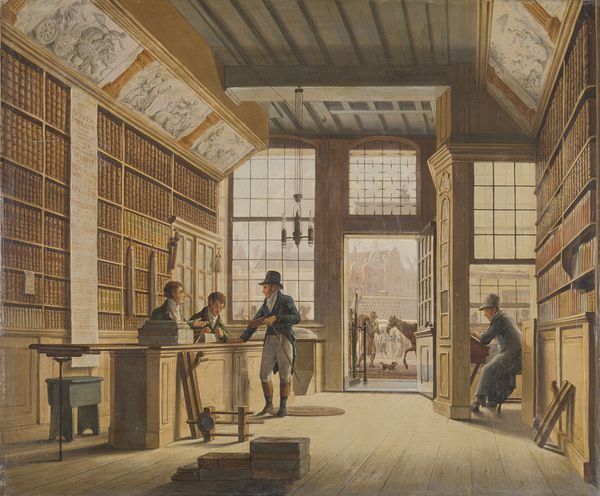
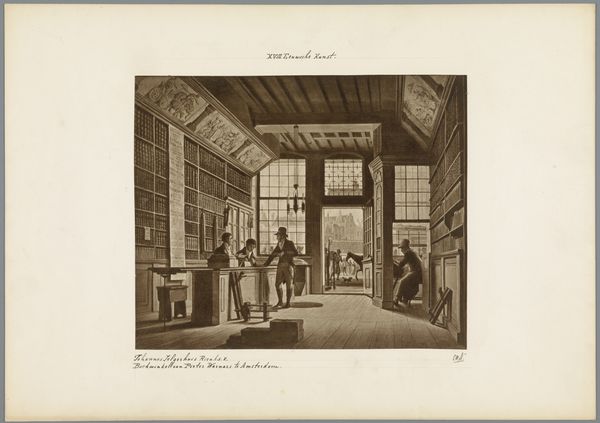
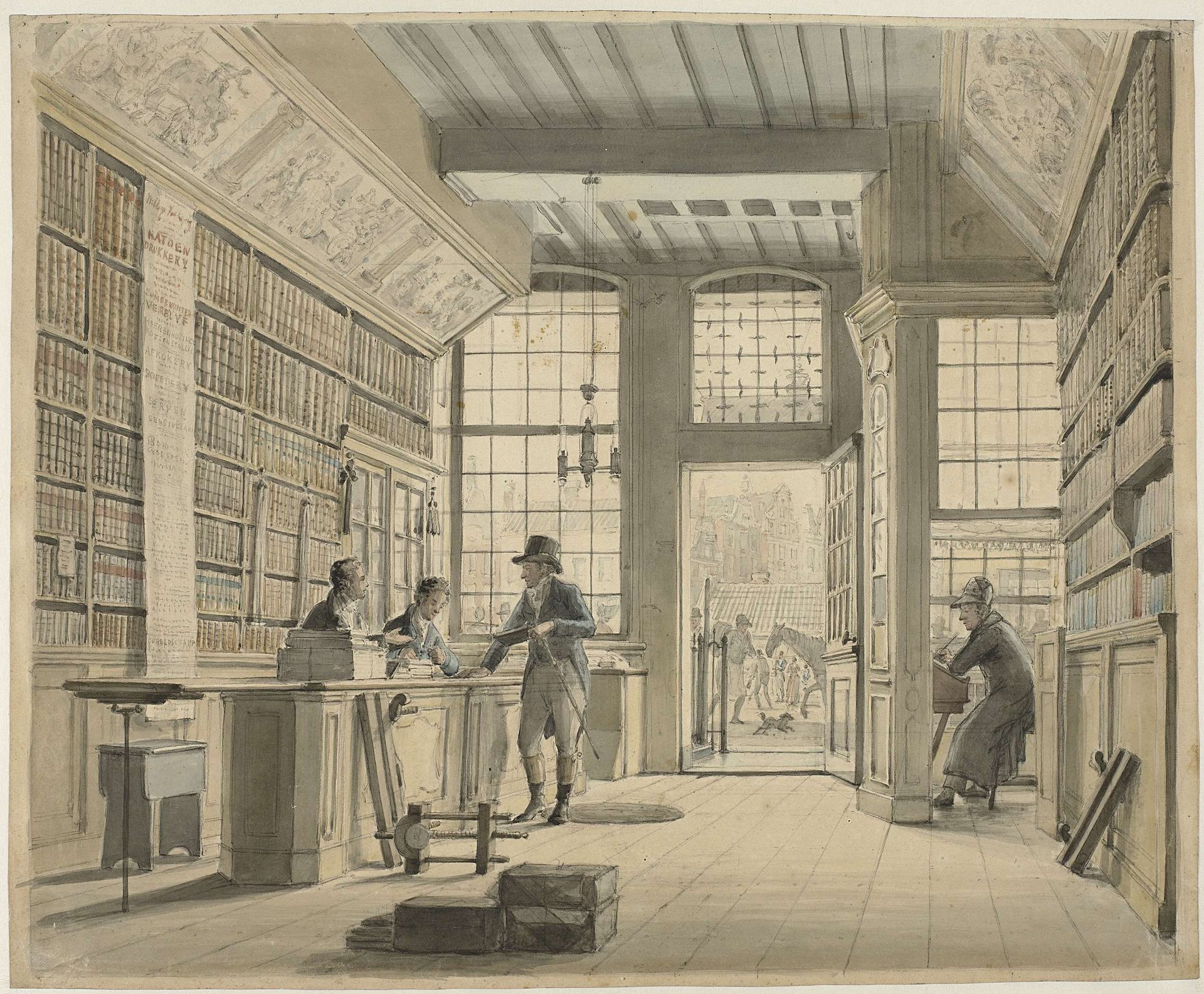
Johannes Jelgerhuis rendered "The bookstore of Pieter Meijer Warnars on the Vijgendam in Amsterdam" with watercolor and pencil. Notice how Jelgerhuis composes the space with a keen eye for geometric precision, subdividing the interior into a grid-like structure using vertical stacks of books, window panes, and door frames. This rigorous organization is softened by the human presence. Figures are strategically placed to animate the scene and draw the viewer's eye through the composition. Consider how the cool tones of the watercolor wash create a tranquil, contemplative mood, while the precise pencil work gives clarity to the architectural details and the textures of the books. The linear perspective pulls us into the depth of the space, yet the flat rendering of the figures reminds us of the artifice inherent in pictorial representation. Jelgerhuis masterfully balances the rational order of the Enlightenment with an appreciation for the everyday human experience, inviting us to reflect on the interplay between knowledge, commerce, and community.
De winkel van de boekhandelaar Pieter Meijer Warnars op de Vijgendam te Amsterdam
before 1820

Johannes Jelgerhuis
1770 - 1836Location
RijksmuseumArtwork details
- Medium
- drawing, paper, ink
- Dimensions
- height 450 mm, width 570 mm
- Location
- Rijksmuseum
- Copyright
- Rijks Museum: Open Domain
Tags
Comments
Share your thoughts
About this artwork
Johannes Jelgerhuis rendered "The bookstore of Pieter Meijer Warnars on the Vijgendam in Amsterdam" with watercolor and pencil. Notice how Jelgerhuis composes the space with a keen eye for geometric precision, subdividing the interior into a grid-like structure using vertical stacks of books, window panes, and door frames. This rigorous organization is softened by the human presence. Figures are strategically placed to animate the scene and draw the viewer's eye through the composition. Consider how the cool tones of the watercolor wash create a tranquil, contemplative mood, while the precise pencil work gives clarity to the architectural details and the textures of the books. The linear perspective pulls us into the depth of the space, yet the flat rendering of the figures reminds us of the artifice inherent in pictorial representation. Jelgerhuis masterfully balances the rational order of the Enlightenment with an appreciation for the everyday human experience, inviting us to reflect on the interplay between knowledge, commerce, and community.
Comments
Share your thoughts