About this artwork
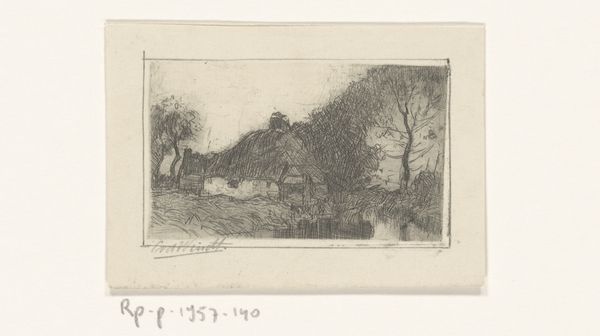
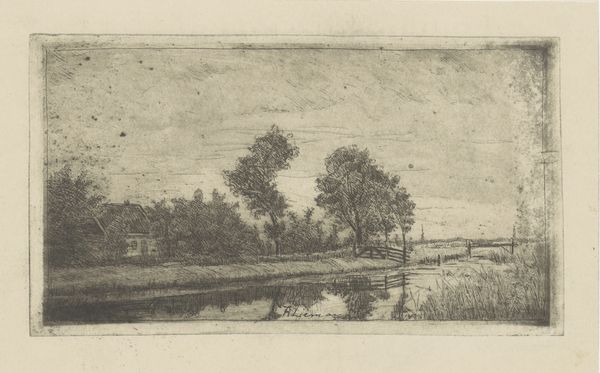
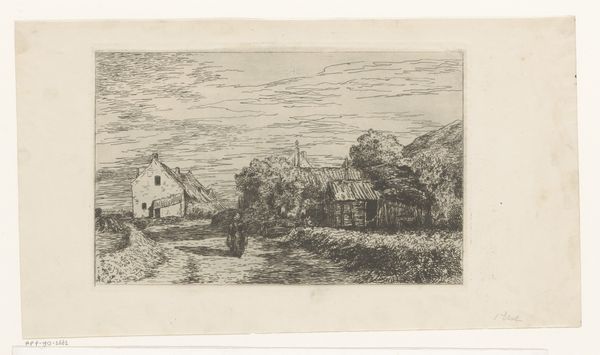
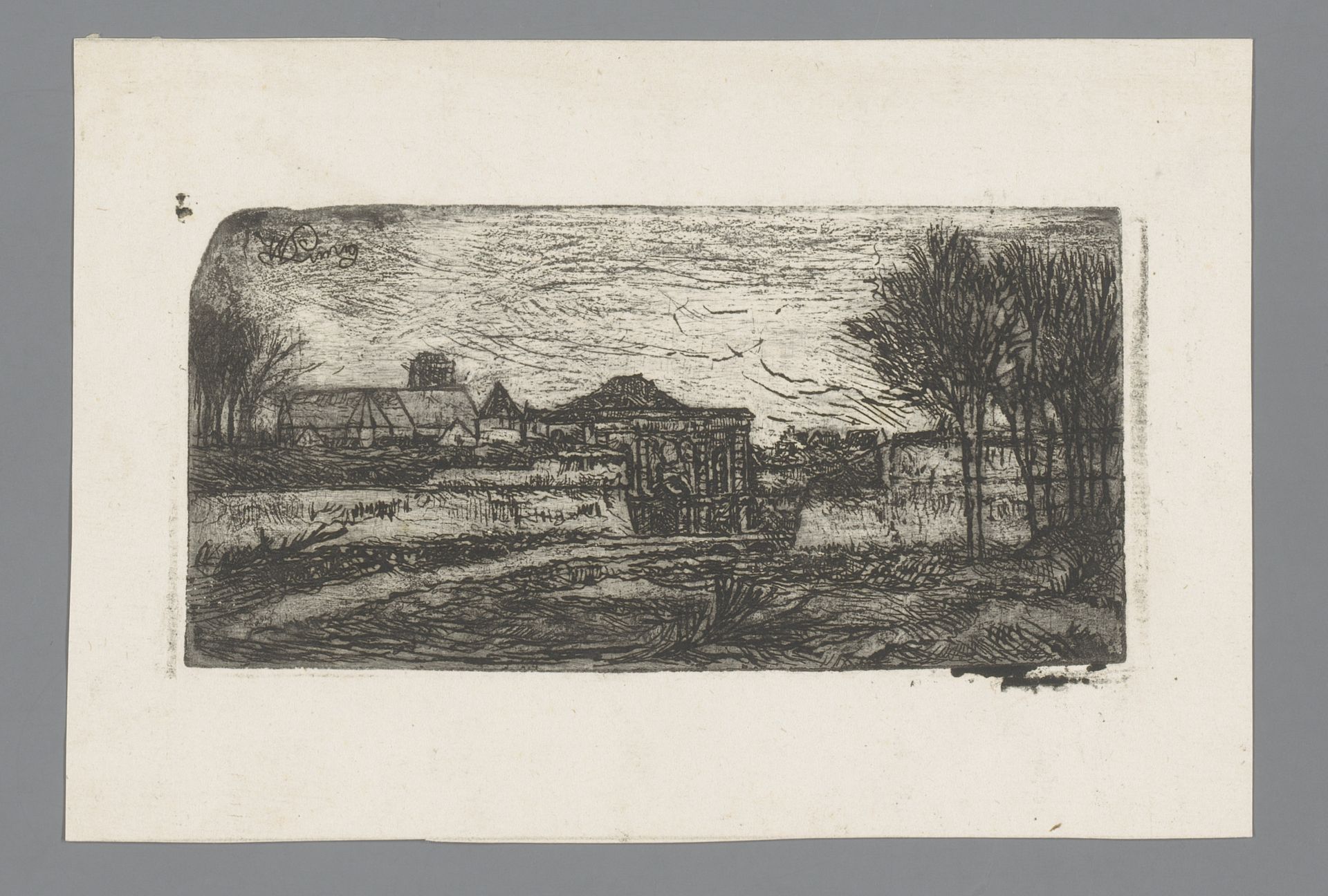
This print, "View of Fortifications near Antwerp," was made by Willem Linnig the Younger using etching. With this printmaking process, the artist covers a metal plate with a waxy, acid-resistant substance, then scratches away the coating with a pointed tool. The plate is then immersed in acid, which bites into the exposed metal, creating an image that can be inked and printed. The dense network of fine lines in this small image captures the heavy weight of the stone structures and the bare branches of the trees. You can see the fortifications, evoking the labor required for their construction and their role in military infrastructure. The level of detail shows a remarkable control of the etching process, while the dark tones emphasize the artist's skill in evoking a sense of place and time. Ultimately, understanding the labor-intensive process of etching offers insight into the work of Willem Linnig and highlights the skill required to translate the world into art.
Gezicht op fortificaties bij Antwerpen 1852 - 1890

Willem (II) Linnig
1842 - 1890Location
RijksmuseumArtwork details
- Medium
- drawing, print, etching, paper
- Dimensions
- height 67 mm, width 135 mm
- Location
- Rijksmuseum
- Copyright
- Rijks Museum: Open Domain
Tags
drawing
etching
landscape
paper
realism
Comments
No comments
About this artwork
This print, "View of Fortifications near Antwerp," was made by Willem Linnig the Younger using etching. With this printmaking process, the artist covers a metal plate with a waxy, acid-resistant substance, then scratches away the coating with a pointed tool. The plate is then immersed in acid, which bites into the exposed metal, creating an image that can be inked and printed. The dense network of fine lines in this small image captures the heavy weight of the stone structures and the bare branches of the trees. You can see the fortifications, evoking the labor required for their construction and their role in military infrastructure. The level of detail shows a remarkable control of the etching process, while the dark tones emphasize the artist's skill in evoking a sense of place and time. Ultimately, understanding the labor-intensive process of etching offers insight into the work of Willem Linnig and highlights the skill required to translate the world into art.
Comments
No comments