About this artwork
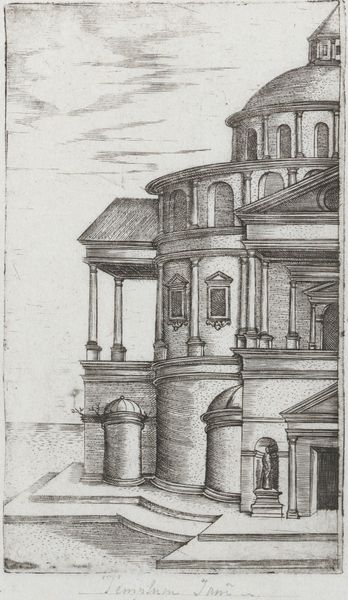
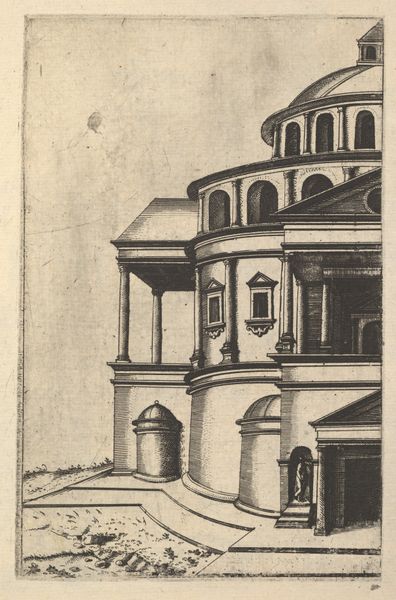
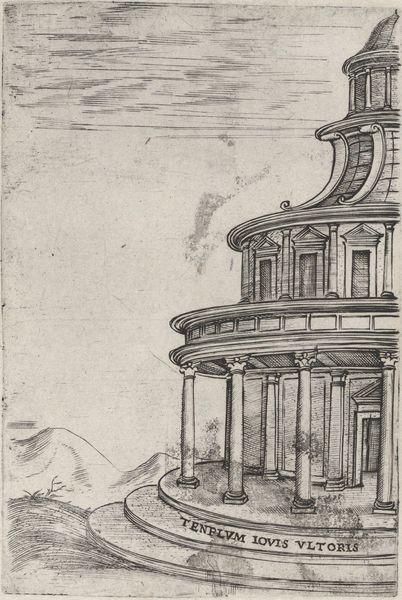
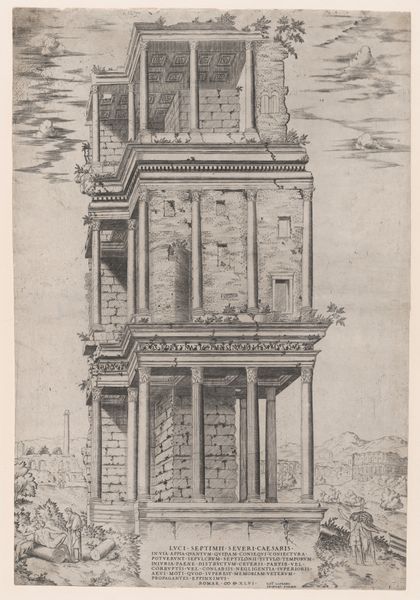
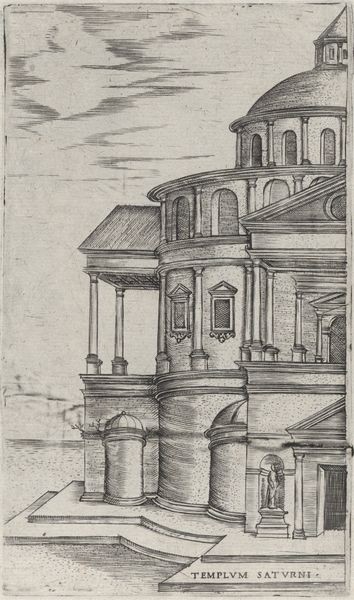
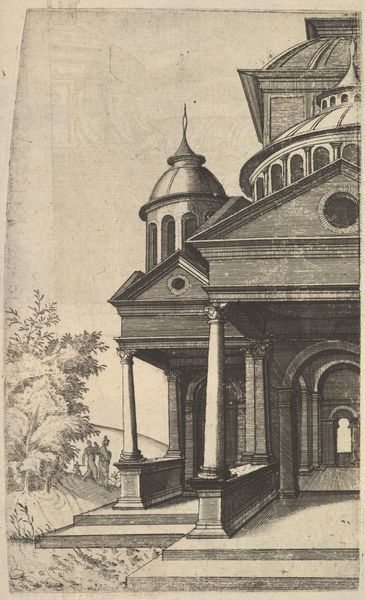
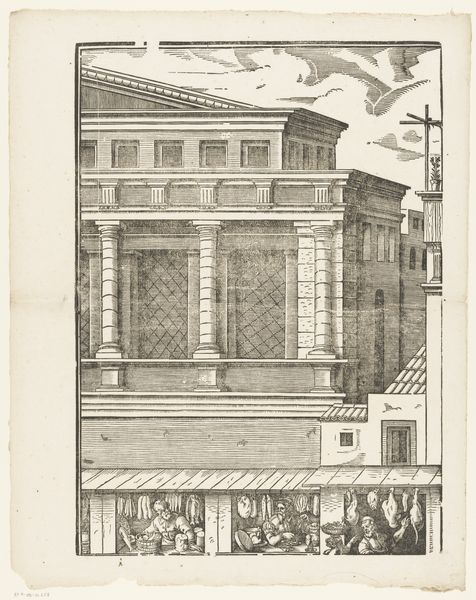
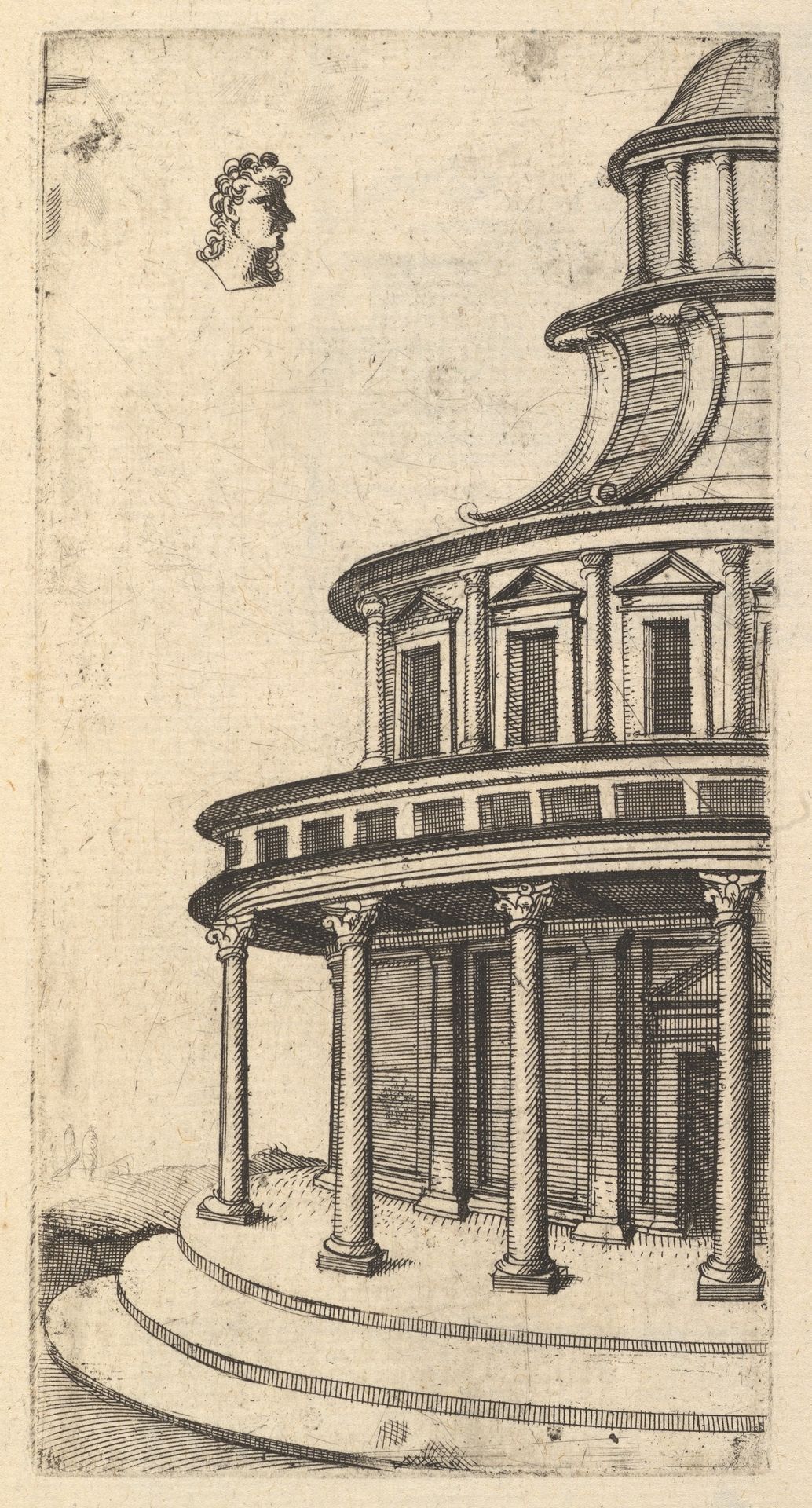
Lambert Suavius created this print, Partial View of a Building, as part of a series of prints in the mid-16th century. In this period, the rise of Humanism fostered a renewed interest in classical antiquity, influencing art and architecture. Suavius's work reflects this fascination, meticulously depicting the ruins of a temple dedicated to Jove, the Roman god of the sky. This print offers insights into the cultural values of the Renaissance. It reflects a society that looked to the past for inspiration, while negotiating its relationship with the remnants of a once-dominant empire. The detailed rendering and partial view invite viewers to imagine the temple in its full grandeur. The inclusion of a head in the upper-left corner creates a dialogue between the ancient world and the present. It prompts reflection on the passage of time and the enduring legacy of classical civilization.
Partial view of a Building [Templum Iovis Ultoris) from the series 'Ruinarum variarum fabricarum delineationes pictoribus caeterisque id genus artificibus multum utiles' 1554


Artwork details
- Medium
- drawing, print, etching, engraving, architecture
- Dimensions
- Plate: 5 5/16 x 2 3/4 in. (13.5 x 7 cm)
- Location
- Metropolitan Museum of Art, New York, NY
- Copyright
- Public Domain
Tags
drawing
etching
11_renaissance
engraving
architecture
Comments
No comments
About this artwork
Lambert Suavius created this print, Partial View of a Building, as part of a series of prints in the mid-16th century. In this period, the rise of Humanism fostered a renewed interest in classical antiquity, influencing art and architecture. Suavius's work reflects this fascination, meticulously depicting the ruins of a temple dedicated to Jove, the Roman god of the sky. This print offers insights into the cultural values of the Renaissance. It reflects a society that looked to the past for inspiration, while negotiating its relationship with the remnants of a once-dominant empire. The detailed rendering and partial view invite viewers to imagine the temple in its full grandeur. The inclusion of a head in the upper-left corner creates a dialogue between the ancient world and the present. It prompts reflection on the passage of time and the enduring legacy of classical civilization.
Comments
No comments