About this artwork
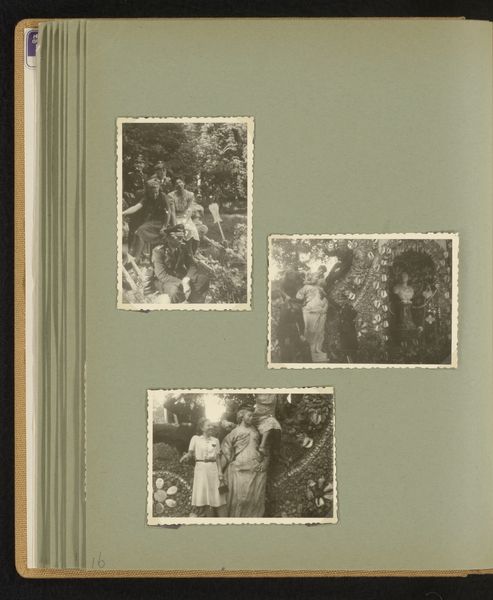
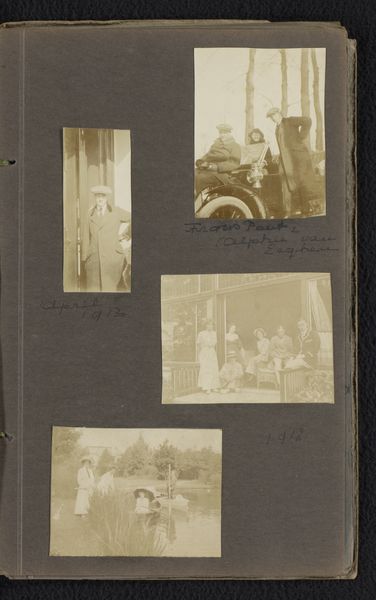
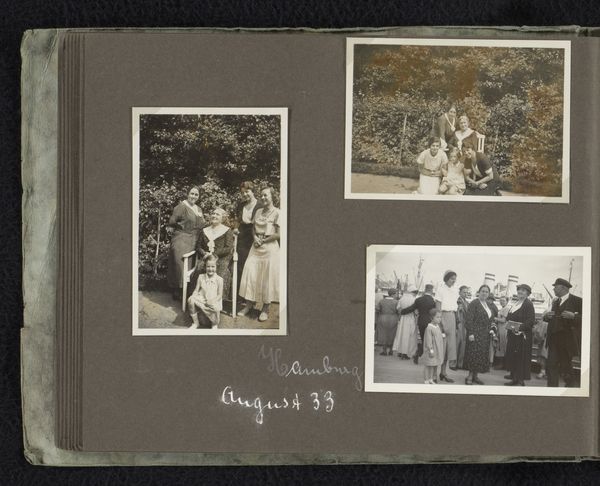
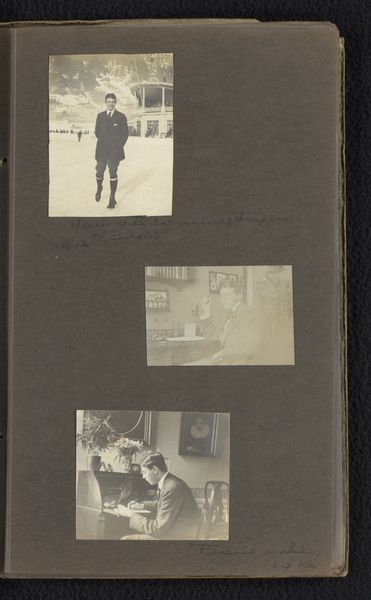
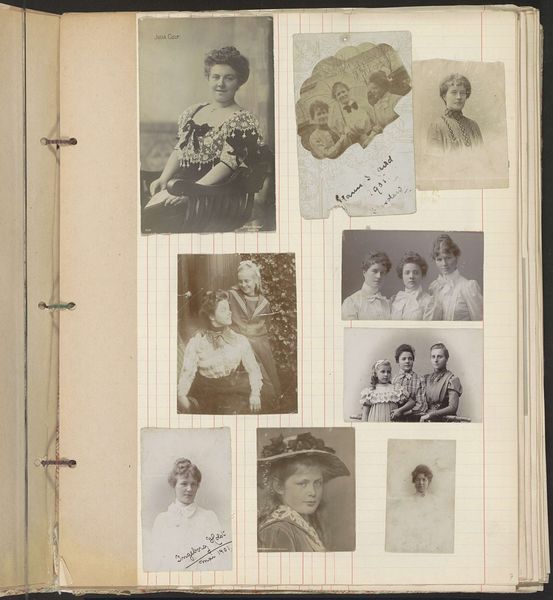
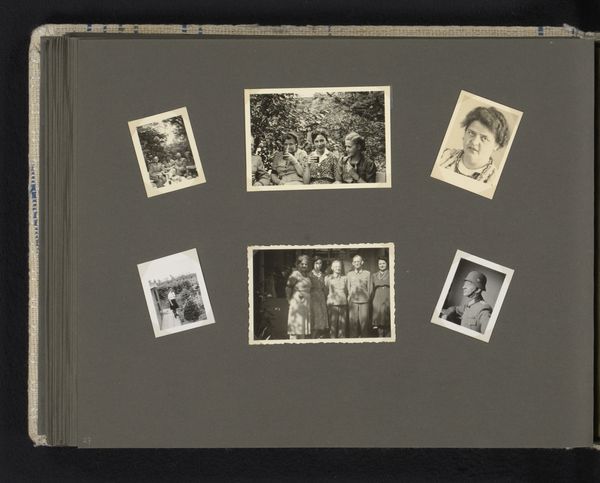
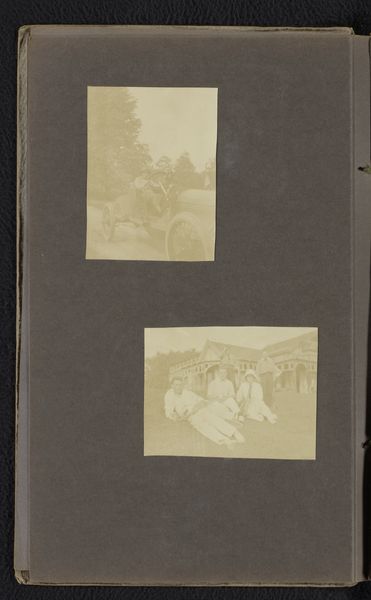
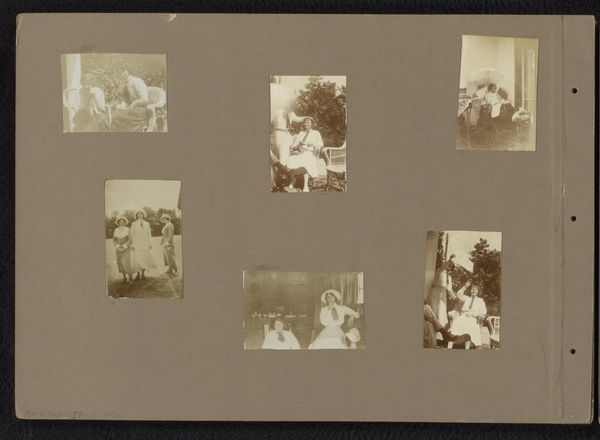
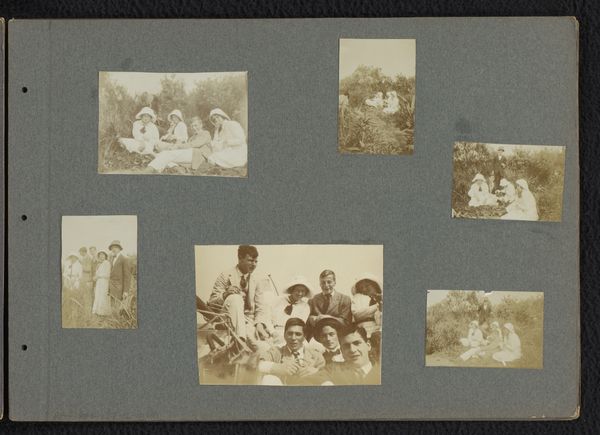
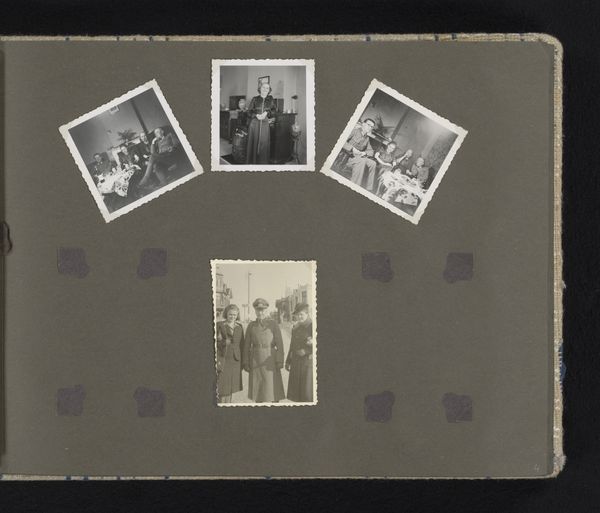
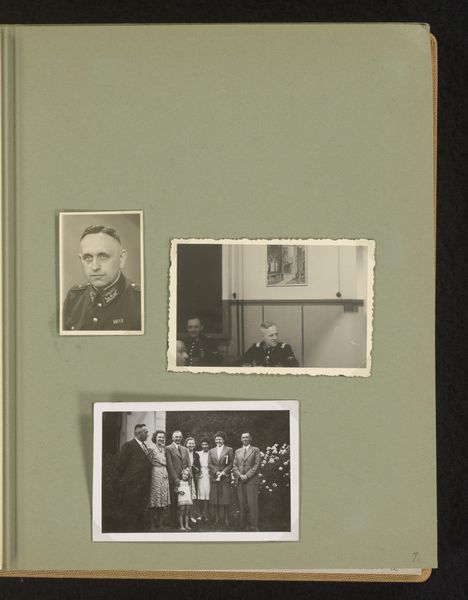
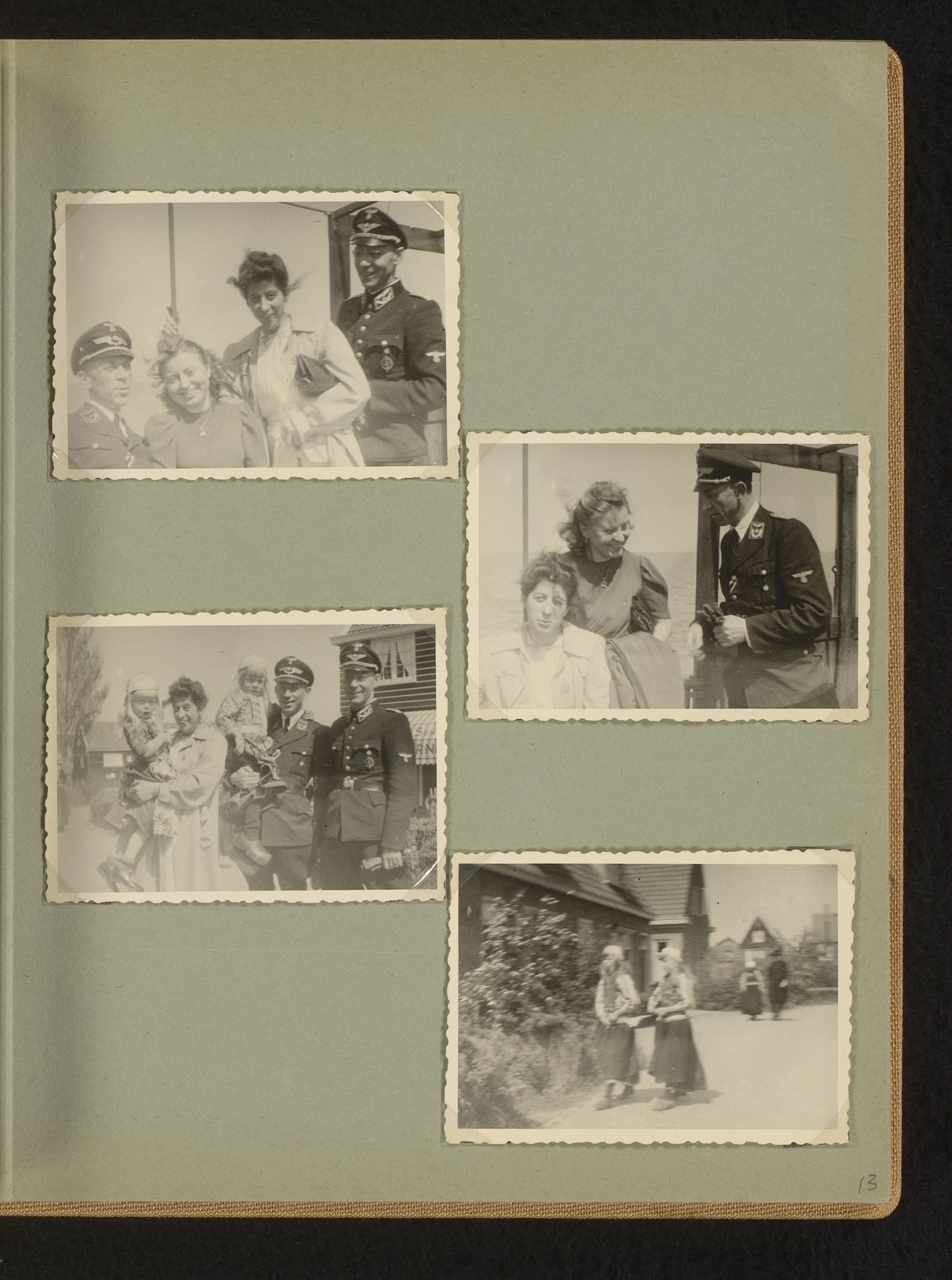
This unassuming photo album page holds snapshots titled "Duitse militairen in Marken," and was made by an anonymous hand sometime during the Second World War. What strikes me about these images are the edges, that simple, scalloped border which betrays the casual, domestic setting. The photographs are small, almost modest, like little windows into a world that feels both familiar and deeply unsettling. Look at the tonal range in these images, the way the light and shadow define the figures and their interactions. You can almost feel the texture of the photo paper, its matte surface absorbing the light. Consider the act of placing these images in an album, a gesture of preserving memory and lived experience. Yet, in this case, these are the memories of occupants and the occupied. This album reminds me of Gerhard Richter's "Atlas," his collection of found photographs that served as source material for his paintings. Like Richter, this anonymous photographer transforms the everyday into something haunting and profound. The power of art lies in its ability to hold these contradictions, to invite us to look closer, to question, and to remember.

Artwork details
- Medium
- photography, gelatin-silver-print
- Dimensions
- height 60 mm, width 80 mm, height 240 mm, width 190 mm
- Copyright
- Rijks Museum: Open Domain
Tags
Comments
Share your thoughts
About this artwork
This unassuming photo album page holds snapshots titled "Duitse militairen in Marken," and was made by an anonymous hand sometime during the Second World War. What strikes me about these images are the edges, that simple, scalloped border which betrays the casual, domestic setting. The photographs are small, almost modest, like little windows into a world that feels both familiar and deeply unsettling. Look at the tonal range in these images, the way the light and shadow define the figures and their interactions. You can almost feel the texture of the photo paper, its matte surface absorbing the light. Consider the act of placing these images in an album, a gesture of preserving memory and lived experience. Yet, in this case, these are the memories of occupants and the occupied. This album reminds me of Gerhard Richter's "Atlas," his collection of found photographs that served as source material for his paintings. Like Richter, this anonymous photographer transforms the everyday into something haunting and profound. The power of art lies in its ability to hold these contradictions, to invite us to look closer, to question, and to remember.
Comments
Share your thoughts