About this artwork
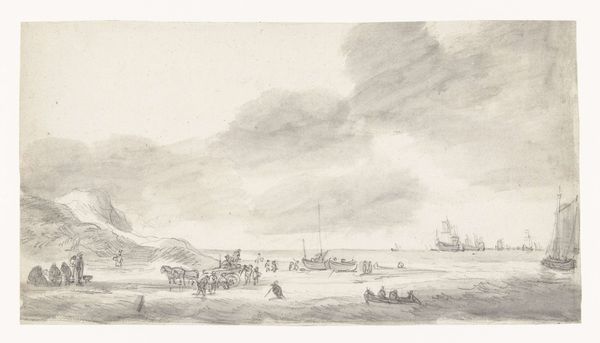
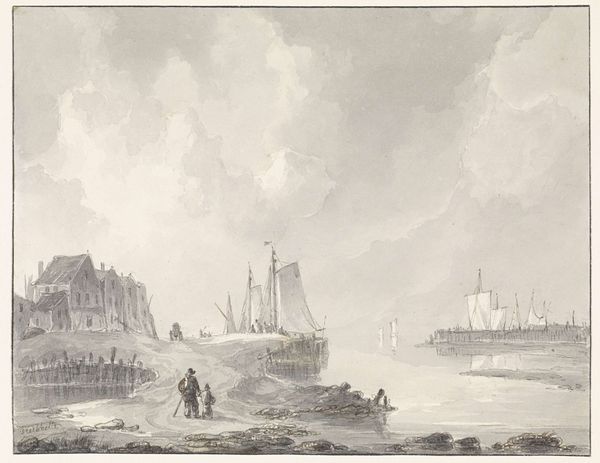
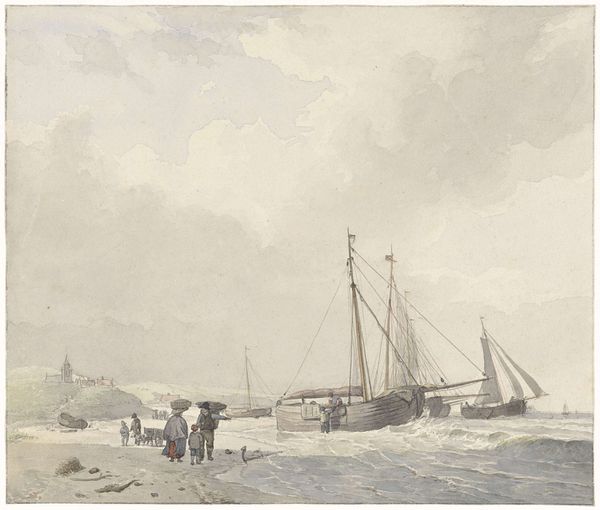
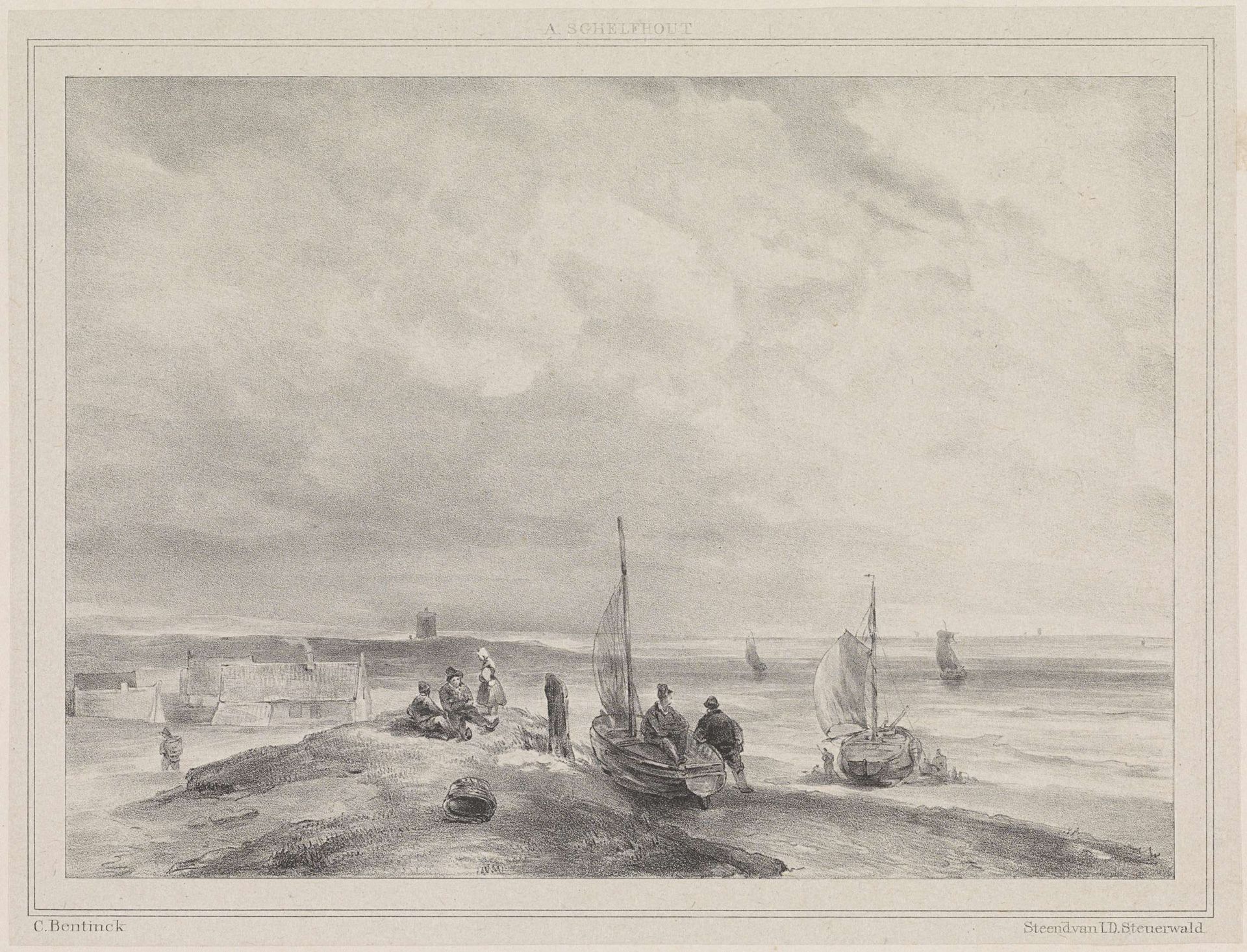
Editor: This is "Strand met vissers," or "Beach with Fishermen," by Carel Frederik Curtenius Bentinck, dating from around 1824 to 1849. It’s a graphite drawing at the Rijksmuseum. I find the quiet greyscale tones really calming. What stands out to you in this piece? Curator: What intrigues me is how Bentinck uses the motif of the shoreline. Beaches are transitional spaces, symbolically liminal, between land and sea. It's a place of exchange, of meeting. What do you notice about the human figures within this landscape? Editor: They seem to be pausing. It’s like they’re taking a break or waiting, rather than actively working. There's an implication of community here, several people together on the beach front, looking towards the sea, almost like anticipating what's coming in. Curator: Precisely. This in-between state speaks volumes. Notice the positioning of the boats as well. Are they in active use or at rest? Their sails are furled, suggesting a temporary stillness. How does this imagery connect, perhaps, to ideas of hope or uncertainty about the future? Consider how landscapes like these can embody collective hopes and anxieties of a time and a people. Editor: So, the beach becomes more than just a place. It is an allegorical space too! I am thinking how this genre painting relates to ideas in Romanticism. The beach seems to reflect not only the exterior environment, but internal, emotional states too. Curator: Indeed. Artists often return to the same imagery, finding endless possibilities within it, connecting individual experiences to universal symbols. I am still stuck by the shoreline: a meeting of earth, sea and humanity. Editor: It is incredible how much a simple drawing can reveal. Thank you for unpacking that imagery with me.
Strand met vissers
1824 - 1849

Carel Frederik Curtenius Bentinck
1814 - 1849Location
RijksmuseumArtwork details
- Medium
- drawing, pencil, graphite
- Dimensions
- height 275 mm, width 355 mm
- Location
- Rijksmuseum
- Copyright
- Rijks Museum: Open Domain
Tags
Comments
Share your thoughts
About this artwork
Editor: This is "Strand met vissers," or "Beach with Fishermen," by Carel Frederik Curtenius Bentinck, dating from around 1824 to 1849. It’s a graphite drawing at the Rijksmuseum. I find the quiet greyscale tones really calming. What stands out to you in this piece? Curator: What intrigues me is how Bentinck uses the motif of the shoreline. Beaches are transitional spaces, symbolically liminal, between land and sea. It's a place of exchange, of meeting. What do you notice about the human figures within this landscape? Editor: They seem to be pausing. It’s like they’re taking a break or waiting, rather than actively working. There's an implication of community here, several people together on the beach front, looking towards the sea, almost like anticipating what's coming in. Curator: Precisely. This in-between state speaks volumes. Notice the positioning of the boats as well. Are they in active use or at rest? Their sails are furled, suggesting a temporary stillness. How does this imagery connect, perhaps, to ideas of hope or uncertainty about the future? Consider how landscapes like these can embody collective hopes and anxieties of a time and a people. Editor: So, the beach becomes more than just a place. It is an allegorical space too! I am thinking how this genre painting relates to ideas in Romanticism. The beach seems to reflect not only the exterior environment, but internal, emotional states too. Curator: Indeed. Artists often return to the same imagery, finding endless possibilities within it, connecting individual experiences to universal symbols. I am still stuck by the shoreline: a meeting of earth, sea and humanity. Editor: It is incredible how much a simple drawing can reveal. Thank you for unpacking that imagery with me.
Comments
Share your thoughts