c. 1850s
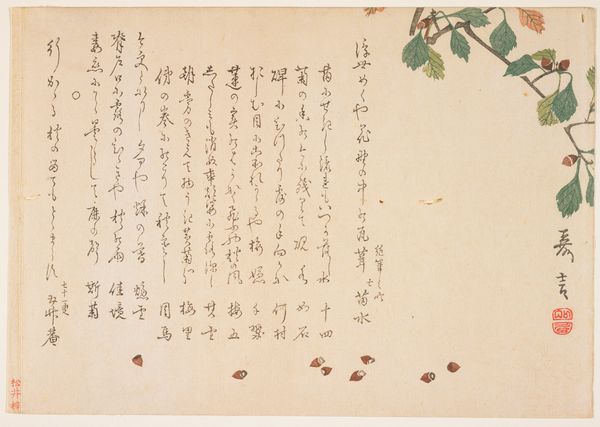
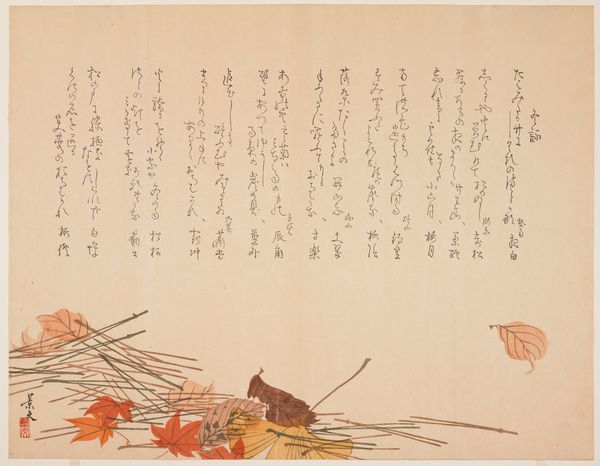
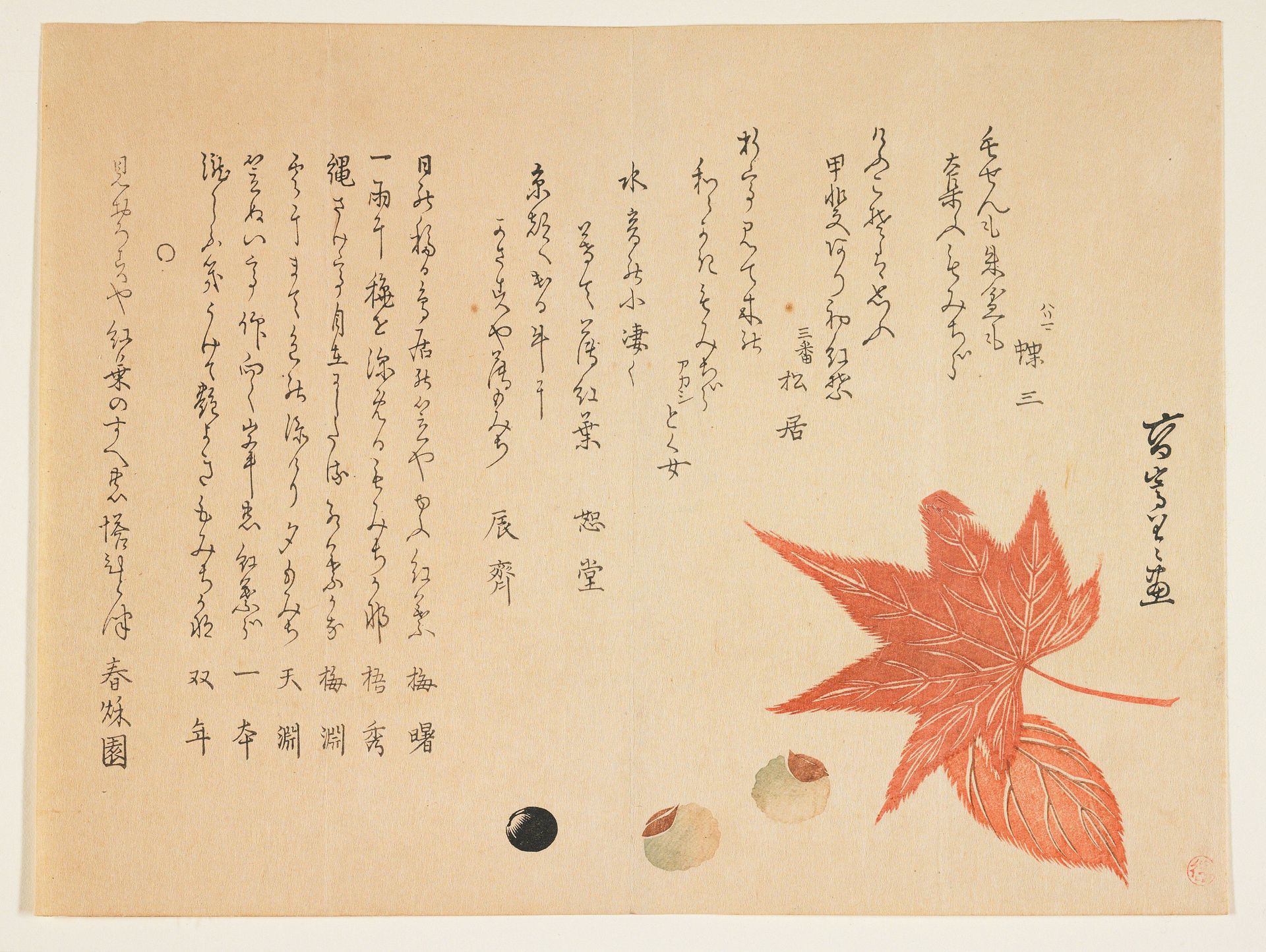
(Autumn leaves and nuts)


Listen to curator's interpretation
Curatorial notes
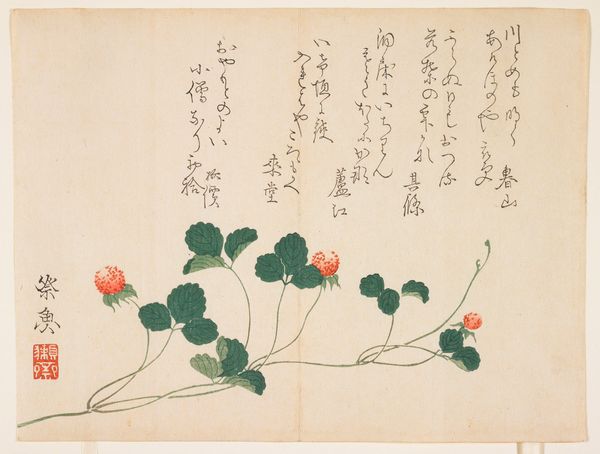
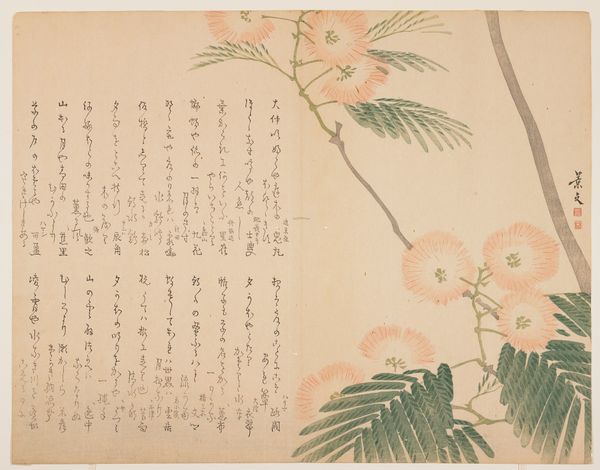
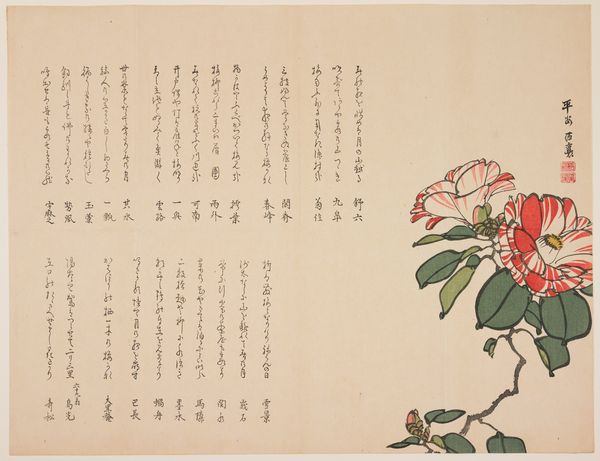
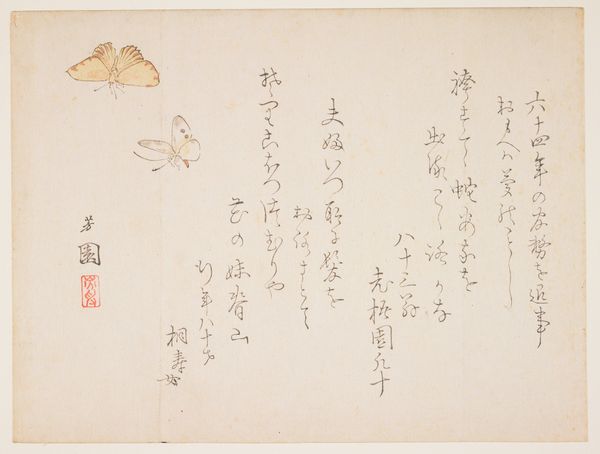
Kō Sūkoku II created this print of autumn leaves and nuts in Japan, sometime in the 19th century, though the exact date is unknown. The print is replete with traditional Japanese poetic imagery of the season. Sūkoku’s composition of calligraphy and natural forms reminds us of the importance of seasonal change in Japanese art and culture. We see how the artist has placed text alongside the botanical imagery. Calligraphy was a highly valued art form in Japan, closely linked to painting. Both required mastery of brushstroke and ink. This print is an example of the blending of artistic and literary pursuits, reflecting the scholarly ideals of the time. To gain a deeper understanding of this print, we can consult collections of Japanese poetry and historical texts on calligraphy and painting. Through these resources, we come to appreciate art as something deeply embedded in its cultural and institutional context.