About this artwork
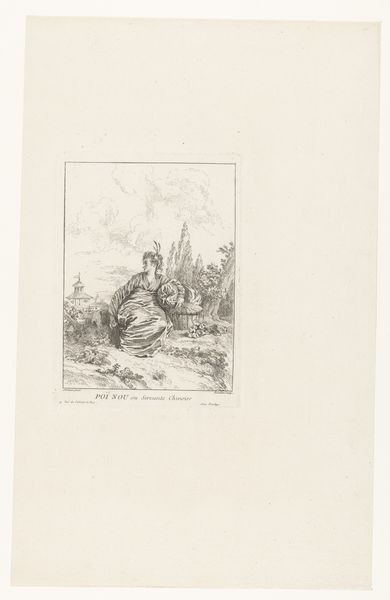
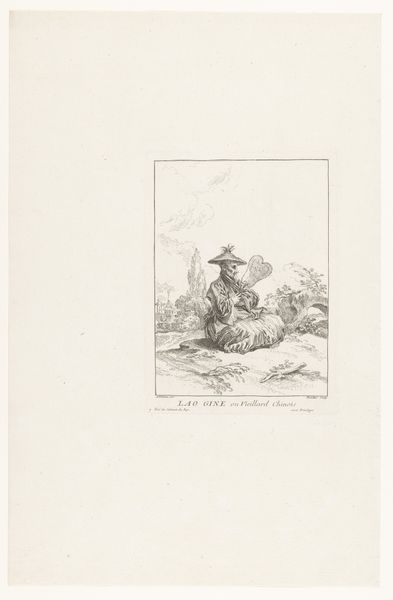
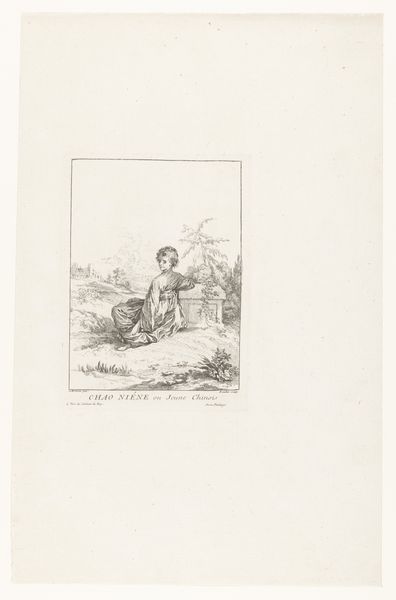
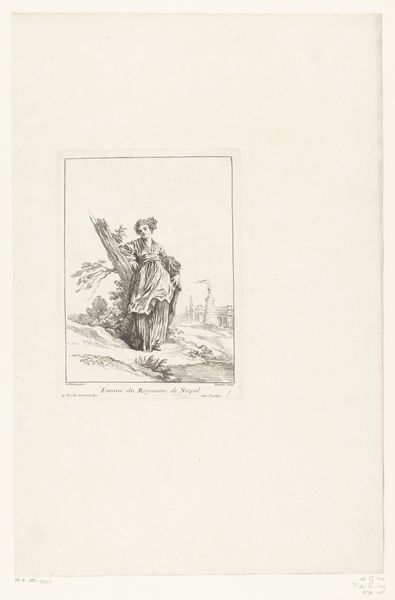
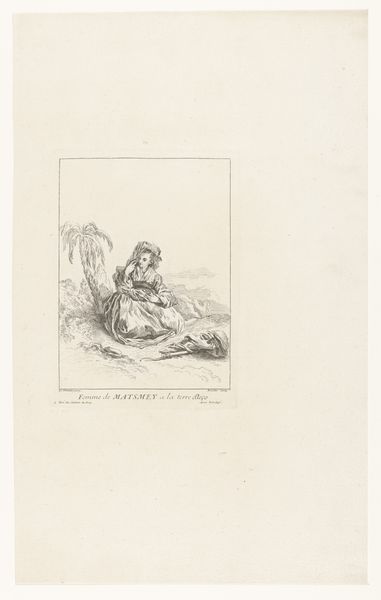
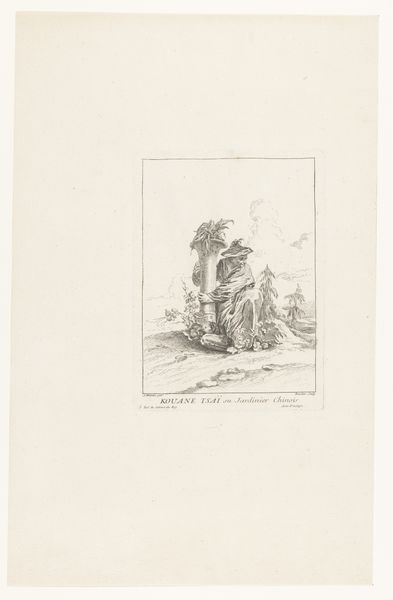
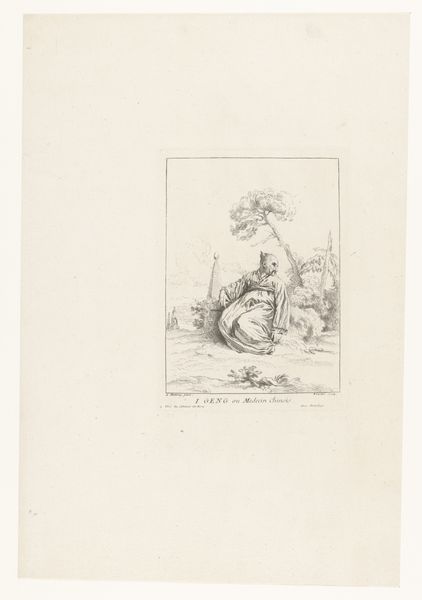
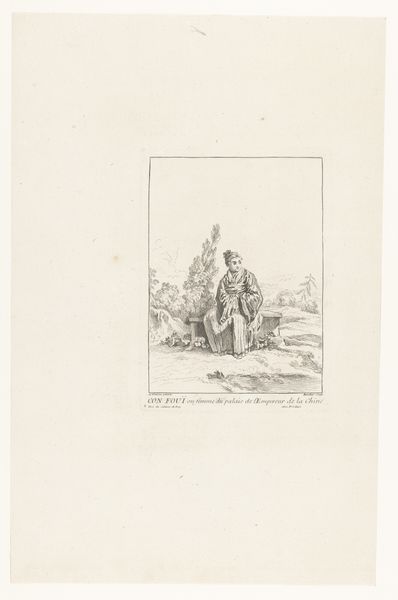
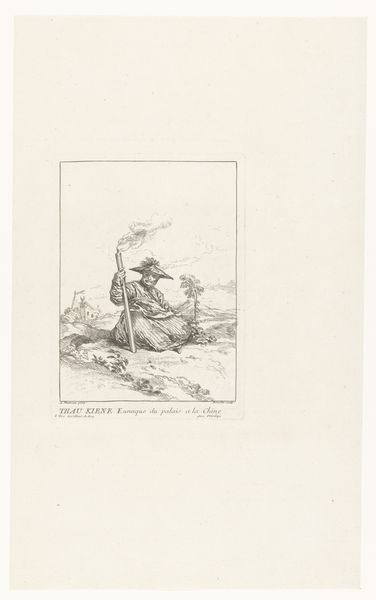
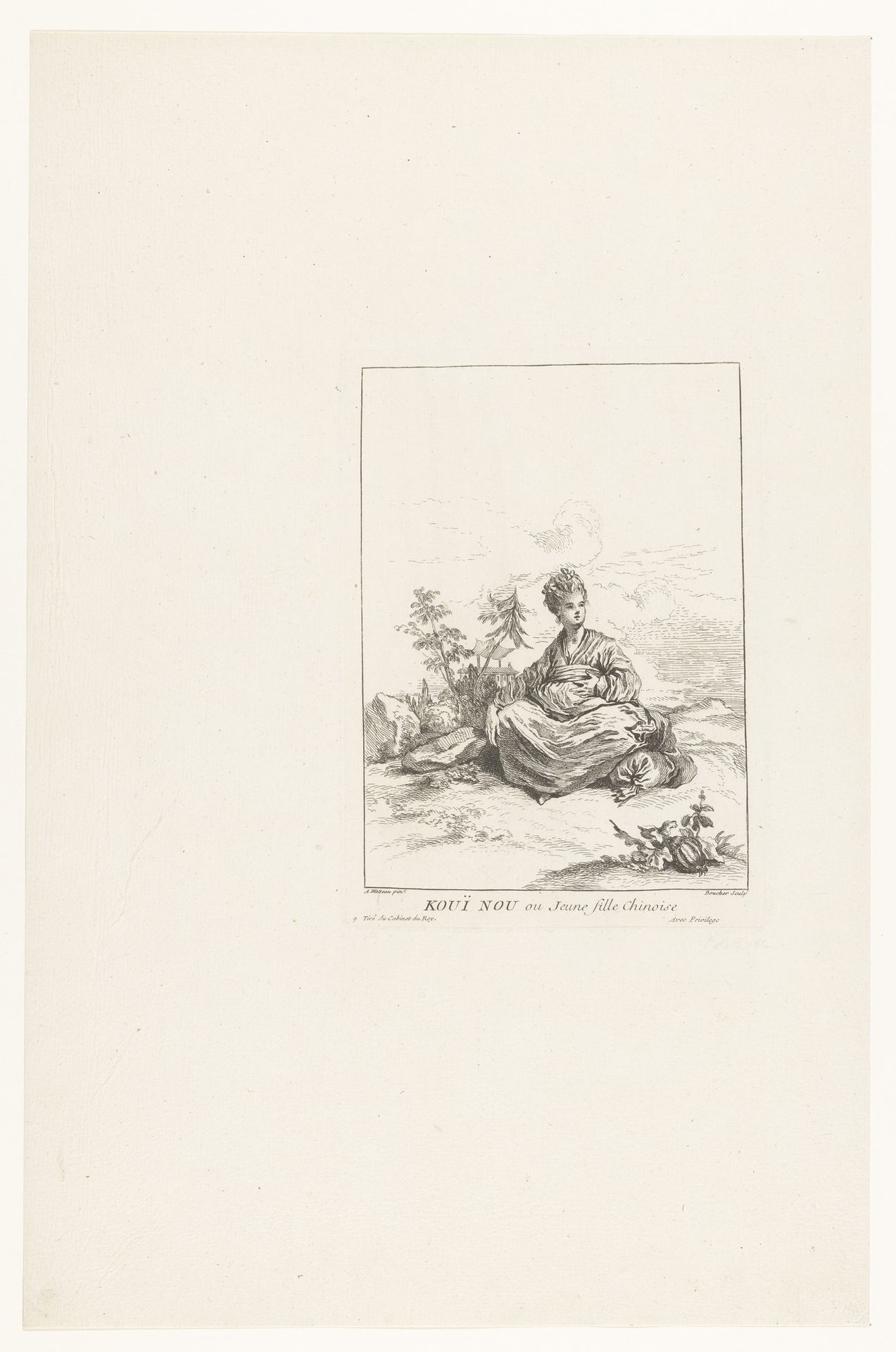
This print, titled "Jonge Chinese vrouw, zittend in een landschap," was made by François Boucher. It is made using etching, a printmaking technique with a rich history of skilled traditions. Boucher created the image by coating a metal plate with a waxy, acid-resistant substance, and then scratching an image into it with a needle. When dipped in acid, the exposed lines would bite into the metal, allowing for the application of ink and creation of multiple prints. This was no quick and easy task, the process required planning, skill, and careful execution. In this case, Boucher’s print engages with the aesthetics of "chinoiserie," a style reflecting European fascination with China. Prints like these circulated widely, driving consumer demand for luxury goods. The irony, of course, is that the intensive, specialized labor of European printmakers fueled the appetite for commodities associated with the East. We must consider how these historical processes have imbued the artwork with social and cultural significance.
Jonge Chinese vrouw, zittend in een landschap c. 1731

Francois Boucher
1703 - 1770Location
RijksmuseumArtwork details
- Medium
- print, engraving
- Dimensions
- height 215 mm, width 155 mm
- Location
- Rijksmuseum
- Copyright
- Rijks Museum: Open Domain
Tags
portrait
landscape
genre-painting
engraving
rococo
Comments
No comments
About this artwork
This print, titled "Jonge Chinese vrouw, zittend in een landschap," was made by François Boucher. It is made using etching, a printmaking technique with a rich history of skilled traditions. Boucher created the image by coating a metal plate with a waxy, acid-resistant substance, and then scratching an image into it with a needle. When dipped in acid, the exposed lines would bite into the metal, allowing for the application of ink and creation of multiple prints. This was no quick and easy task, the process required planning, skill, and careful execution. In this case, Boucher’s print engages with the aesthetics of "chinoiserie," a style reflecting European fascination with China. Prints like these circulated widely, driving consumer demand for luxury goods. The irony, of course, is that the intensive, specialized labor of European printmakers fueled the appetite for commodities associated with the East. We must consider how these historical processes have imbued the artwork with social and cultural significance.
Comments
No comments