1567 - 1570
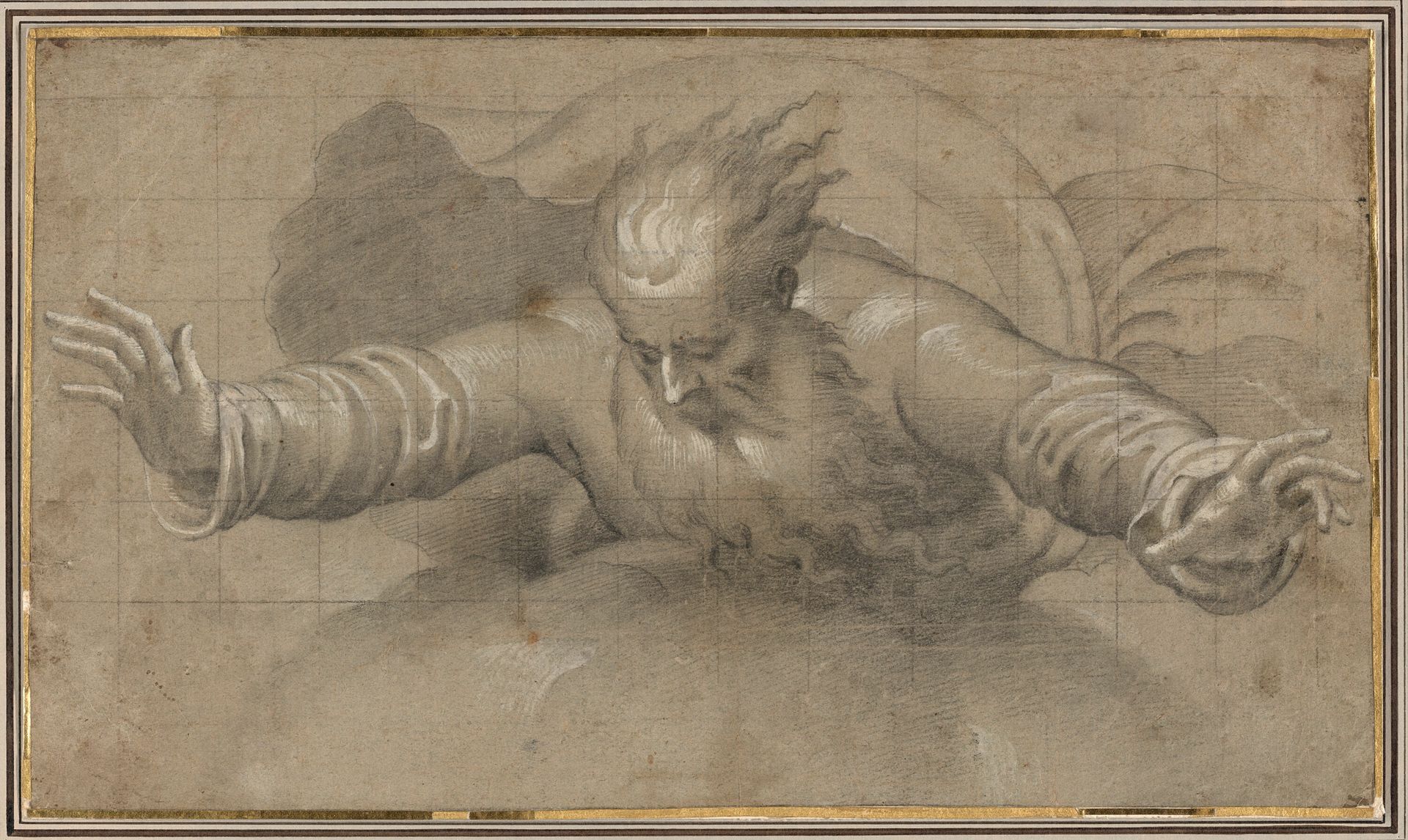
God the Father


Listen to curator's interpretation
Curatorial notes
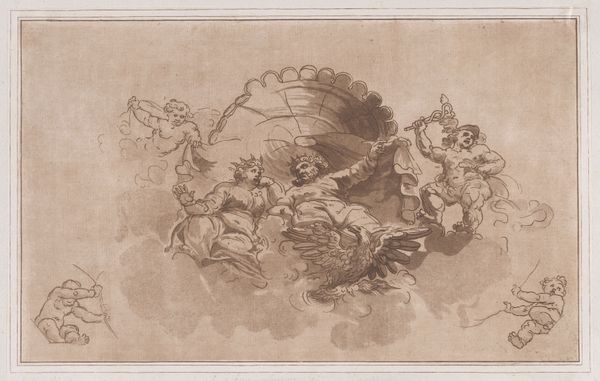
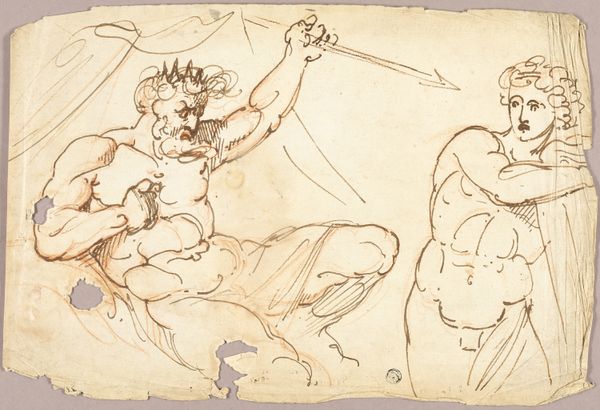
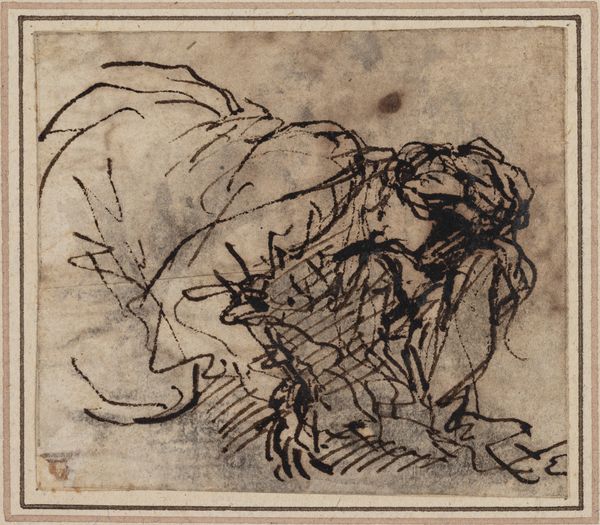
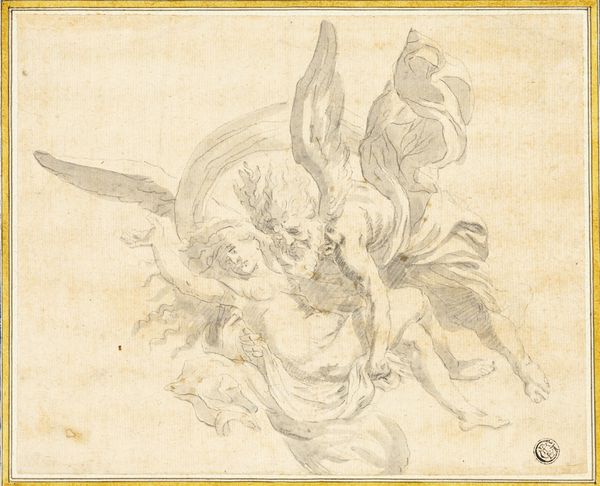
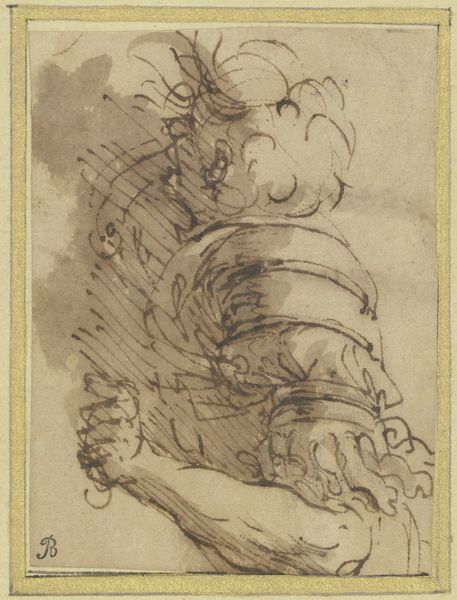
Editor: Here we have "God the Father," a drawing by Bernardino Campi from around 1567 to 1570. It's rendered with charcoal, chalk, and gouache on paper, and is currently held here at the Art Institute of Chicago. What I immediately notice is the striking use of light and shadow – it really emphasizes the figure's immense form. What do you make of it? Curator: What strikes me is the gridded under-drawing still visible beneath the gouache and charcoal. This isn’t just a spontaneous sketch; it's a carefully planned construction. Campi is showing us the labor involved in creating an idealized, divine image. Notice the paper itself: it's not pristine, but a surface for work, a material to be manipulated. Editor: So you are seeing this not just as a religious artwork, but also a record of its own creation? Curator: Exactly! The materiality shouts just as loudly as the subject. The blend of media - chalk, charcoal, gouache – isn't about achieving perfect illusionism. Each contributes to a visible layering, an almost archaeological dig into the making of an image. Editor: And what about the social aspect of creating such a religious piece? Curator: The production of "God the Father" speaks to the cultural demand for these images and the social role of artists like Campi. This wasn't solitary, divinely inspired creation, but a process embedded within the material conditions of 16th-century artistic production. Someone prepared the paper, ground the pigments... Editor: So, thinking about the materiality, the labor... it sort of demystifies the traditional view of Renaissance art, doesn’t it? I see it. Curator: Precisely! It shifts our gaze from solely appreciating the 'divine' subject to considering the very human and material processes that brought it into being.