photography, gelatin-silver-print
#
landscape
#
outdoor photograph
#
photography
#
gelatin-silver-print
#
monochrome photography
#
realism
#
monochrome
Dimensions: sheet (trimmed to image): 7.9 x 10.7 cm (3 1/8 x 4 3/16 in.)
Copyright: National Gallery of Art: CC0 1.0
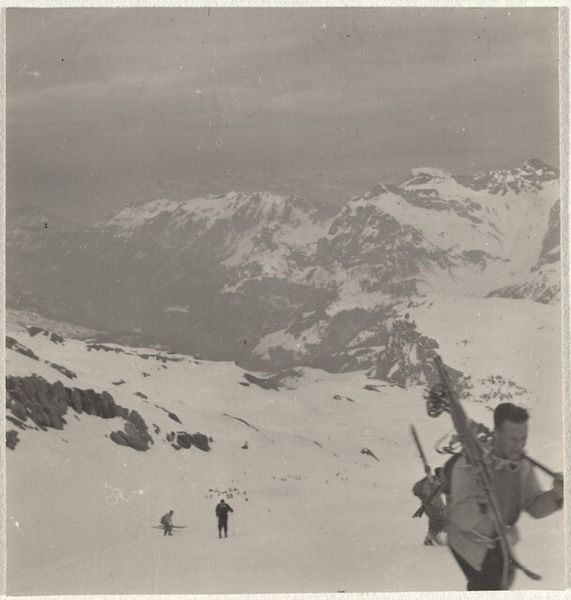
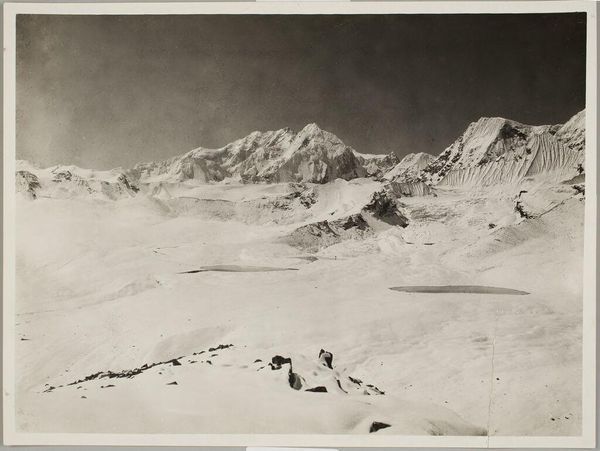
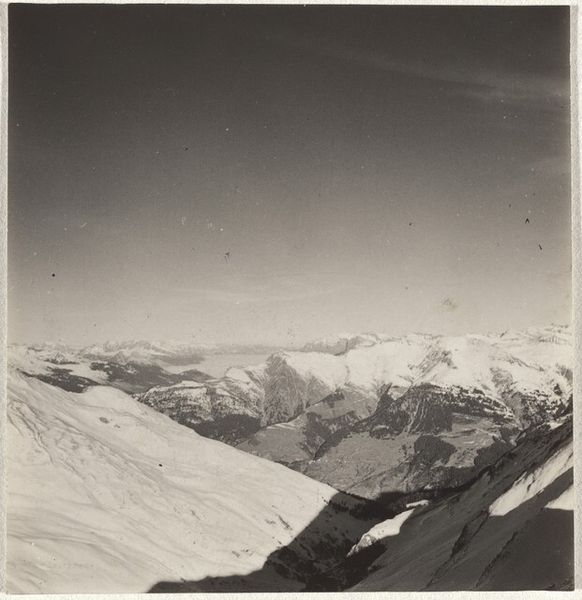
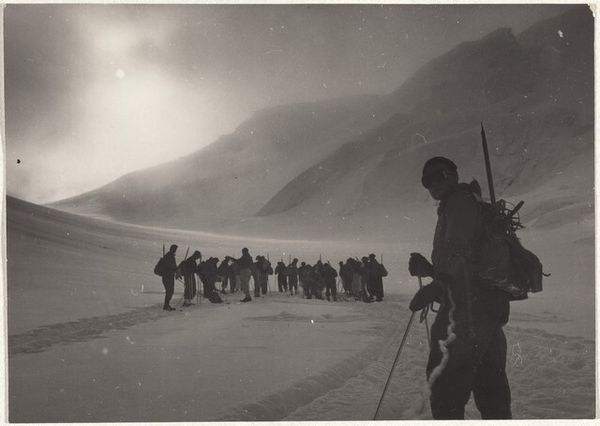
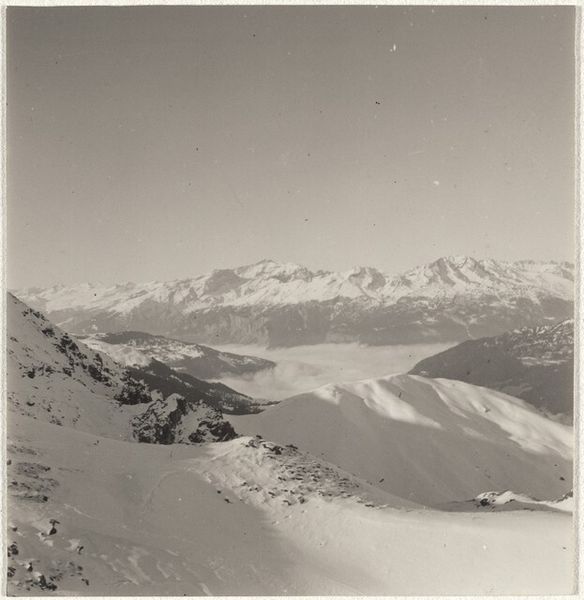
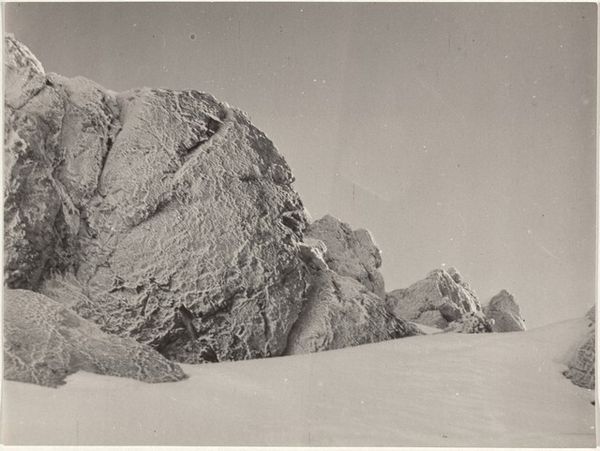
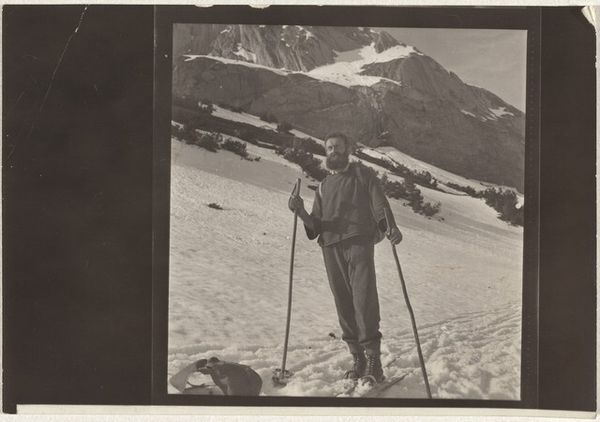
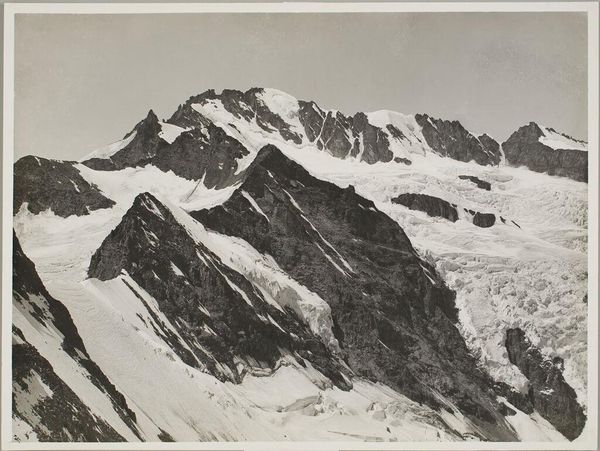
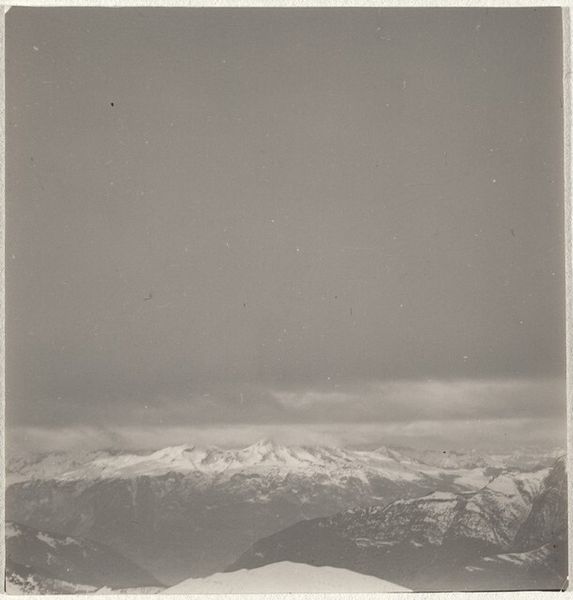
Editor: This gelatin-silver print, titled "Skis in Snow--Sports," was created by Robert Frank sometime between 1941 and 1945. It’s very stark, the skis looming like grave markers against the backdrop of the snowy peaks. What visual stories do you see unfolding here? Curator: Well, immediately, the stark monochrome presents a paradox of absence and presence. Consider skis - instruments of movement, speed, freedom - rendered still, almost sentinel-like. This stillness can trigger many readings of that era... wartime constraints, perhaps? Or is there something more archetypal? What inherent feeling do skis evoke for you as a cultural object? Editor: A sense of adventure, definitely, but also the isolation of being alone in nature, confronting vastness. Maybe that echoes wartime feelings, the uncertainty… Curator: Precisely! Frank juxtaposes the potential energy of the skis with the immense, enduring presence of the mountains. Notice the light – the intense, almost blinding white. This reinforces the starkness and perhaps suggests purity, challenge, even transcendence. Does the way the skis are positioned, slightly haphazardly, suggest to you anything about the unseen person? Editor: It suggests an absence. Someone was here, adventuring, but is now gone. The gear is left as a trace. Curator: And consider the temporal dimension of “Sports” embedded in the title. What deeper reflection might that elicit when viewing equipment that once embodied thrilling motion rendered permanently still? Editor: That's powerful. It makes you think about time, memory, and how even our most joyful experiences eventually fade. Curator: Indeed, how even instruments of liberation can stand as monuments of things lost or interrupted. Perhaps in their starkness they hold, like cultural relics, enduring symbols for generations hence. Thank you! I find this dialogue sparked greater insight into visual storytelling in a time of duress. Editor: Absolutely, I see now how everyday objects can reflect really deep human experiences and collective memories.
Comments
No comments
Be the first to comment and join the conversation on the ultimate creative platform.
 Collect
 React
React Comment
More like this