About this artwork
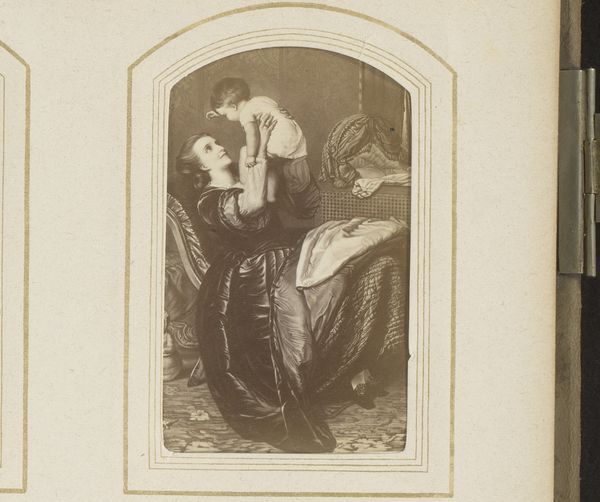
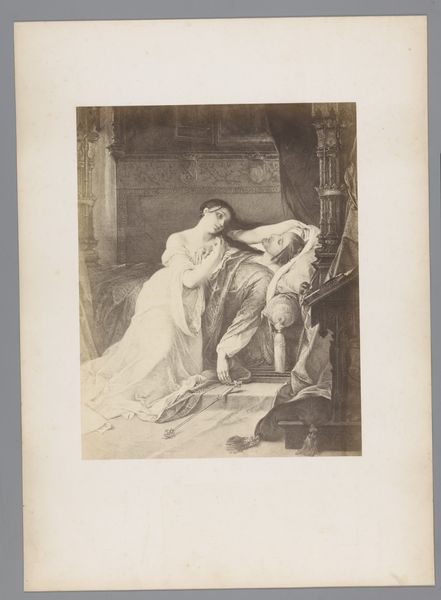
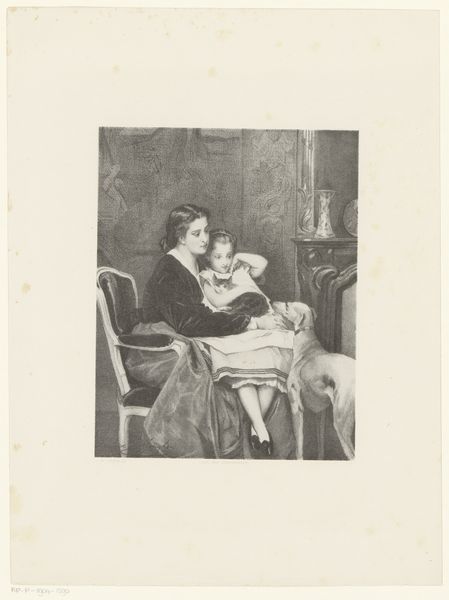
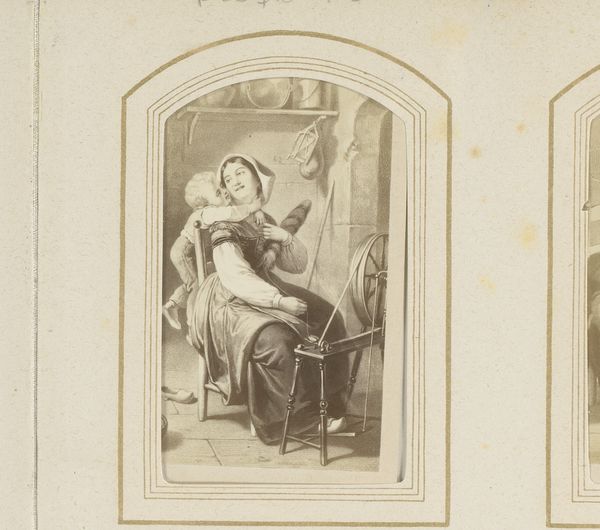
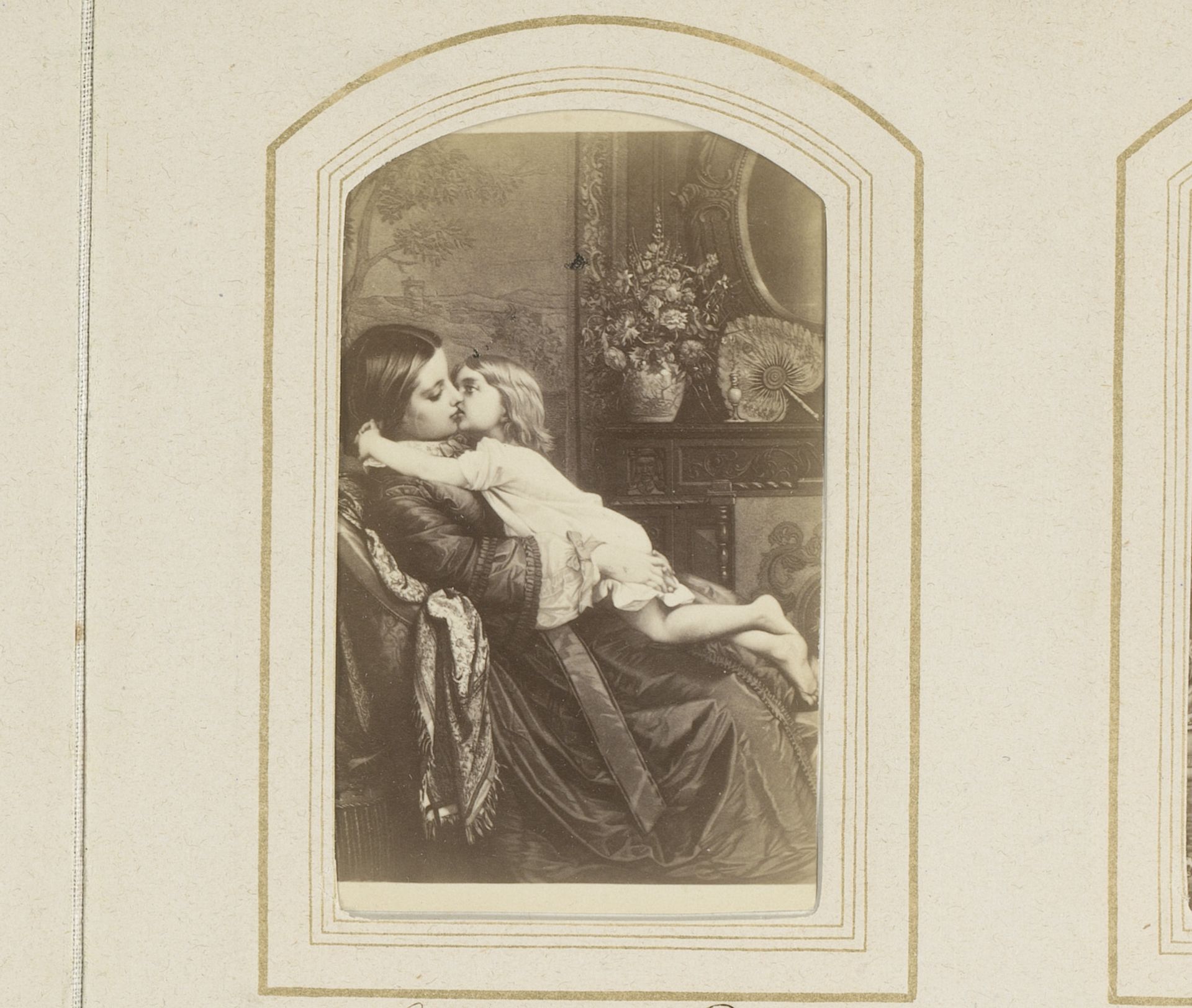
This photogravure, "Fotoreproductie van Le baiser maternel," presents a staged scene of maternal affection. Although made by an anonymous artist, the composition centers on a mother and child in a tightly framed domestic tableau. The sepia tones cast a soft, nostalgic light, enhancing the sentimental mood. Structurally, the photograph organizes itself around the central diagonal axis formed by the bodies of the mother and child. This axis is counterbalanced by the arrangement of objects in the background, such as the vase of flowers and the ornate fan, which add layers of meaning. These are not merely decorative, they help articulate a semiotic system, communicating ideas about domesticity and femininity. The photograph operates within a specific cultural code, reinforcing bourgeois values, yet it uses these symbols to convey a sense of timelessness. The interplay of light and shadow across the subjects' faces invites an ongoing interpretation, continually shifting our understanding of its sentimental subject.
Fotoreproductie van Le baiser maternel
1870 - 1890

Anonymous
@anonymousLocation
RijksmuseumArtwork details
- Dimensions
- height 84 mm, width 51 mm
- Location
- Rijksmuseum
- Copyright
- Rijks Museum: Open Domain
Comments
Share your thoughts
About this artwork
This photogravure, "Fotoreproductie van Le baiser maternel," presents a staged scene of maternal affection. Although made by an anonymous artist, the composition centers on a mother and child in a tightly framed domestic tableau. The sepia tones cast a soft, nostalgic light, enhancing the sentimental mood. Structurally, the photograph organizes itself around the central diagonal axis formed by the bodies of the mother and child. This axis is counterbalanced by the arrangement of objects in the background, such as the vase of flowers and the ornate fan, which add layers of meaning. These are not merely decorative, they help articulate a semiotic system, communicating ideas about domesticity and femininity. The photograph operates within a specific cultural code, reinforcing bourgeois values, yet it uses these symbols to convey a sense of timelessness. The interplay of light and shadow across the subjects' faces invites an ongoing interpretation, continually shifting our understanding of its sentimental subject.
Comments
Share your thoughts