About this artwork
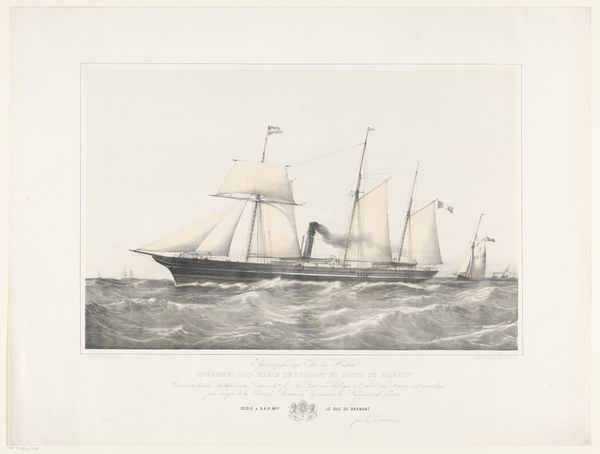
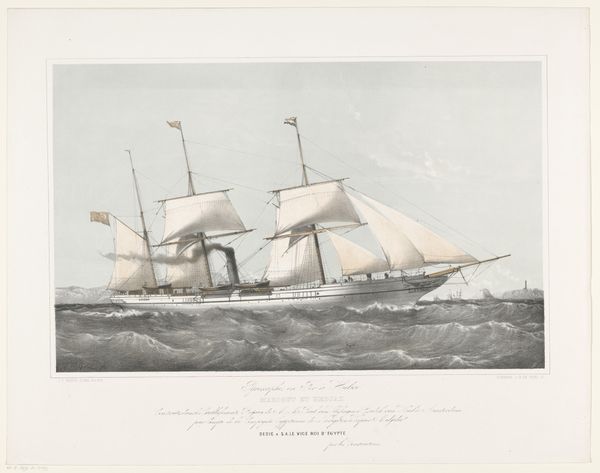
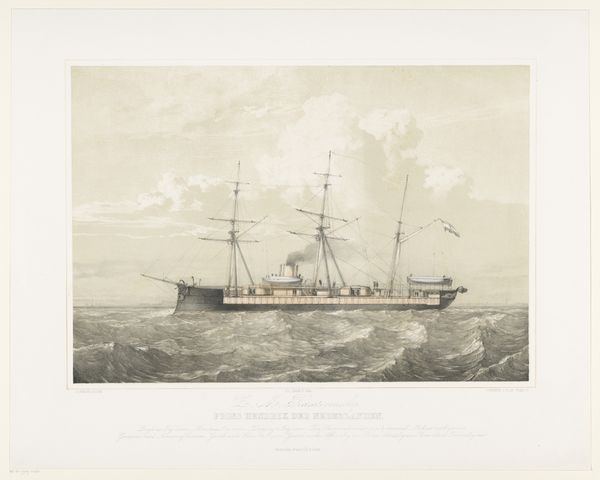
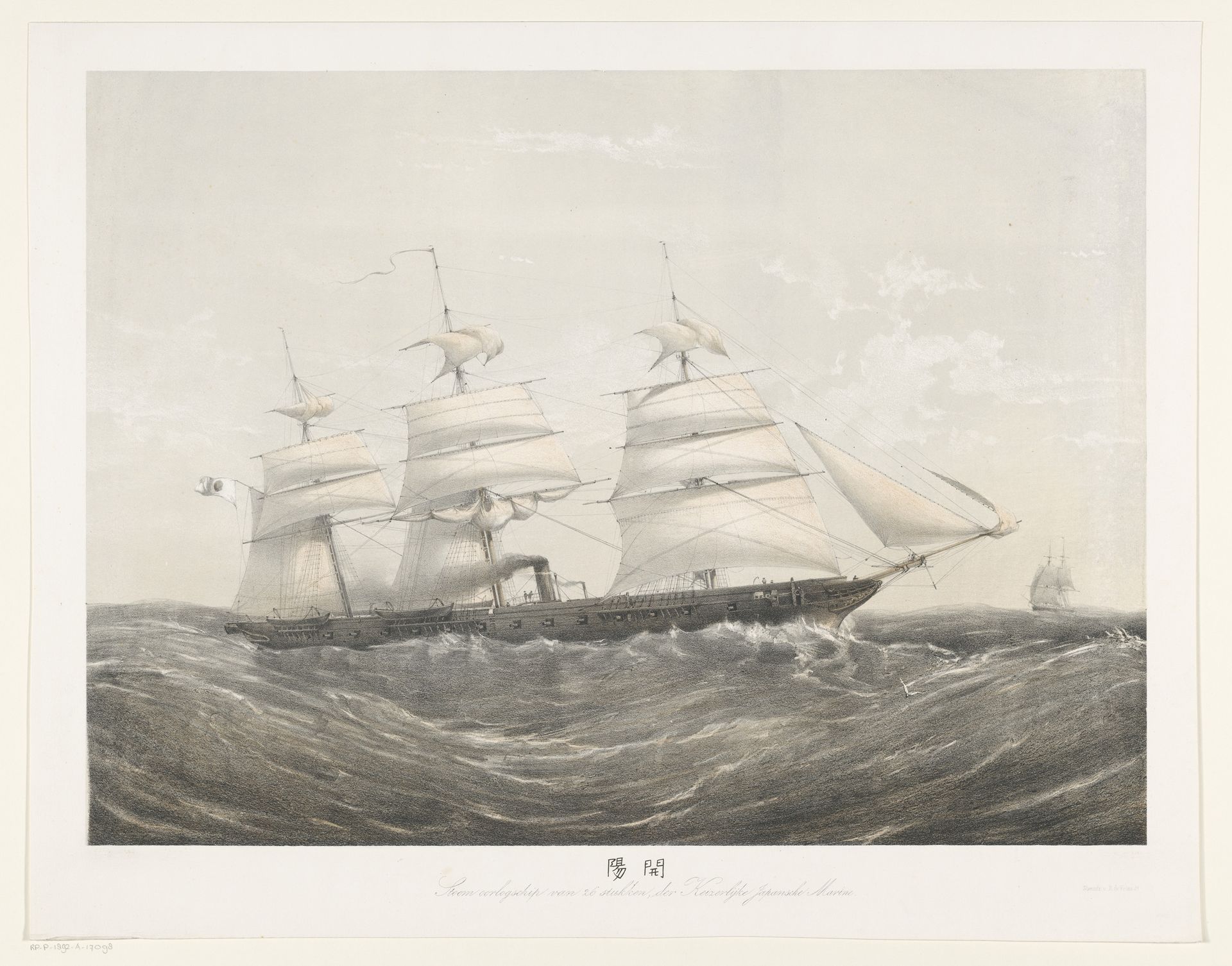
Johan Conrad Greive created this print of a Japanese steam warship sailing at sea using lithography, a printing technique, in the late 19th century. Greive, who specialized in maritime scenes, made this work during a period of significant transformation in Japan, known as the Meiji Restoration. This era marked Japan's rapid modernization and opening to the West, including the adoption of Western military technology. The warship symbolizes Japan's ambition to assert itself as a modern power on the global stage. We see how Japan has embraced industrialization, yet it is jarring to note this progress through an image of war. This print invites reflection on how nations adopt new technologies for advancement, and on the cultural shifts accompanying military modernization. The scene evokes both admiration for progress and concern for the path nations choose to exert their power.
Japans stoomoorlogsschip varend op zee 1847 - 1874

Johan Conrad Greive
1837 - 1891Location
RijksmuseumArtwork details
- Medium
- print, watercolor
- Dimensions
- height 477 mm, width 605 mm
- Location
- Rijksmuseum
- Copyright
- Rijks Museum: Open Domain
Tags
landscape
watercolor
orientalism
genre-painting
watercolor
Comments
No comments
About this artwork
Johan Conrad Greive created this print of a Japanese steam warship sailing at sea using lithography, a printing technique, in the late 19th century. Greive, who specialized in maritime scenes, made this work during a period of significant transformation in Japan, known as the Meiji Restoration. This era marked Japan's rapid modernization and opening to the West, including the adoption of Western military technology. The warship symbolizes Japan's ambition to assert itself as a modern power on the global stage. We see how Japan has embraced industrialization, yet it is jarring to note this progress through an image of war. This print invites reflection on how nations adopt new technologies for advancement, and on the cultural shifts accompanying military modernization. The scene evokes both admiration for progress and concern for the path nations choose to exert their power.
Comments
No comments