1867 - 1899
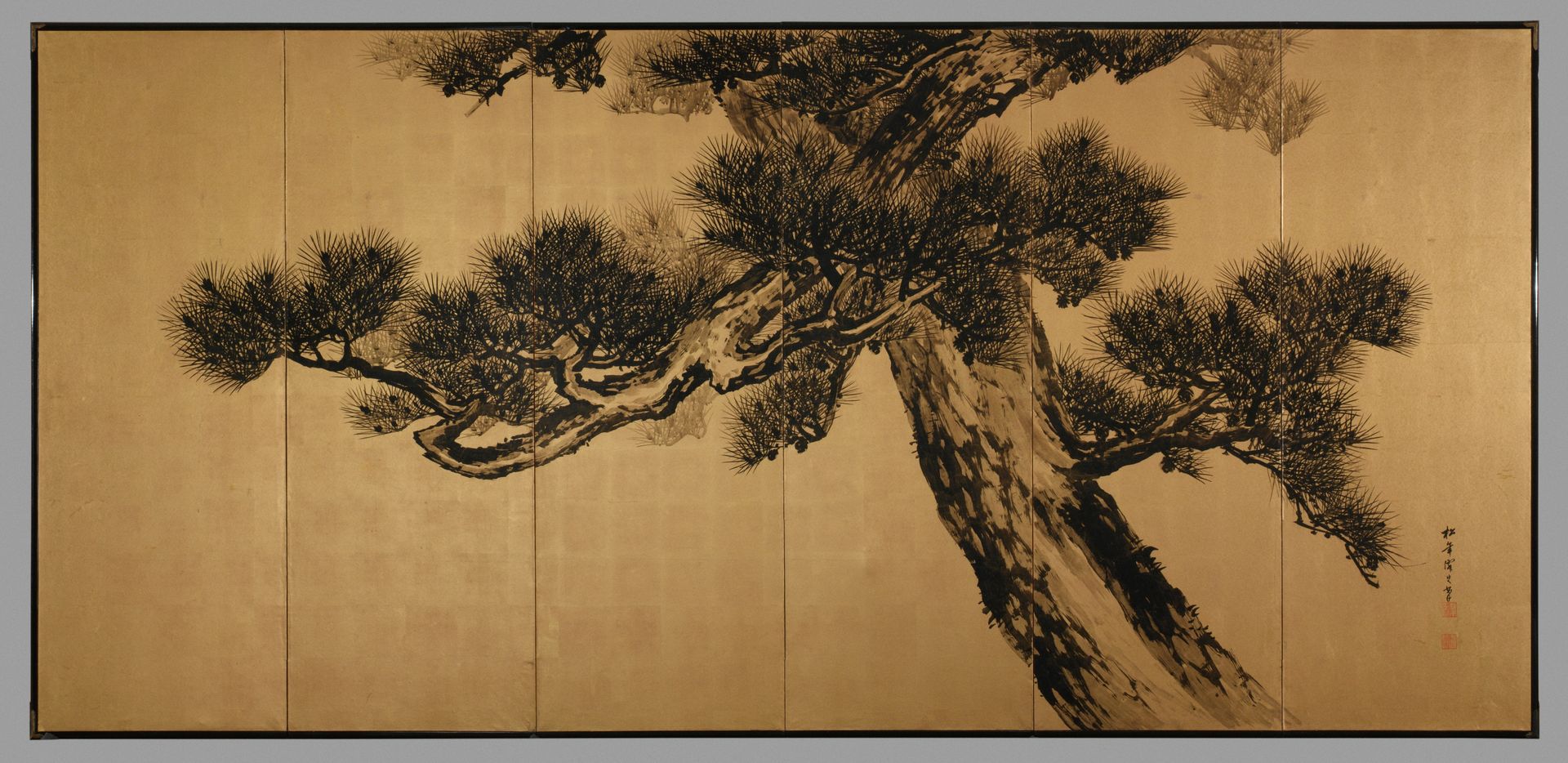
Aged Pines


Listen to curator's interpretation
Curatorial notes
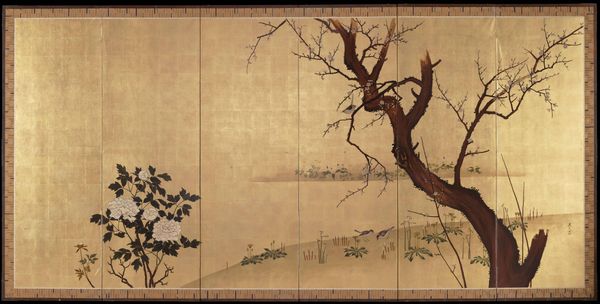
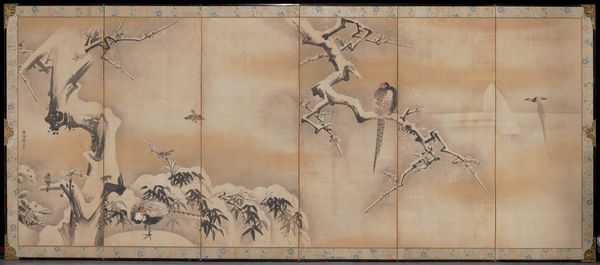
Editor: So, here we have “Aged Pines” by Suzuki Shonen, created between 1867 and 1899. It’s ink, tempera, and gold on paper, a six-panel screen currently at the Met. I am really drawn to the strong diagonal of the tree trunk, which gives the entire piece such dynamic energy. How do you interpret this work? Curator: The dynamism you observe is certainly present, yet consider also the static nature of the pine, a symbol of longevity. The composition achieves its effect through a juxtaposition of movement and stillness. Observe the texture created by the varied brushstrokes; Shonen meticulously articulates the pine needles to convey volume and depth. Editor: That's interesting! I was so focused on the trunk that I hadn't noticed the nuances in the leaves themselves. It’s almost like two separate artworks combined into one. Curator: Precisely. This dichotomy reinforces the concept of wabi-sabi, embracing imperfection and the transient nature of beauty. Notice also the negative space around the branches. Do you see how it balances the composition, giving prominence to form? Editor: Yes, the use of empty space focuses attention on the details of the tree. So it's less about portraying a literal landscape, and more about using these natural forms to explore fundamental contrasts? Curator: Exactly. Through line, color, and form, Shonen provokes a meditation on time, permanence, and beauty itself. Editor: That's fascinating. I initially saw the bold lines, but now I appreciate how every element supports the other, creating that visual harmony. Curator: Indeed, and art, in its essence, strives to achieve that harmonic confluence of intention and visual form. Editor: I’ll never look at ink paintings the same way again. It's all about form and those contrasting relationships between the brushstrokes! Curator: Exactly! And appreciating form can transform how one understands not just paintings, but also the world around them.