1743
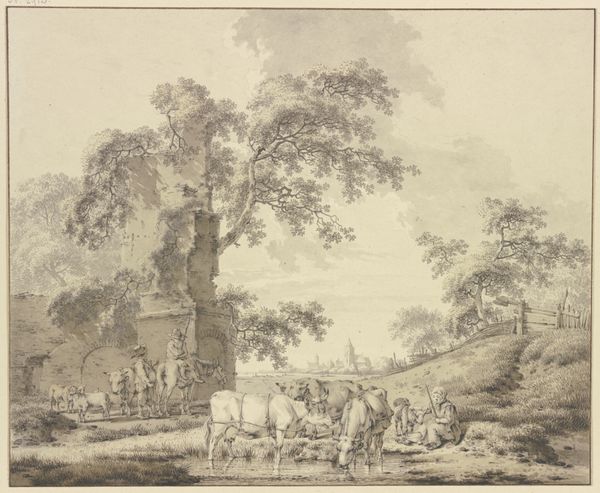
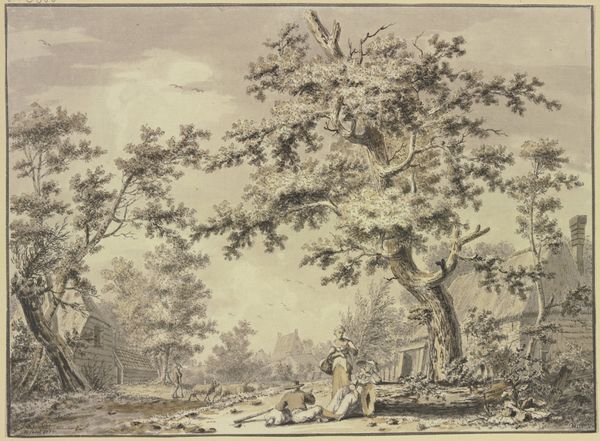
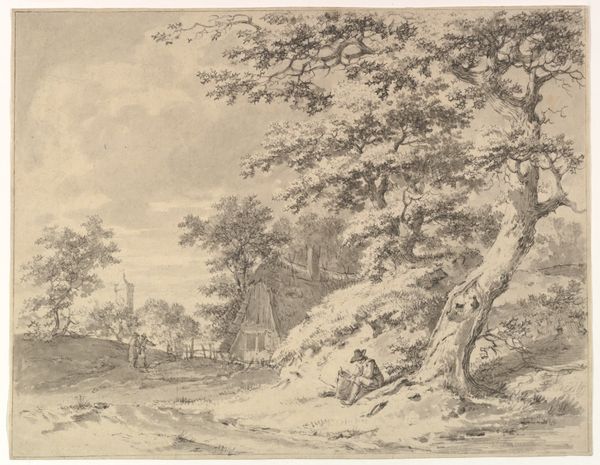
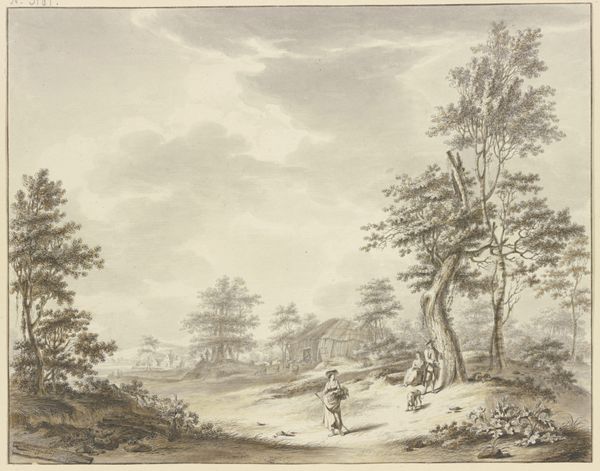
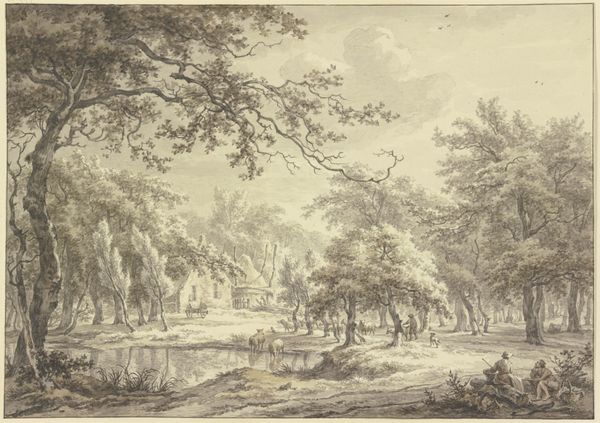
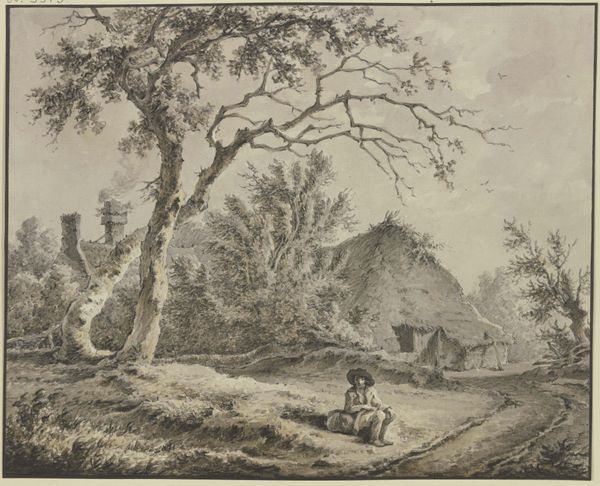
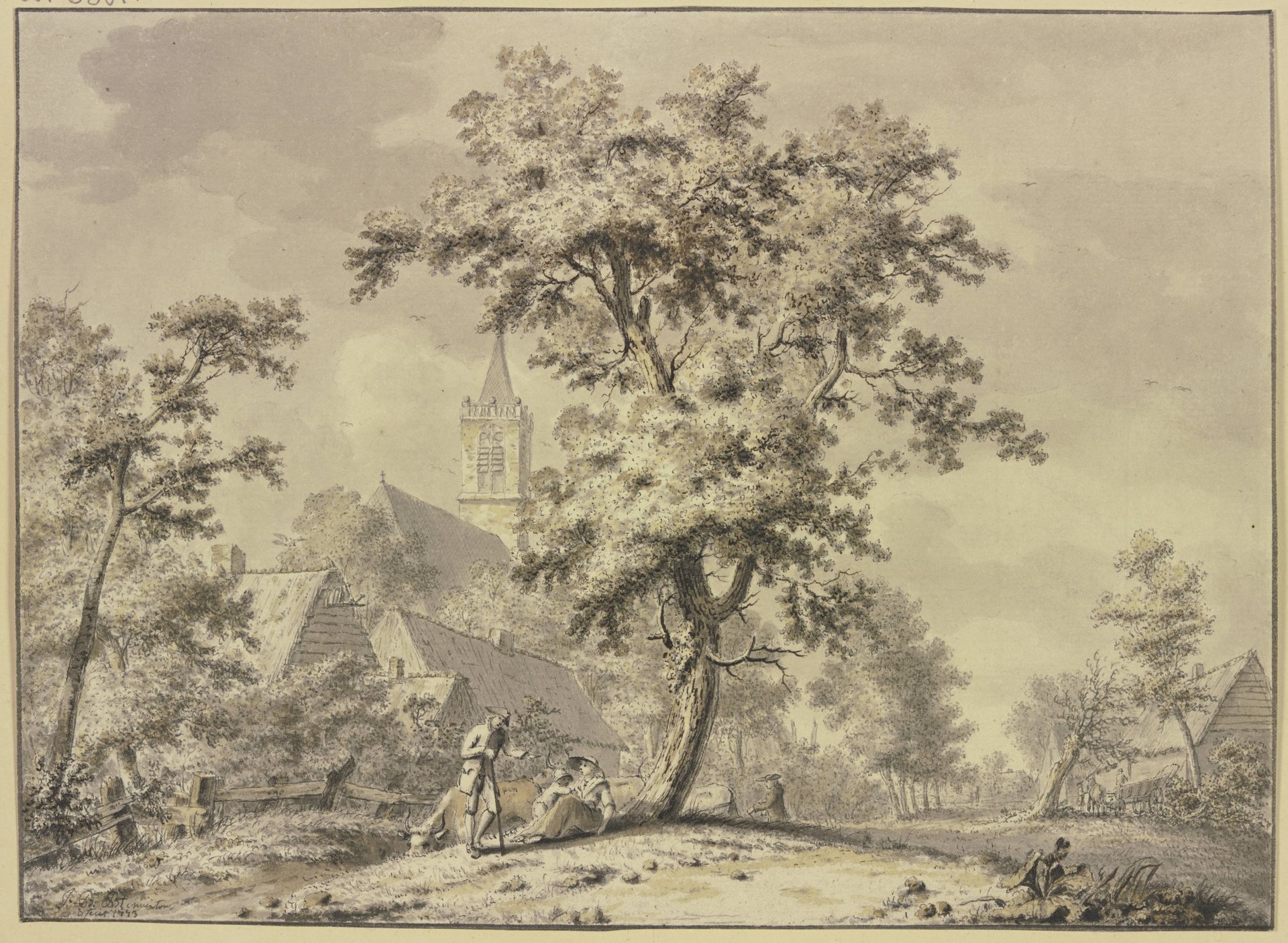
Unter einem Baum sitzt ein Mann mit Frau und Kind und einigen Kühen


Listen to curator's interpretation
Curatorial notes
Editor: Right, so here we have "Unter einem Baum sitzt ein Mann mit Frau und Kind und einigen Kühen"—that's "Under a Tree Sits a Man with Wife and Child and some Cows"—created in 1743 by Johan Bernhard Brandhoff. It’s rendered in pencil, colored pencil, ink, and Indian ink on paper. It's like stepping into a storybook scene, all gentle slopes and quiet observation. How do you see it? Curator: It whispers of a world steeped in Romanticism, wouldn’t you agree? Look at the family nestled under the tree, the church steeple just barely poking through. It's a moment of quiet intimacy framed by the immensity of nature, softened by those muted colours. I feel invited to breathe and linger with them. Doesn't it also feel like Brandhoff is inviting *us* to escape into simpler times? Do you find a tension, though, between the details rendered so carefully and the fleeting nature of the scene? Editor: Definitely a tension. It's almost photographically precise, yet dreamlike. Was this typical of artwork from the 1740s? Curator: It's fascinating because you've got one foot firmly in meticulous observation and the other daring to express subjective emotion. It’s a pre-industrial longing for connection. I wonder what the cow are thinking! I suppose Brandhoff himself felt a strong pull towards nature… towards, perhaps, creating an image of serene harmony? Editor: Thinking about it, the way he uses all those different types of drawing materials contributes to that serene effect. Curator: Exactly. It gives a certain texture, a feeling almost like one is touching it. That kind of tangible emotion is really evocative. Editor: I see it now. The choice of medium creates such soft effects and enhances that feeling. It's almost a form of personal expression in itself, a memory, like a peaceful daydream captured on paper. Thanks! Curator: Indeed. It gives the sense that something very intimate is on display, almost as if one were not looking at art, but reading from someone's innermost heart.