About this artwork
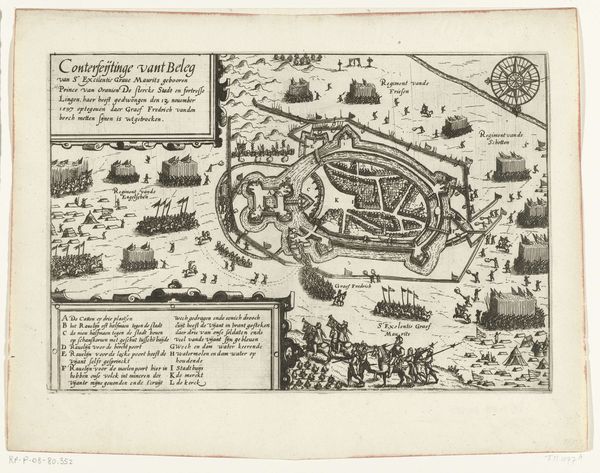
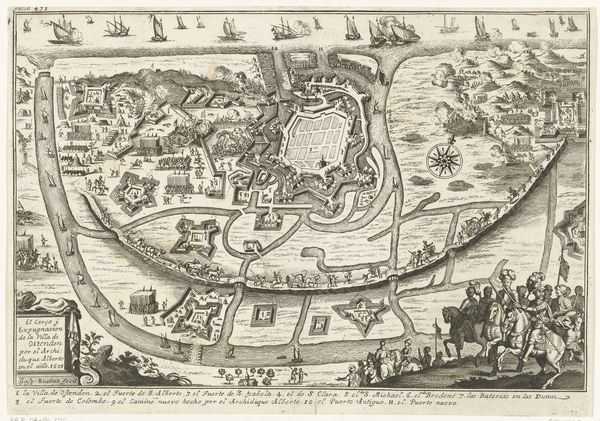
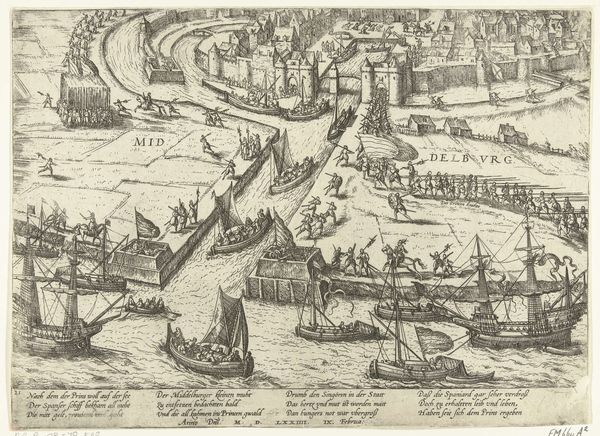
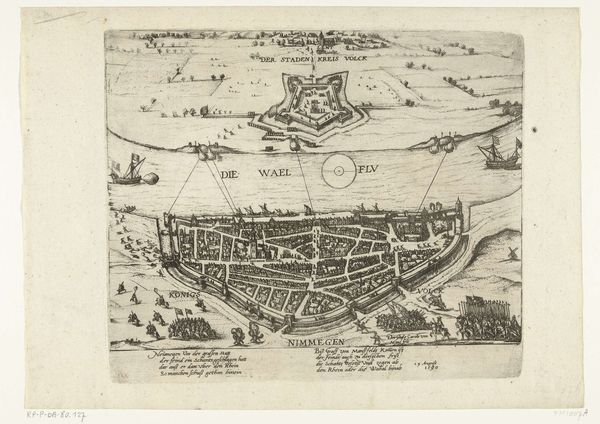
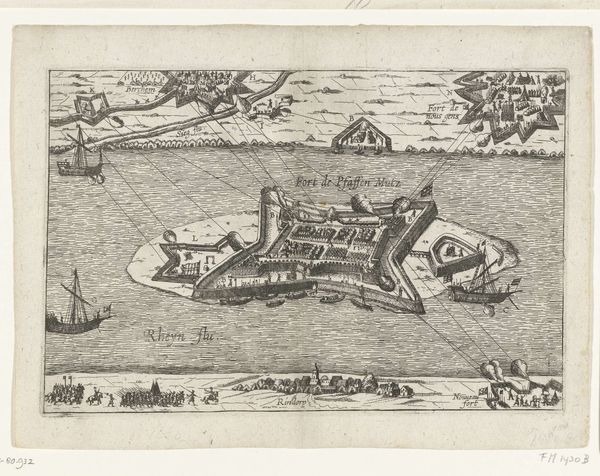
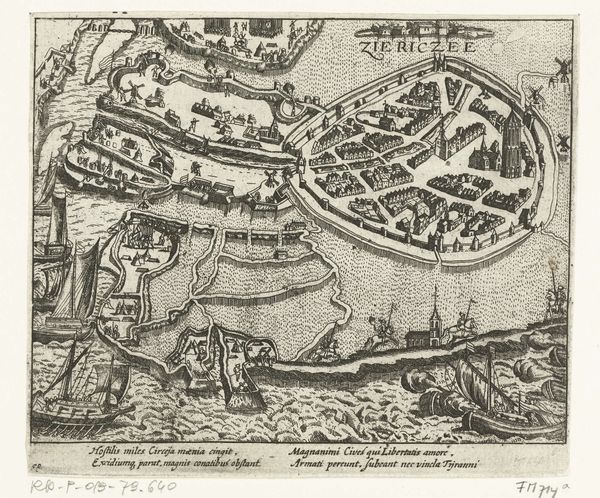
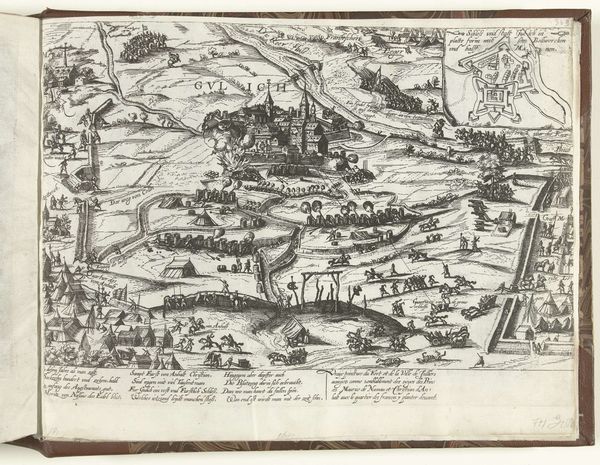
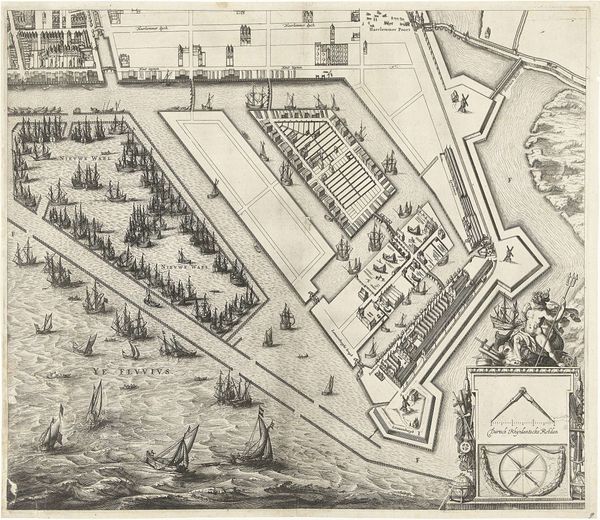
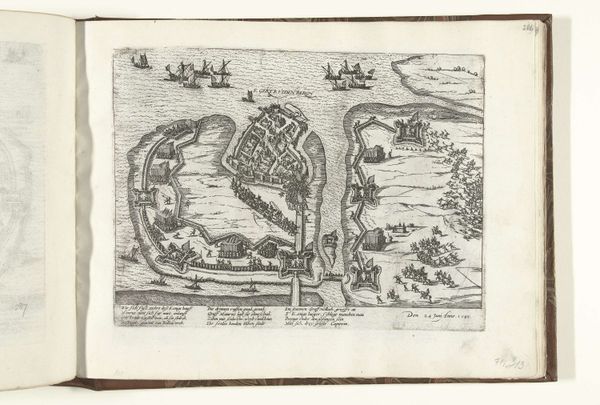
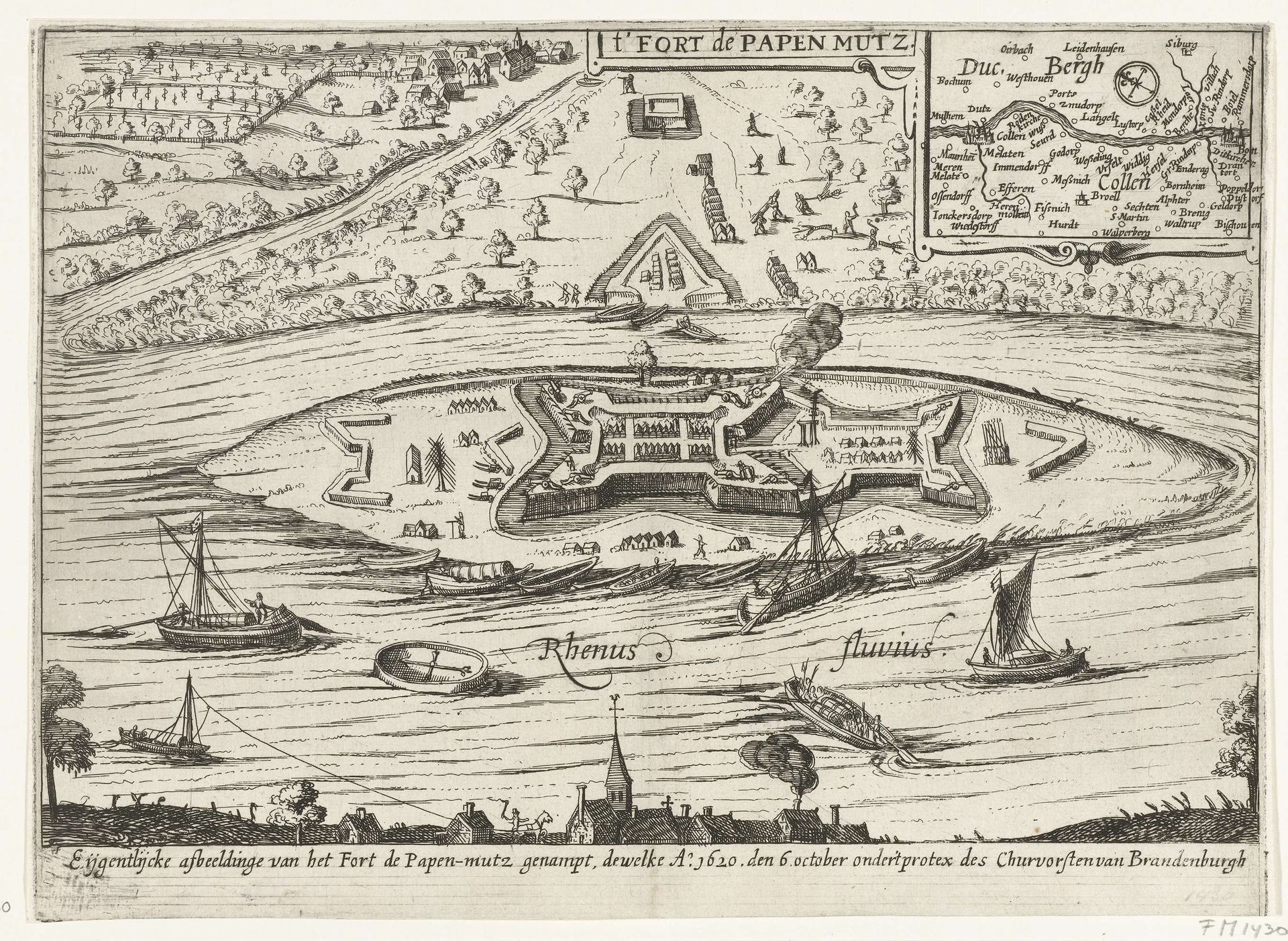
This is an anonymous print from 1620, depicting Schans Papenmuts, a fort built by Maurits on the Rhine river. It gives us a bird's-eye view of the fort, surrounded by water, with ships and smaller boats populating the scene. The image creates meaning through its detailed depiction of military architecture and river navigation. Made in the Netherlands during the early 17th century, it reflects the country's preoccupation with military defense during the Eighty Years' War. You'll notice that the print includes a small map of the surrounding area, suggesting that it was intended as both a record and a practical tool for military planning. The fort itself embodies the complex social and political structures of the time: who commissioned it? How was it used? To better understand an artwork like this, historians consult period maps, military records, and political documents. These resources enable us to reconstruct the institutional context in which it was made. Art is not created in a vacuum; it is contingent on the social and institutional conditions of its time.
Schans Papenmuts gebouwd door Maurits in de Rijn, 1620
1620

Anonymous
@anonymousLocation
RijksmuseumArtwork details
- Medium
- drawing, print, ink, engraving
- Dimensions
- height 200 mm, width 275 mm
- Location
- Rijksmuseum
- Copyright
- Rijks Museum: Open Domain
Tags
Comments
Share your thoughts
About this artwork
This is an anonymous print from 1620, depicting Schans Papenmuts, a fort built by Maurits on the Rhine river. It gives us a bird's-eye view of the fort, surrounded by water, with ships and smaller boats populating the scene. The image creates meaning through its detailed depiction of military architecture and river navigation. Made in the Netherlands during the early 17th century, it reflects the country's preoccupation with military defense during the Eighty Years' War. You'll notice that the print includes a small map of the surrounding area, suggesting that it was intended as both a record and a practical tool for military planning. The fort itself embodies the complex social and political structures of the time: who commissioned it? How was it used? To better understand an artwork like this, historians consult period maps, military records, and political documents. These resources enable us to reconstruct the institutional context in which it was made. Art is not created in a vacuum; it is contingent on the social and institutional conditions of its time.
Comments
Share your thoughts