About this artwork
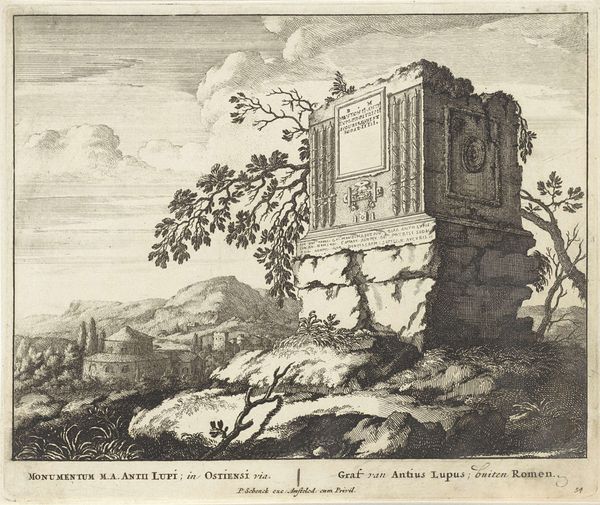
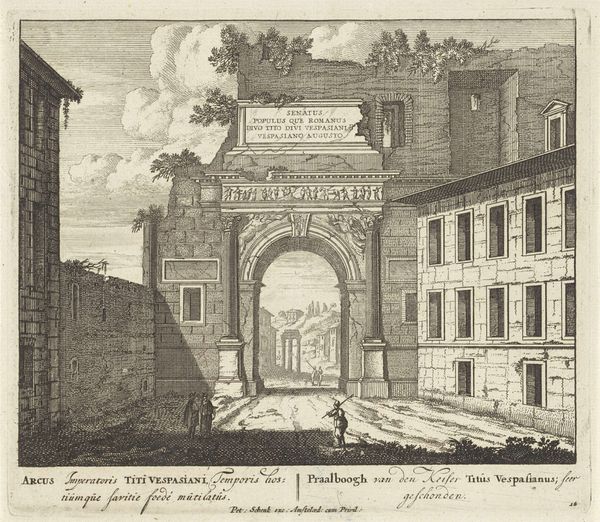
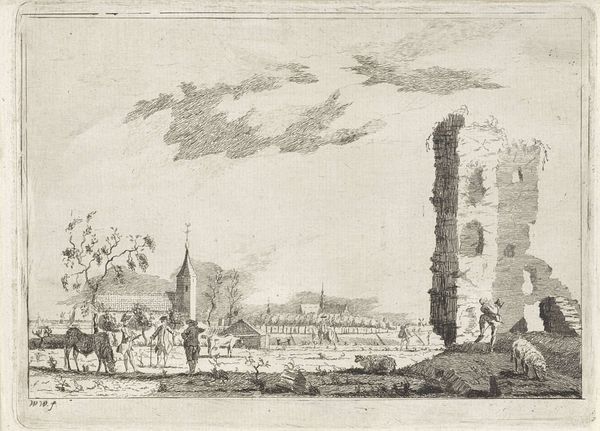
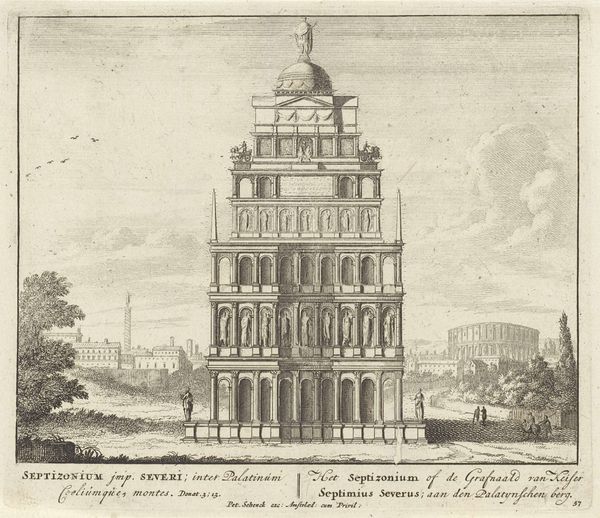
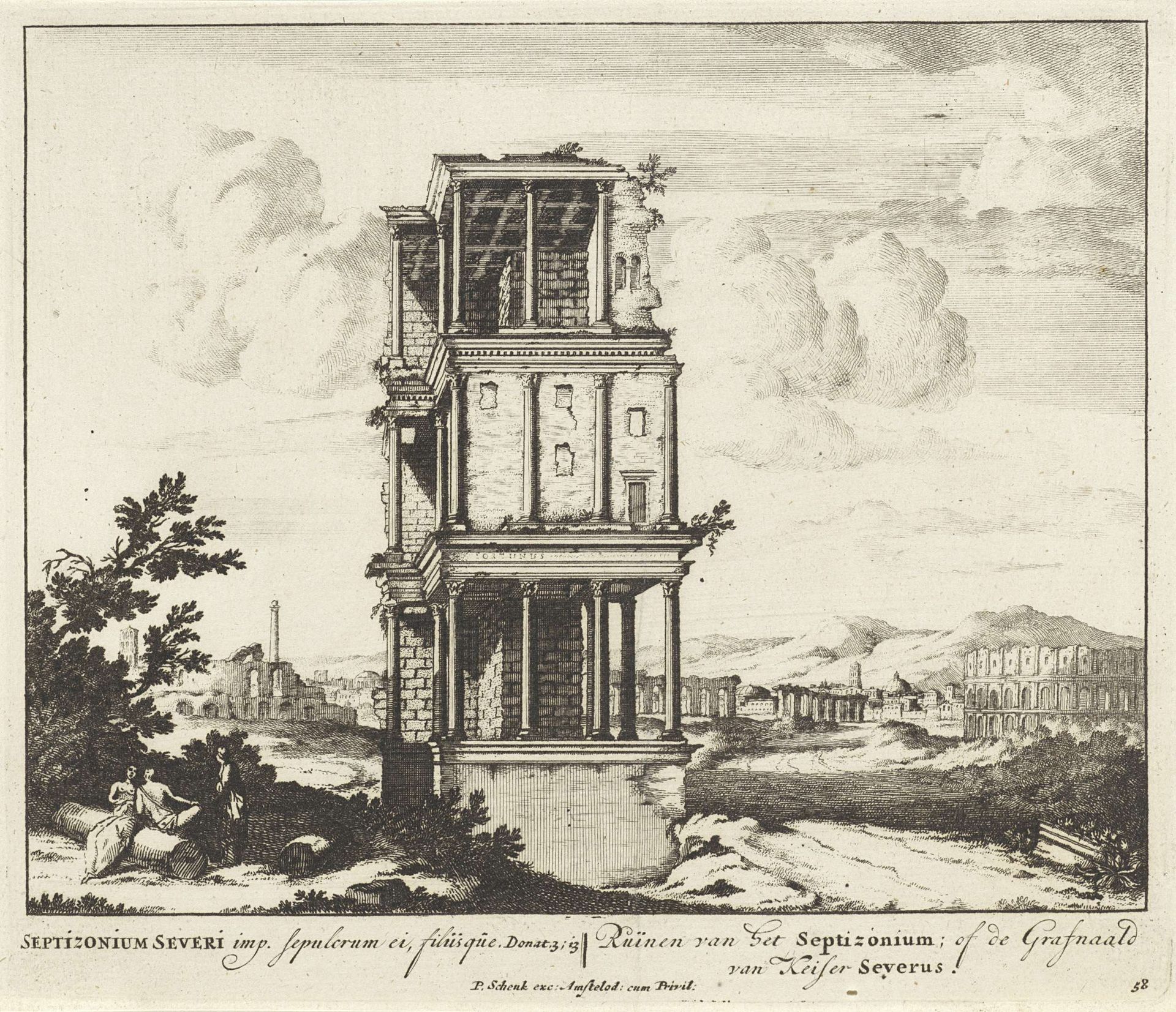
This engraving depicts the ruined monument of Septimius Severus, rendered with delicate lines and a stark contrast between light and shadow. The composition is structured around the verticality of the ruin itself, a skeletal structure that dominates the foreground. Note how the artist employs linear perspective to create a sense of depth, drawing our eye towards the distant Roman landscape, dotted with further ruins. The monument, though decaying, retains a powerful presence, its classical architectural elements still visible. Here, the artist seems to be engaged in a dialogue between the grandeur of the past and the transience of human achievement. The ruin becomes a sign, an emblem not only of physical decay but also of the instability of power and the inevitable entropy of civilizations. It prompts us to contemplate the passage of time and the cultural codes that underpin our understanding of history and memory.
Ruïne van het grafmonument voor keizer Septimius Severus 1675 - 1711

Anonymous
@anonymousLocation
RijksmuseumArtwork details
- Medium
- drawing, etching, engraving, architecture
- Dimensions
- height 165 mm, width 194 mm
- Location
- Rijksmuseum
- Copyright
- Rijks Museum: Open Domain
Tags
drawing
baroque
etching
landscape
engraving
architecture
Comments
No comments
About this artwork
This engraving depicts the ruined monument of Septimius Severus, rendered with delicate lines and a stark contrast between light and shadow. The composition is structured around the verticality of the ruin itself, a skeletal structure that dominates the foreground. Note how the artist employs linear perspective to create a sense of depth, drawing our eye towards the distant Roman landscape, dotted with further ruins. The monument, though decaying, retains a powerful presence, its classical architectural elements still visible. Here, the artist seems to be engaged in a dialogue between the grandeur of the past and the transience of human achievement. The ruin becomes a sign, an emblem not only of physical decay but also of the instability of power and the inevitable entropy of civilizations. It prompts us to contemplate the passage of time and the cultural codes that underpin our understanding of history and memory.
Comments
No comments