1603
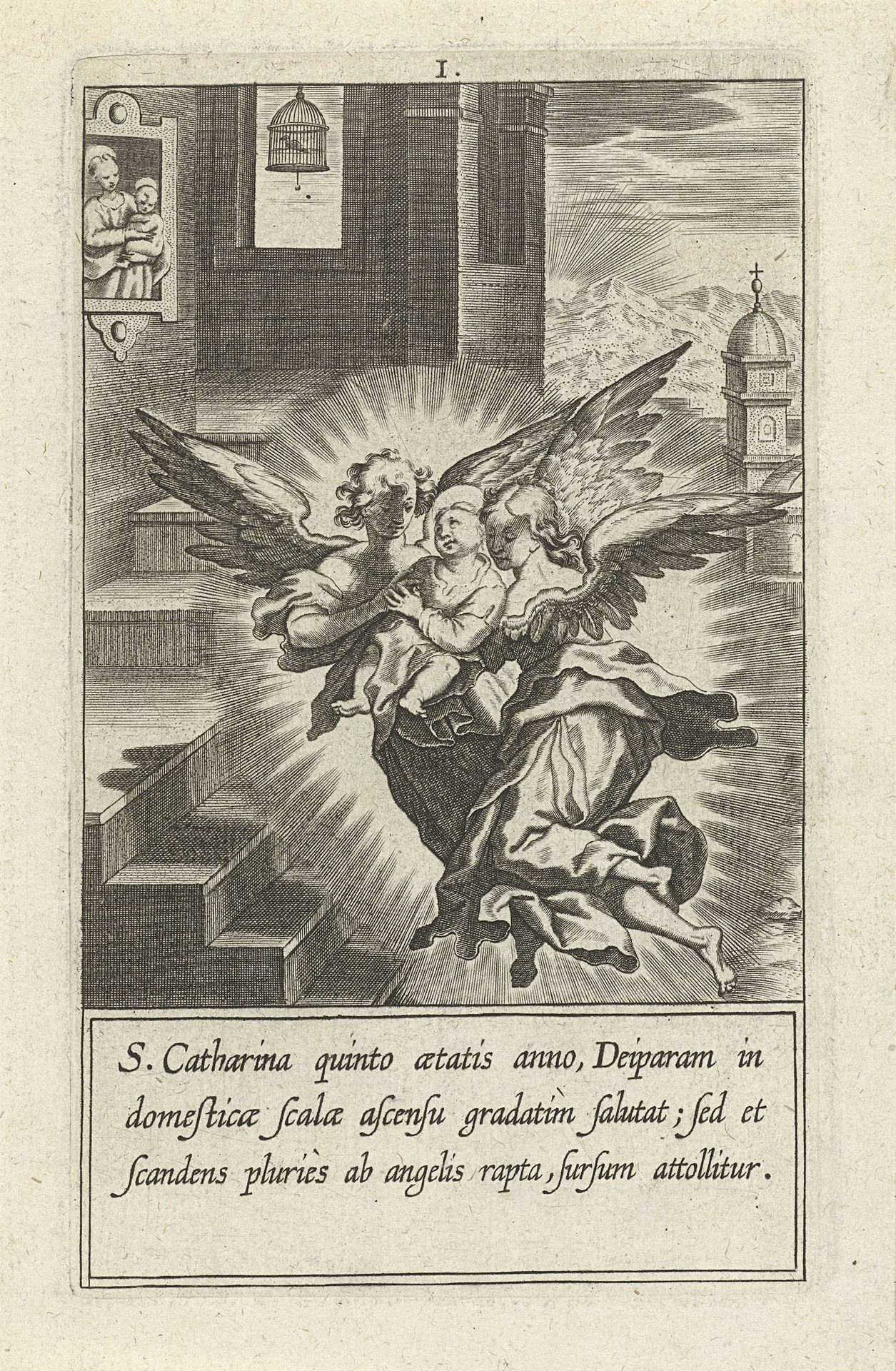
Catharina wordt door twee engelen de trap opgedragen

Cornelis Galle I
1576 - 1650Location
RijksmuseumListen to curator's interpretation
Curatorial notes
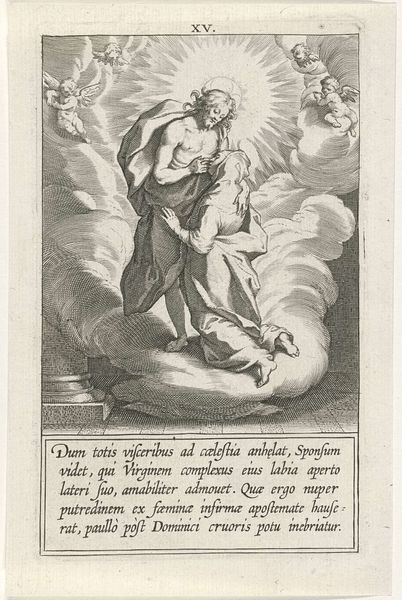
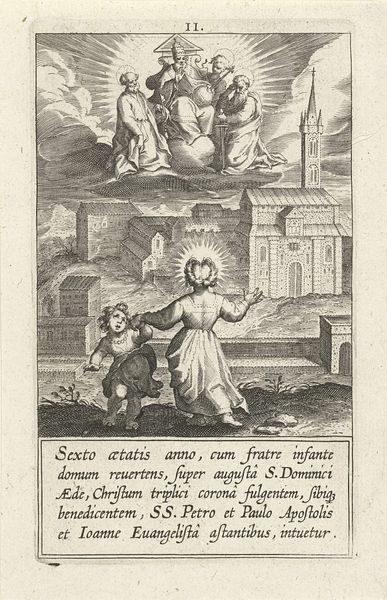
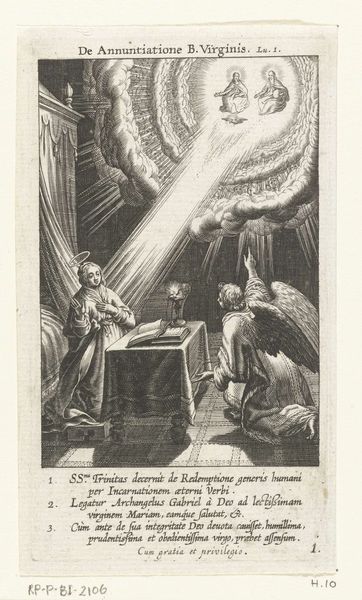
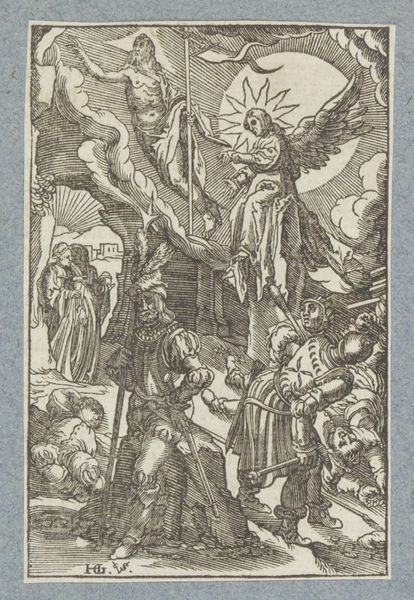
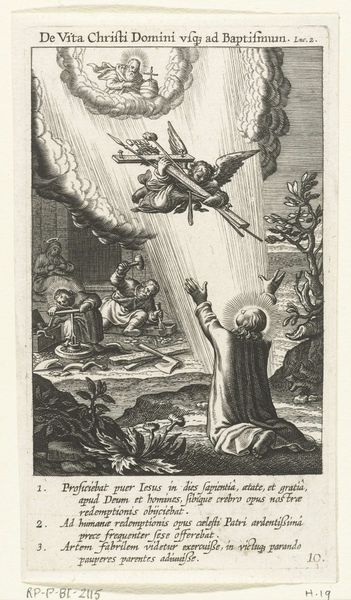
This engraving, "Catharina wordt door twee engelen de trap opgedragen," was made by Cornelis Galle I in the early 17th century. It’s a great example of how graphic art at this time relied on skill and exactitude. The key is the process of intaglio – Galle would have used a tool called a burin to cut lines into a copper plate. These lines hold ink, and when the plate is pressed to paper, the image appears. The precision required is remarkable, especially considering the small scale of this print. Look closely, and you can see how the varying densities of lines create shading and volume, giving the scene its depth. Prints like this were a crucial means of disseminating images and ideas. They were relatively affordable, and allowed for the widespread distribution of religious and allegorical scenes. So, while this may seem like a straightforward devotional image, it's also a testament to the power of the printing press as a technology, able to convey meaning to a broad audience.