
Curatorial notes
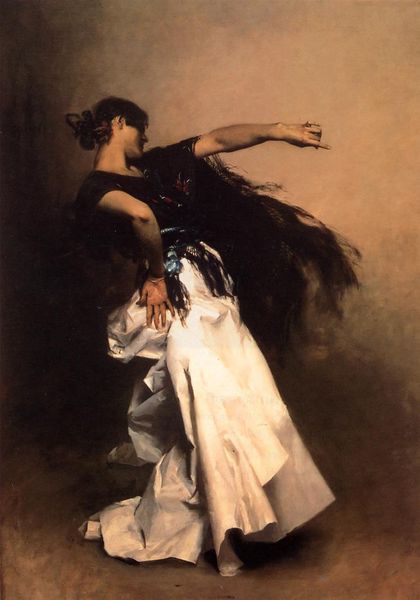
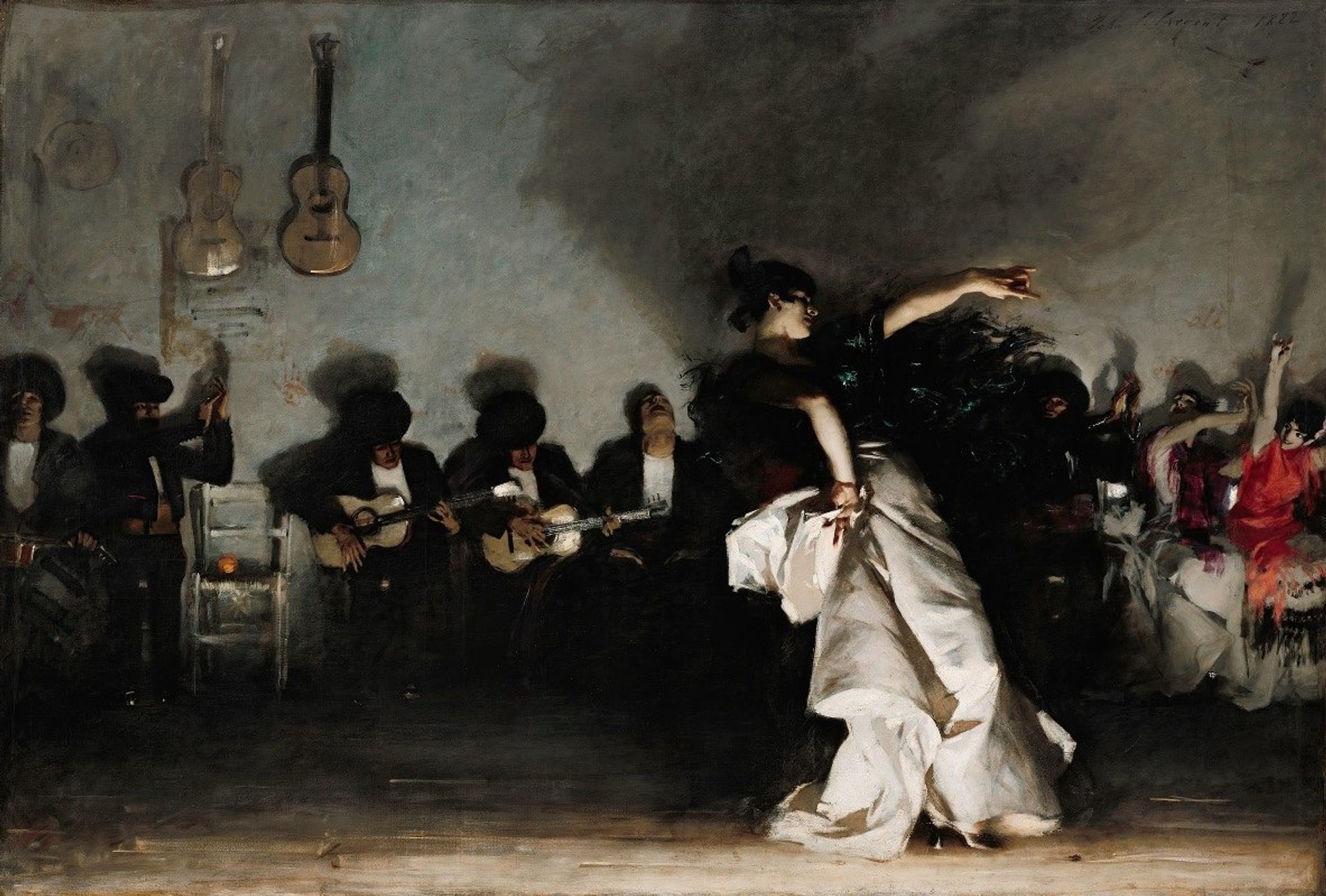
Editor: We’re looking at John Singer Sargent's "El Jaleo," painted in 1882 with oil paints. It depicts a flamenco dancer bathed in light, with musicians and onlookers in the background. The energy of the dance is so palpable! I feel like I can hear the music just by looking at it. What's your interpretation of this dynamic scene? Curator: It’s as if Sargent captured lightning in a bottle, isn’t it? Or maybe starlight in a tavern. Beyond the surface of a genre scene, there’s something deeply evocative at play here. Consider the Spanish fascination that pulsed through the 19th century artistic soul – the “Spanish craze”, if you will. What feelings might Sargent, an American expatriate, be exploring through that cultural lens? Editor: It's interesting you mention the Spanish craze. I guess it's not just a snapshot of a dance but Sargent's reflection on a larger cultural moment. Do you think he’s romanticizing it, or is he trying to capture something more authentic? Curator: Ah, the authenticity question – a shimmering mirage! I suspect Sargent’s more interested in translating an emotional reality than documentary accuracy. He uses theatrical lighting, for example, that almost feels stage-like, wouldn't you agree? But I am left to ask if it helps enhance that emotional power rather than dilute its “realness”. Editor: That's a great point; the dramatic lighting does heighten the intensity! I had initially viewed this as a straightforward depiction, but your insights have encouraged me to consider the layers of cultural context and emotional depth Sargent wove into it. It really makes the artwork richer. Curator: Exactly. Sometimes the most captivating illusions contain deeper truths than stark realities, wouldn't you agree? Sargent invites us to dance with those ambiguities and let them illuminate something within us. Editor: Well, I certainly appreciate that perspective and those thoughts for viewing! I'm excited to go contemplate what is illuminated.