About this artwork
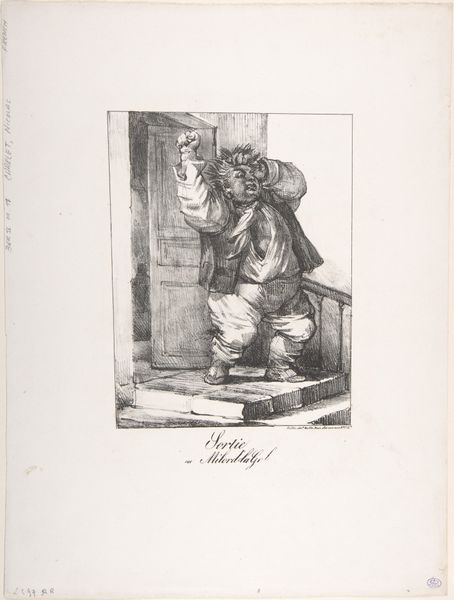
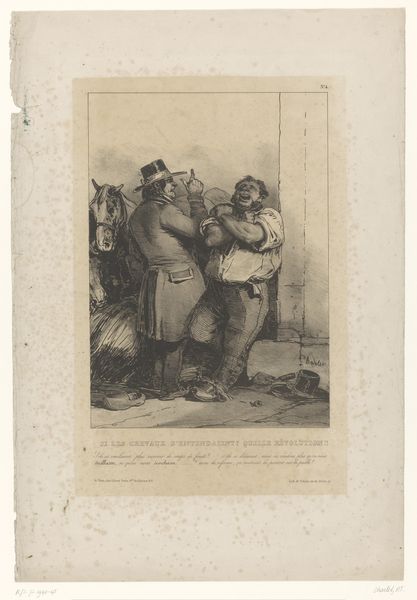
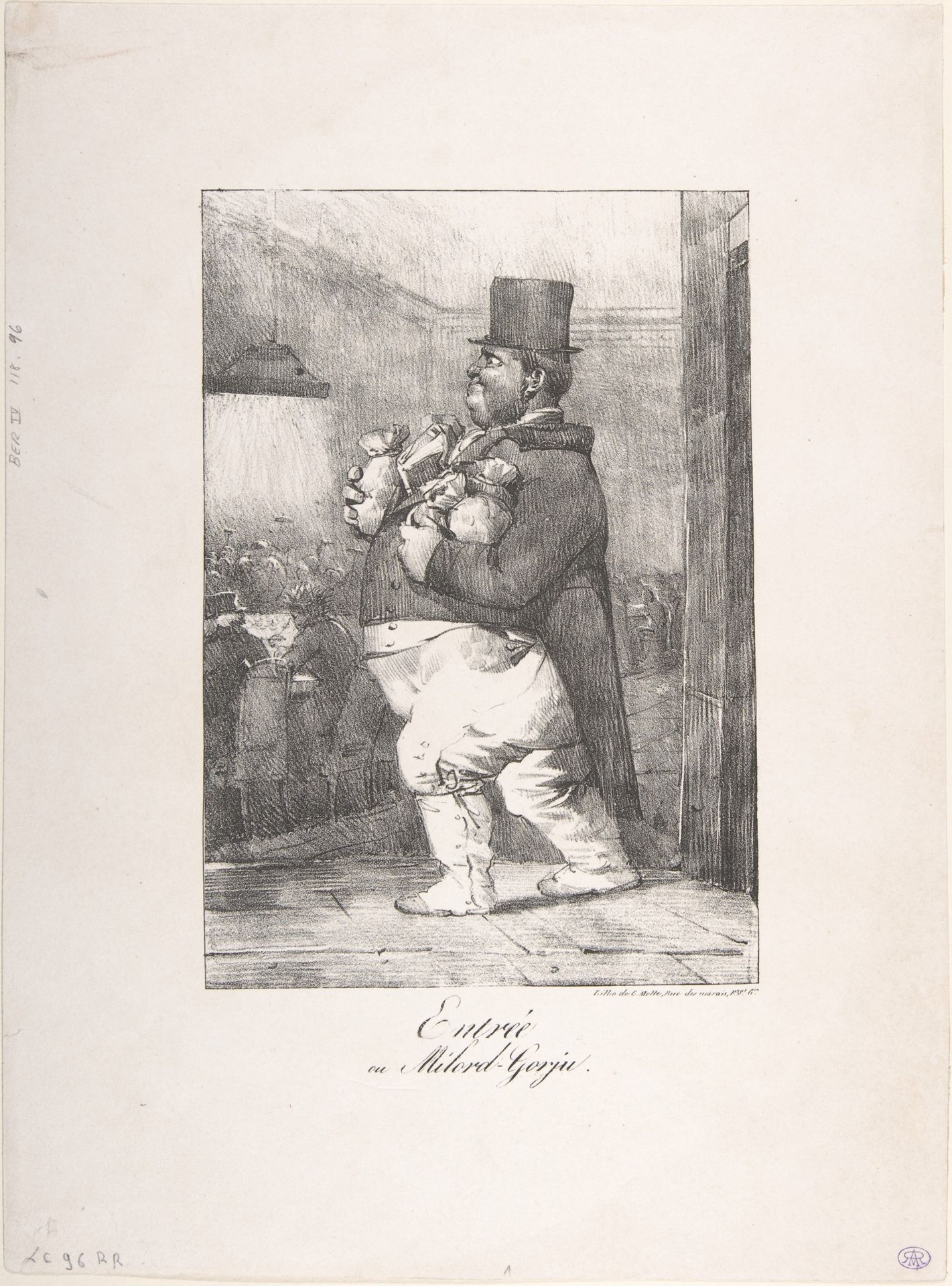
Nicolas Toussaint Charlet created this lithograph, "Entry, or Lord Fat Cheeks" sometime in the first half of the 19th century. It depicts a stout man carrying sacks into what appears to be a gambling den, with the title suggesting a critique of aristocratic excess. Made in France, this work subtly comments on the social structures of its time. Charlet lived through a period of significant political upheaval, including the French Revolution and the rise and fall of Napoleon. The image subtly critiques the restored aristocracy and their conspicuous consumption amidst widespread poverty. The gambling den setting might allude to moral decay and social inequality. Was Charlet attempting to challenge existing social norms through satire? To fully appreciate the nuances of Charlet's message, we can consult historical archives from Parisian printmakers. Researching the socio-political context of 19th-century France, and Charlet's biography, would enhance our understanding of this work. By analyzing the artwork through these lenses, we can better understand its significance as a product of its time.
Entry, or Lord Fat Cheeks (Entrée, ou Milord-Gorju)
1820 - 1822

Nicolas Toussaint Charlet
1792 - 1845
The Metropolitan Museum of Art
Metropolitan Museum of Art, New York, NYArtwork details
- Medium
- drawing, print, etching
- Dimensions
- image: 8 1/4 x 5 11/16 in. (20.9 x 14.5 cm) sheet: 13 3/16 x 9 3/4 in. (33.5 x 24.7 cm)
- Location
- Metropolitan Museum of Art, New York, NY
- Copyright
- Public Domain
Tags
Comments
Share your thoughts
About this artwork
Nicolas Toussaint Charlet created this lithograph, "Entry, or Lord Fat Cheeks" sometime in the first half of the 19th century. It depicts a stout man carrying sacks into what appears to be a gambling den, with the title suggesting a critique of aristocratic excess. Made in France, this work subtly comments on the social structures of its time. Charlet lived through a period of significant political upheaval, including the French Revolution and the rise and fall of Napoleon. The image subtly critiques the restored aristocracy and their conspicuous consumption amidst widespread poverty. The gambling den setting might allude to moral decay and social inequality. Was Charlet attempting to challenge existing social norms through satire? To fully appreciate the nuances of Charlet's message, we can consult historical archives from Parisian printmakers. Researching the socio-political context of 19th-century France, and Charlet's biography, would enhance our understanding of this work. By analyzing the artwork through these lenses, we can better understand its significance as a product of its time.
Comments
Share your thoughts