c. 1910
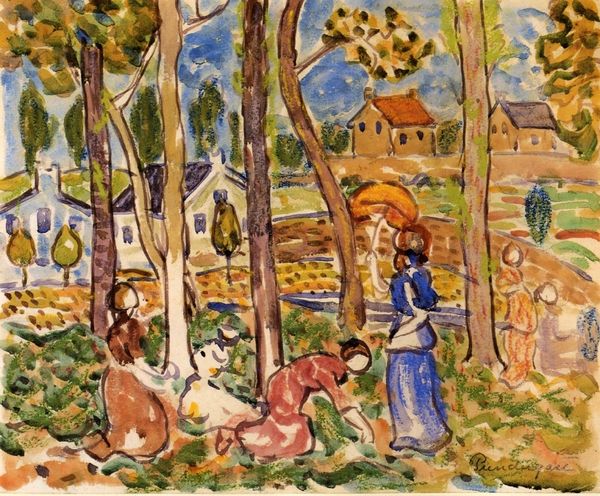
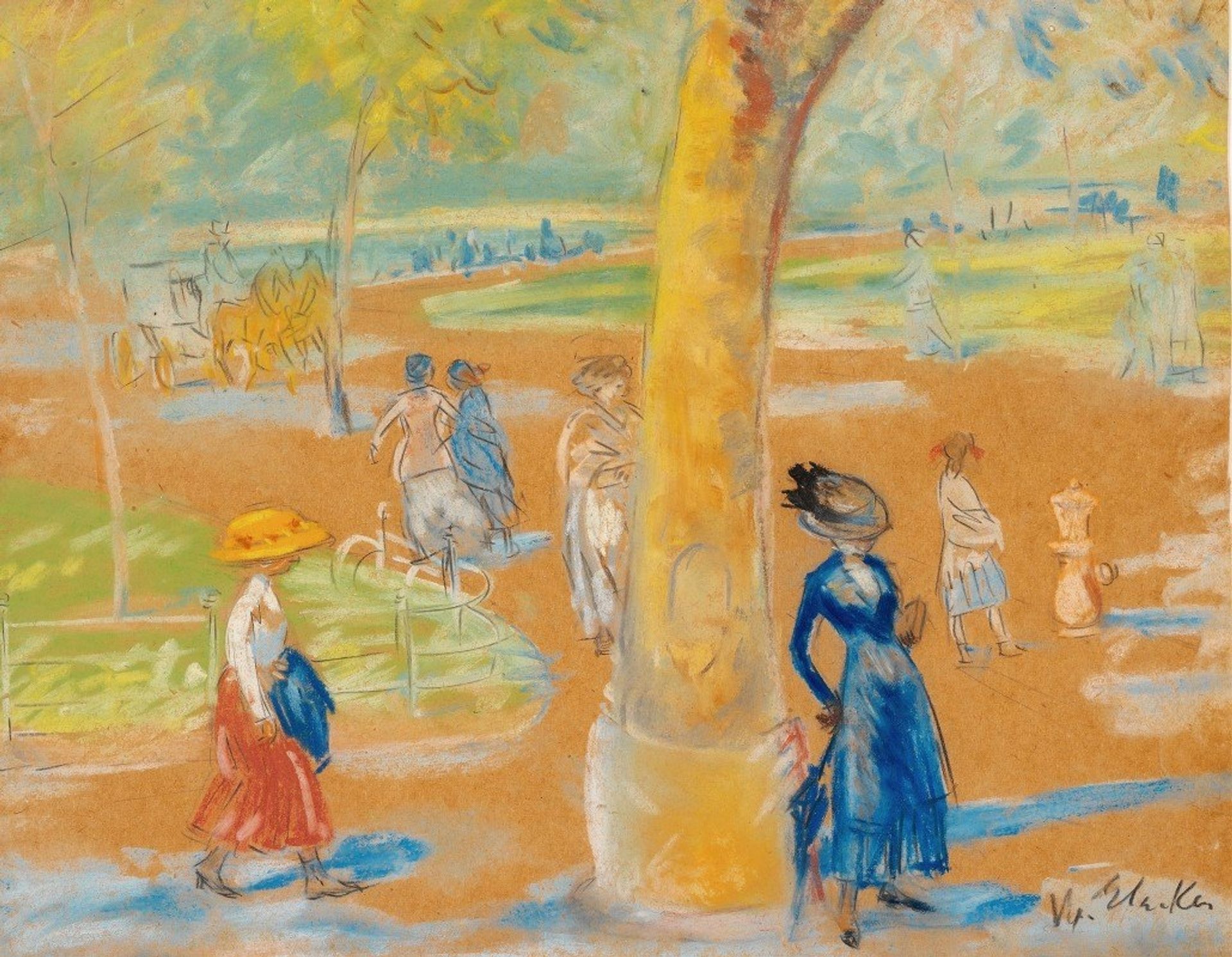
Woman with Umbrella, Washington Square

Listen to curator's interpretation
Curatorial notes
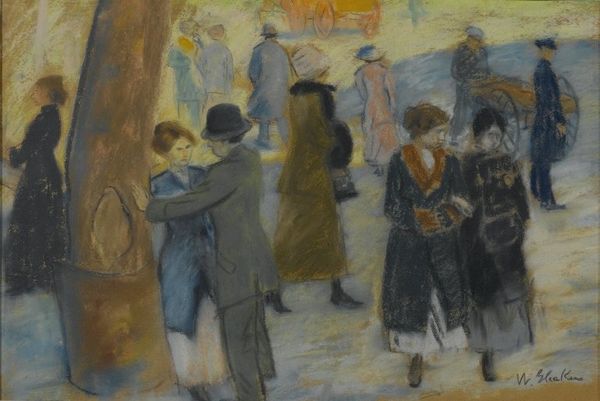
Editor: William Glackens' pastel, "Woman with Umbrella, Washington Square" from around 1910, really captures a fleeting moment. I find it dreamlike, almost a memory fading into the soft hues. How do you read this piece? Curator: Dreamlike, yes, a lovely word. Consider the umbrella. What does an umbrella do? Shelter, protection, of course. But what else? Think about veiling, privacy. Glackens presents this woman *within* Washington Square, yes, but also *withdrawn*. What memories, or aspirations, do you think that umbrella shelters? Editor: So, you're saying the umbrella isn't just functional, it's a symbol of her inner life? The park around her seems almost incidental. Curator: Precisely. Notice the lack of sharp detail, the diffusion of light, the absence of overt narrative. It's about the feeling of a specific moment – a delicate balance of being present, yet self-contained. That's the continuity of image; we still value introspection. What does this moment say about women's evolving place in society at the time? Is it an image of progress, of continued constraint, or perhaps both? Editor: It's fascinating how Glackens can capture all of that with such a seemingly simple scene. I guess I see that the choice to use a commonplace object like an umbrella can symbolize a cultural idea, like the changing social position of women. Curator: The seemingly simple image is often the most evocative. I agree; it encapsulates so much! It also reminds us that images are vessels carrying meaning from one generation to the next.