About this artwork
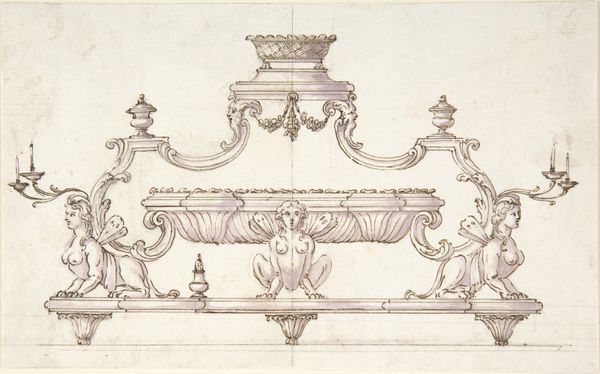
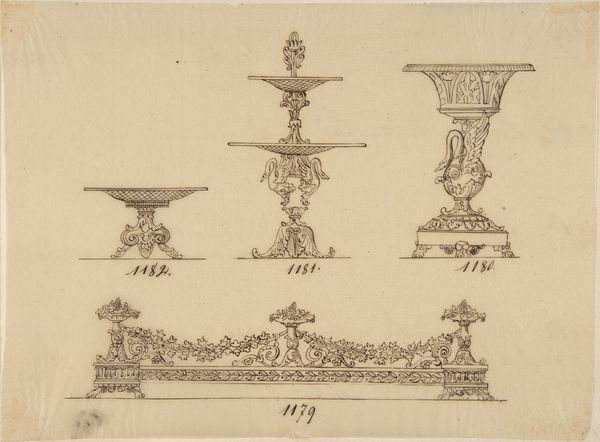
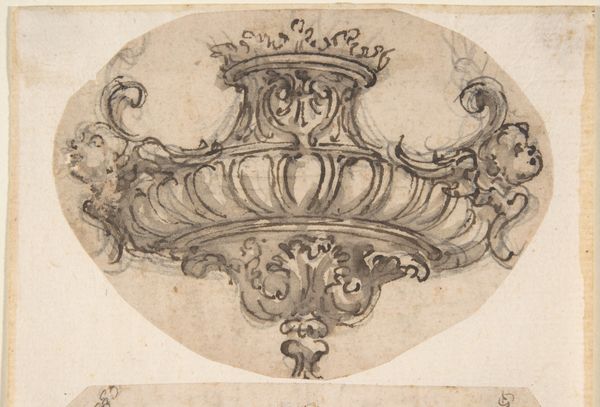
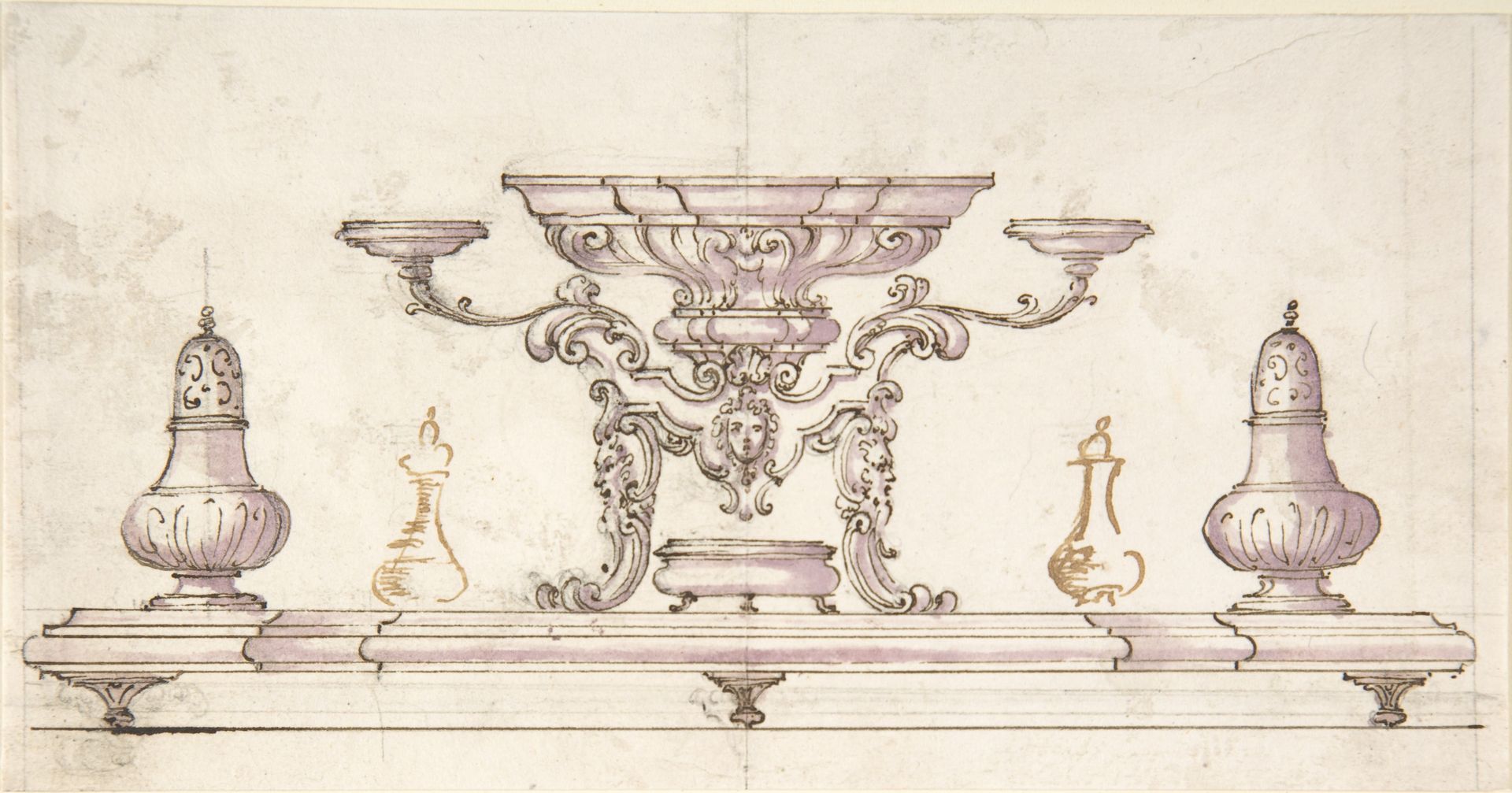
This drawing shows a design for a table centerpiece and salt cellars, made in ink and watercolor by an anonymous artist. The design is for luxury objects, the kind that would have signaled wealth and status. Although it’s just a sketch, you can get a strong sense of the labor involved, not only the artist’s skill, but also the work that would have gone into producing the actual objects. Notice the highly ornamental flourishes, like the faces worked into the supports, and the delicate curves throughout. These would have been extremely time-consuming for metalworkers to execute. Salt cellars, in particular, speak to social hierarchies. Salt used to be a costly commodity, and only those at the head of the table were offered it. So, this drawing provides us with a glimpse into a world of social distinctions, one where even the dining table was a stage for displaying power and wealth. It encourages us to think about the many hands that contributed to such displays.
Drawing for Centerpiece and Salt Cellars
1700 - 1800


Artwork details
- Medium
- drawing, print, paper, ink, pencil
- Dimensions
- 3-1/2 x 6-3/4 in
- Location
- Metropolitan Museum of Art, New York, NY
- Copyright
- Public Domain
Tags
Comments
Share your thoughts
About this artwork
This drawing shows a design for a table centerpiece and salt cellars, made in ink and watercolor by an anonymous artist. The design is for luxury objects, the kind that would have signaled wealth and status. Although it’s just a sketch, you can get a strong sense of the labor involved, not only the artist’s skill, but also the work that would have gone into producing the actual objects. Notice the highly ornamental flourishes, like the faces worked into the supports, and the delicate curves throughout. These would have been extremely time-consuming for metalworkers to execute. Salt cellars, in particular, speak to social hierarchies. Salt used to be a costly commodity, and only those at the head of the table were offered it. So, this drawing provides us with a glimpse into a world of social distinctions, one where even the dining table was a stage for displaying power and wealth. It encourages us to think about the many hands that contributed to such displays.
Comments
Share your thoughts