c. 17th century
Landscape


Listen to curator's interpretation
Curatorial notes
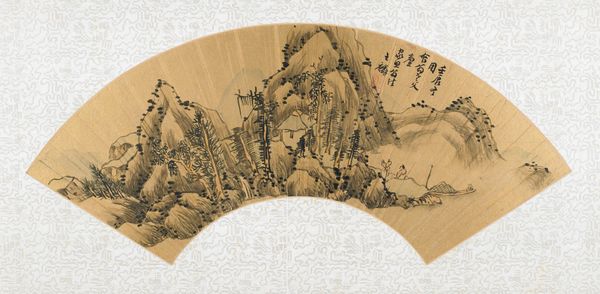
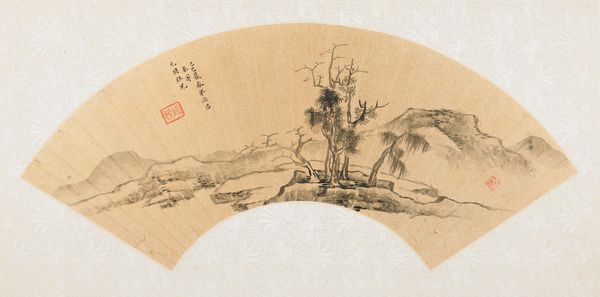
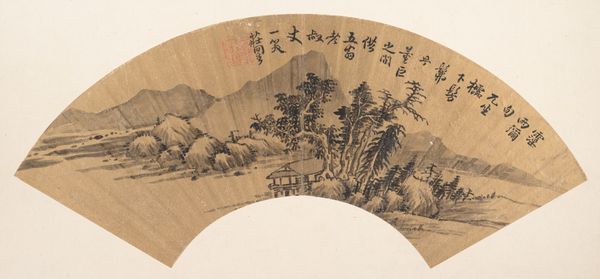
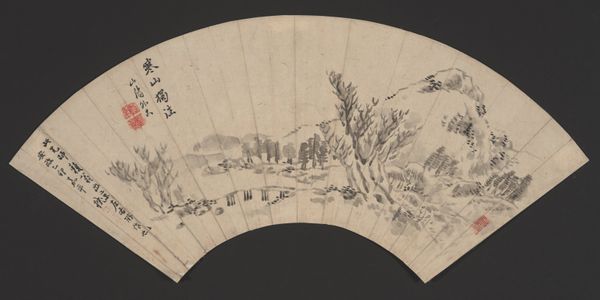
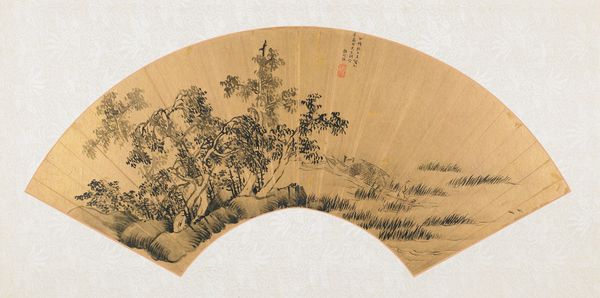
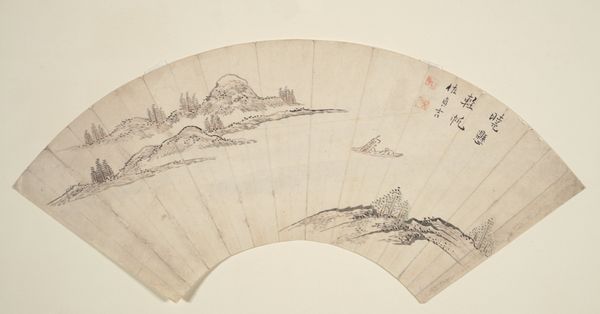
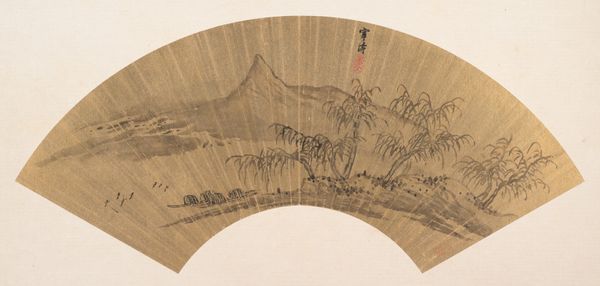
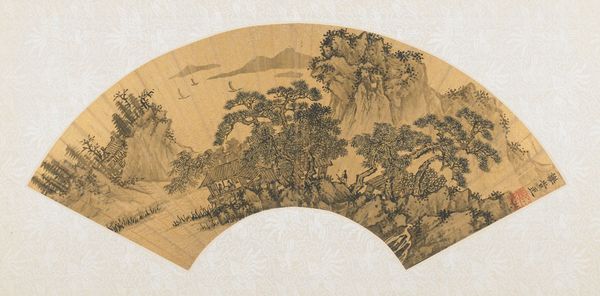
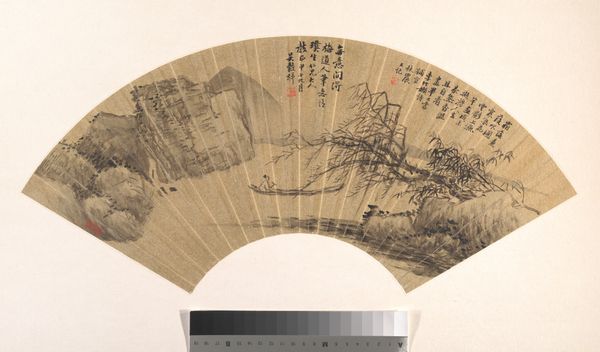
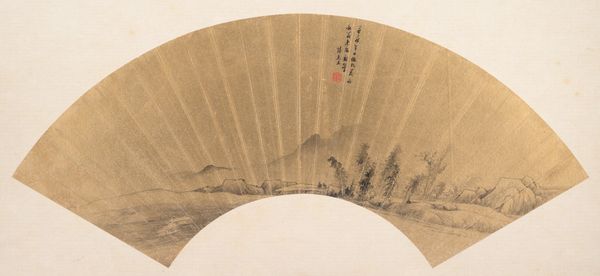
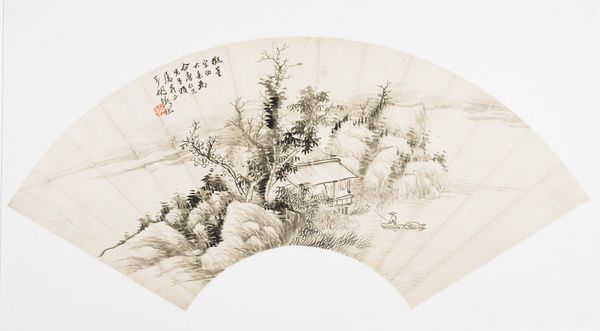
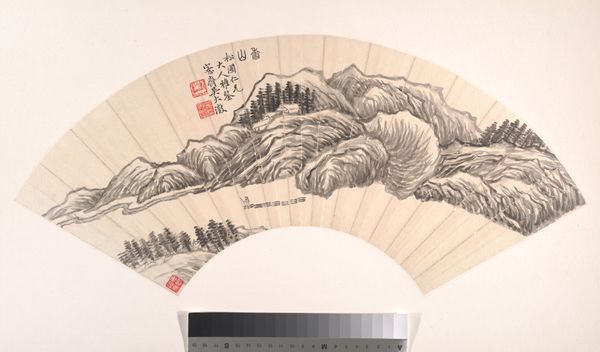
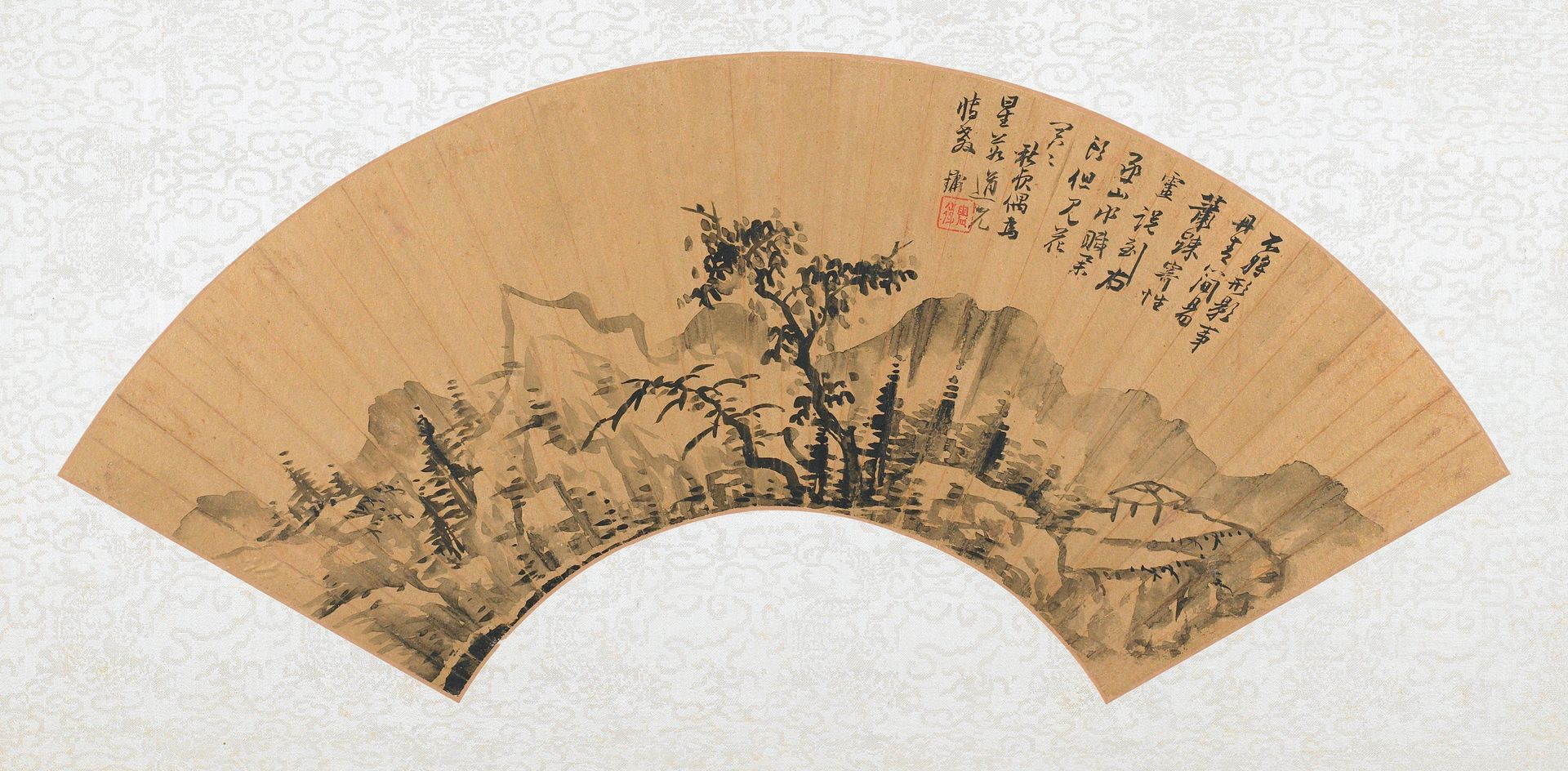
Editor: Here we have Xiang Shengmo’s “Landscape,” created around the 17th century, a watercolor painting currently housed in the Minneapolis Institute of Art. It's presented in this elegant fan shape, which lends a unique perspective to the scene. The mountains feel both imposing and somehow gentle in their rendering. How do you read a piece like this? Curator: This "Landscape" reflects the profound connection between art, politics, and social structures within the Chinese literati culture. Such paintings, presented on fans, were often exchanged within circles of educated elites. They served as symbols of refined taste, but also carried ideological weight. Consider the idealized natural world depicted – does this landscape reinforce or perhaps critique existing power dynamics of that era? Editor: Critique? I hadn’t considered it. How would an image of nature be seen as critical? Curator: The 'escape' into nature, so elegantly presented here, could be interpreted as a commentary on the increasingly complex and perhaps corrupt political world. The choice of such a portable, intimate format like a fan also suggests a sense of personal reflection, a deliberate withdrawal from the grand public stage. Do you see this personal expression reflected in the brushstrokes themselves? Editor: I see how the delicacy, especially in the rendering of the trees and distant mountains, creates that feeling. So, is the museum displaying this fan presenting a certain narrative too? Curator: Absolutely. Museums aren’t neutral spaces. By displaying this fan, highlighting its aesthetic qualities and historical significance, the museum actively participates in constructing our understanding of Chinese art, and by extension, Chinese culture. Think about how its display differs from its original intimate use, changing how the artwork is valued and interpreted. Editor: It is like the fan goes from private enjoyment to public symbol. Thanks, I learned a lot today. Curator: Likewise. Examining art through this socio-political lens makes us aware of the power of imagery.