About this artwork
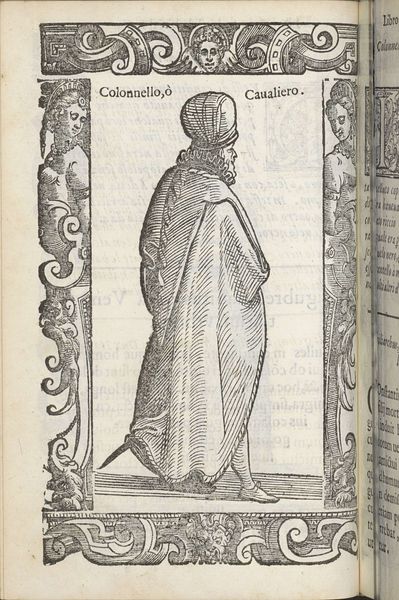
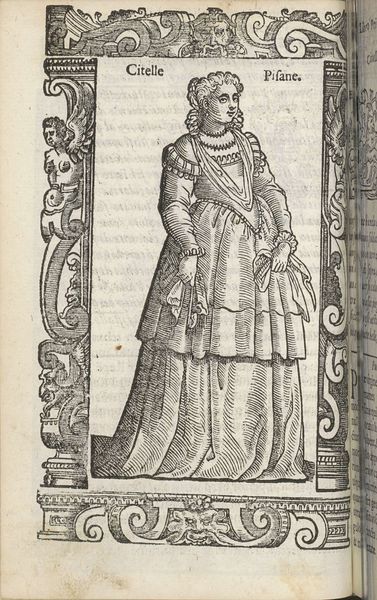
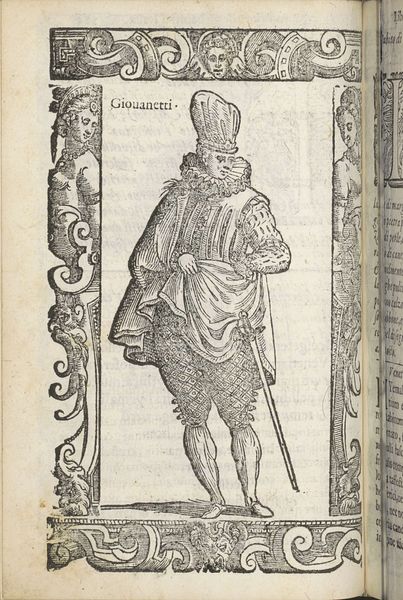
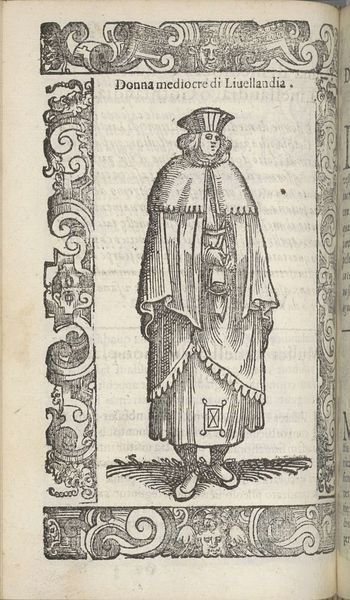
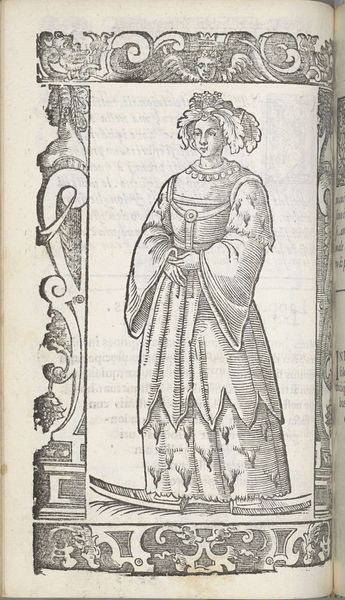
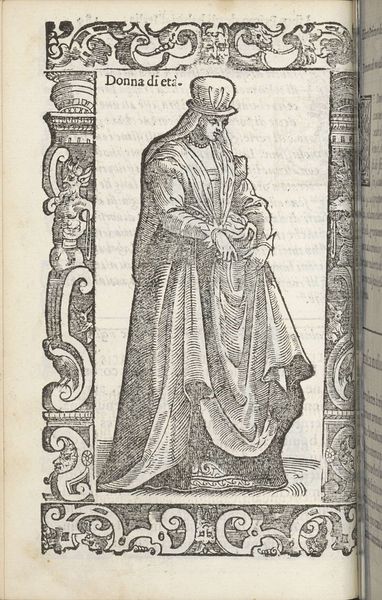
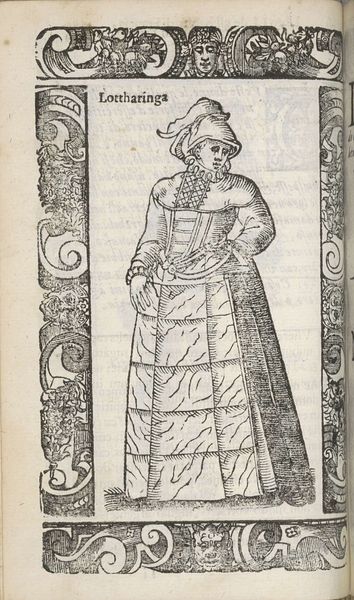
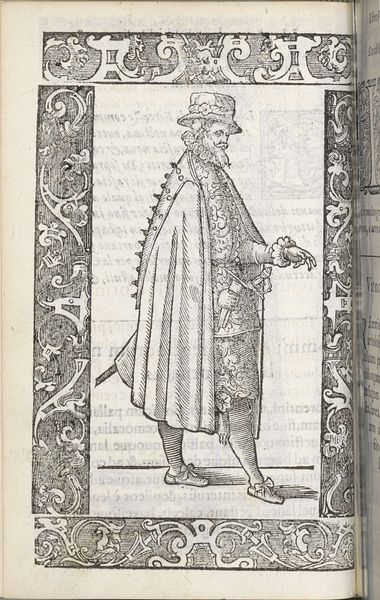
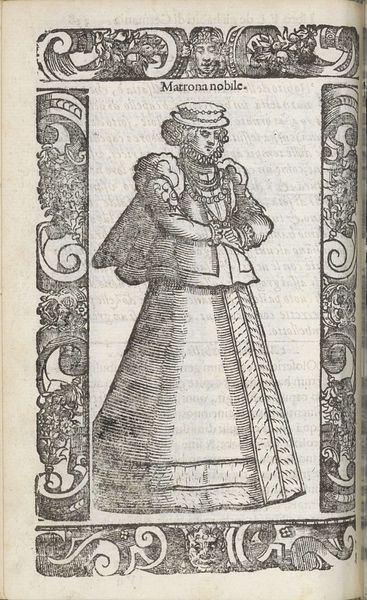
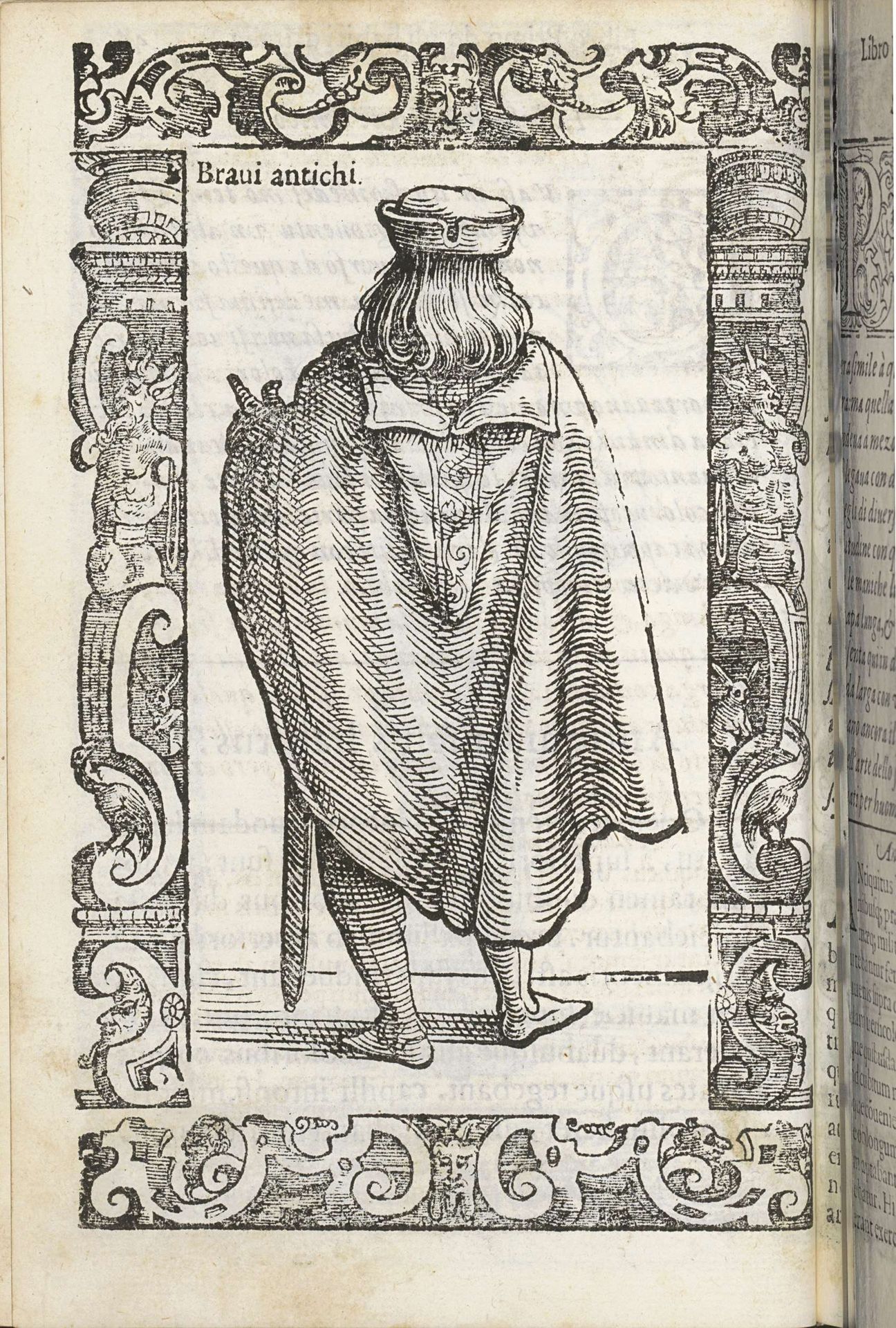
This is a woodcut by Christoph Krieger, titled 'Bravi antichi', which presents a figure from the back, framed within an ornate, symbolic border. The man, likely a mercenary or 'bravo,' is distinguished by his cape and the sword at his side, emblems of power and readiness. The decorative border is rife with symbolic motifs. Notice the grotesque masks reminiscent of ancient theater, evoking a sense of drama and perhaps deceit, fitting for the character depicted. These masks are not merely decorative; they are vestiges of antiquity, reappearing throughout the Renaissance as symbols of classical learning and the darker aspects of human nature. Consider the mask’s evolution from Dionysian rituals to becoming a recurring motif in Renaissance art. Here, it’s not just an ornament but an echo of primal instincts, subtly suggesting the 'bravo's' own mask—hiding intentions, stirring subconscious associations of danger. This visual language engages us, tapping into a collective memory, a shared understanding of symbols that have persisted and transformed across ages.

Artwork details
- Medium
- print, engraving
- Dimensions
- height 167 mm, width 125 mm
- Copyright
- Rijks Museum: Open Domain
Tags
medieval
pen sketch
pencil sketch
figuration
engraving
Comments
No comments
About this artwork
This is a woodcut by Christoph Krieger, titled 'Bravi antichi', which presents a figure from the back, framed within an ornate, symbolic border. The man, likely a mercenary or 'bravo,' is distinguished by his cape and the sword at his side, emblems of power and readiness. The decorative border is rife with symbolic motifs. Notice the grotesque masks reminiscent of ancient theater, evoking a sense of drama and perhaps deceit, fitting for the character depicted. These masks are not merely decorative; they are vestiges of antiquity, reappearing throughout the Renaissance as symbols of classical learning and the darker aspects of human nature. Consider the mask’s evolution from Dionysian rituals to becoming a recurring motif in Renaissance art. Here, it’s not just an ornament but an echo of primal instincts, subtly suggesting the 'bravo's' own mask—hiding intentions, stirring subconscious associations of danger. This visual language engages us, tapping into a collective memory, a shared understanding of symbols that have persisted and transformed across ages.
Comments
No comments