About this artwork
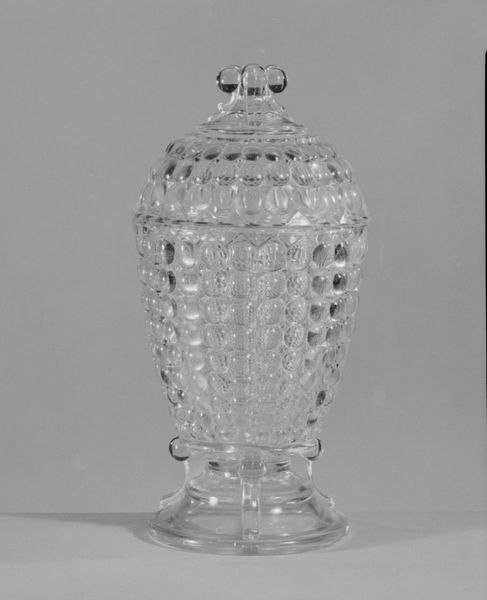
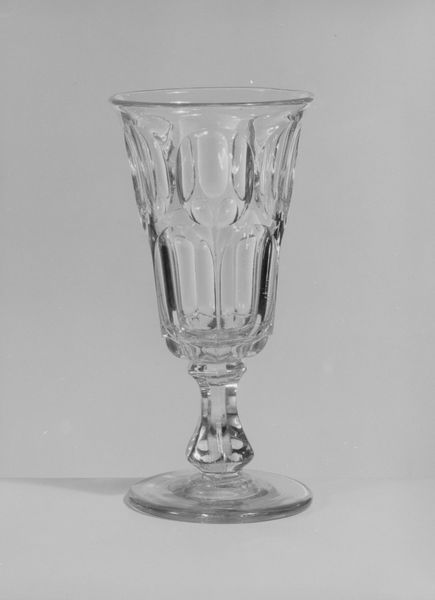
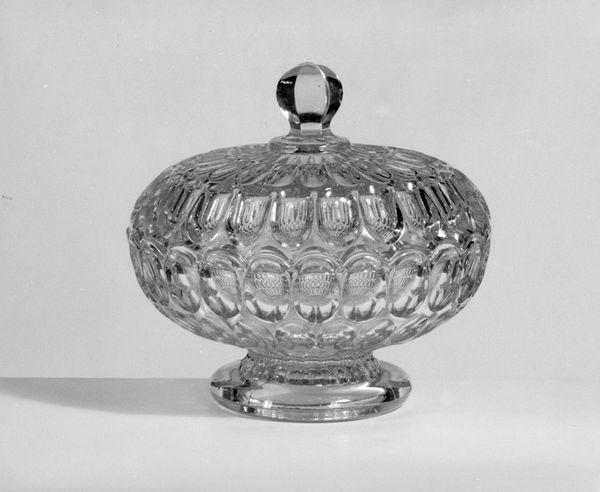
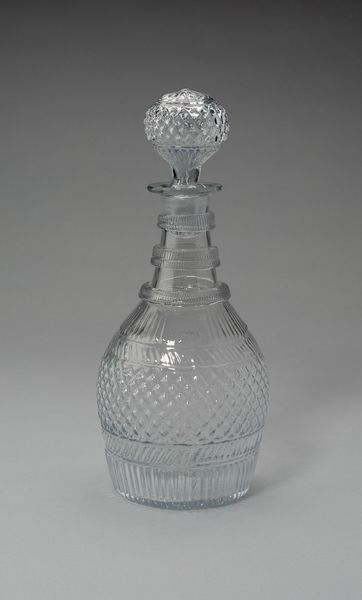
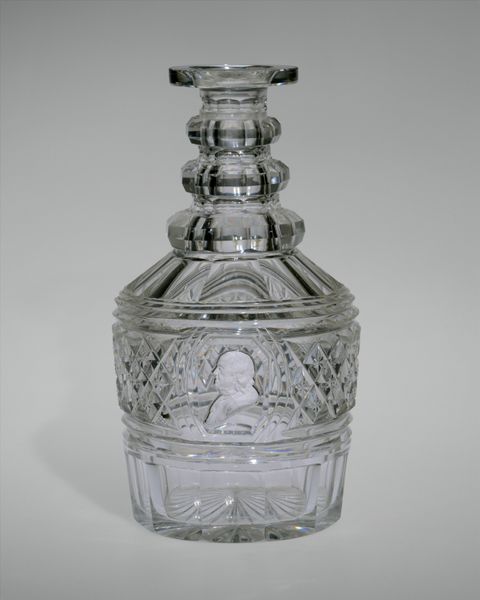
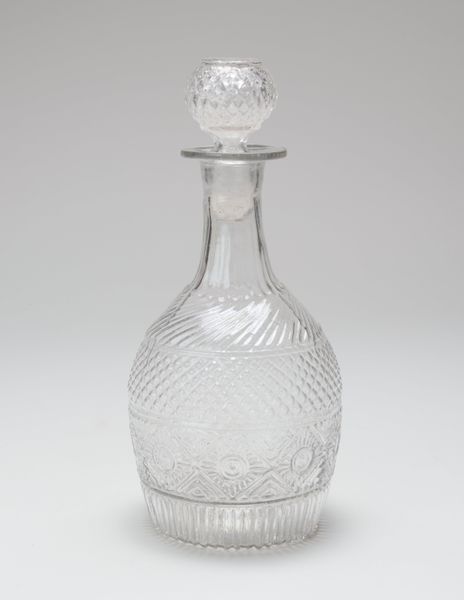
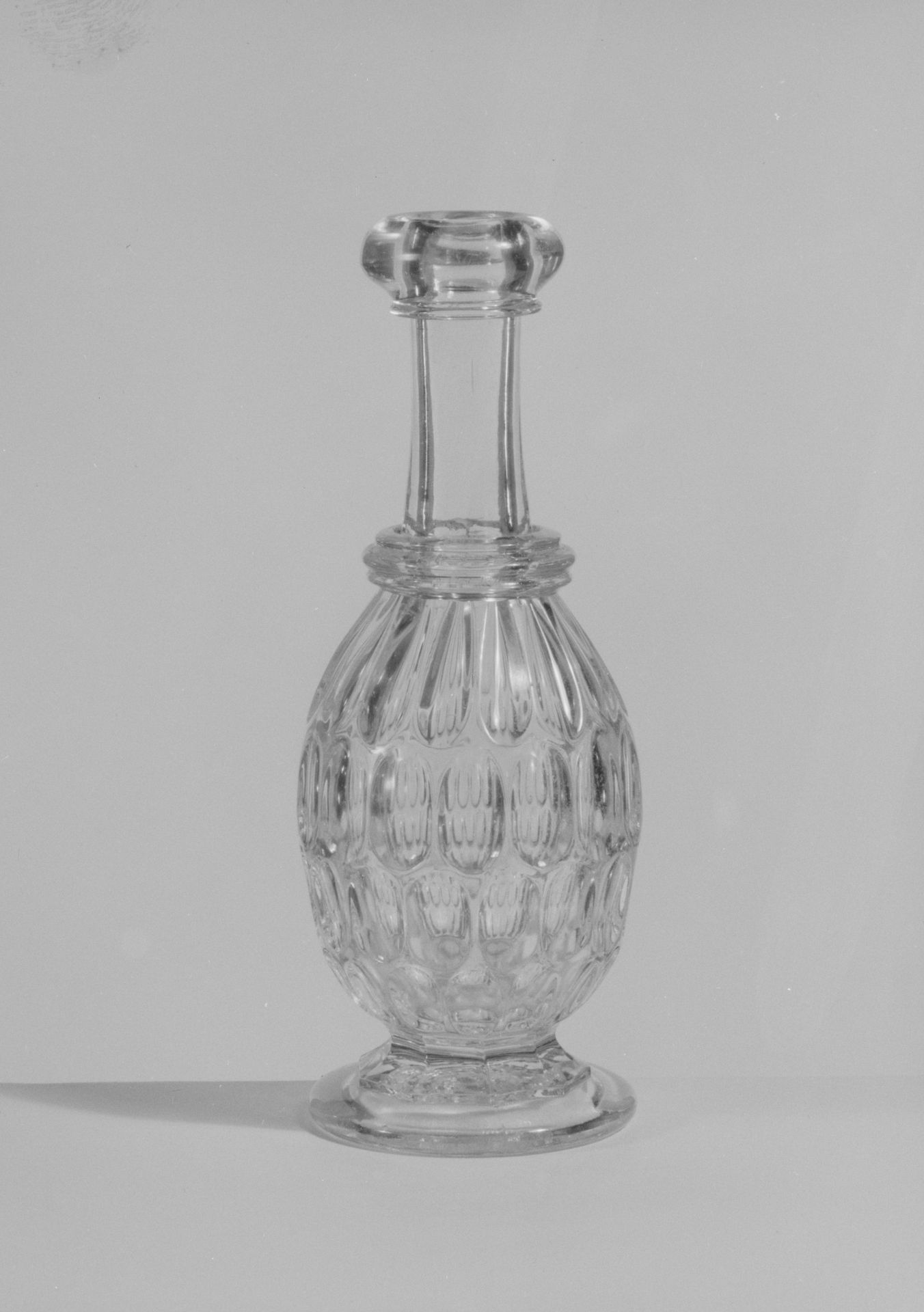
This glass bitters bottle was made by Bakewell, Pears and Company, who were based in Pittsburgh, Pennsylvania. It’s made of clear molded glass, a material which has been heated to a molten state and then shaped within a mold. The bottle is an example of early American glass production during a period of rapid industrialization. The molded pattern creates a textured surface that refracts light, offering visual appeal to what might otherwise be a functional object. This type of decoration would have been relatively quick to produce, and so it offered an affordable alternative to hand-cut glass. The labor and industrial processes involved in its manufacture contrast with traditional fine art. Objects like this blur the lines between mass production and artistic creation. By considering the context of its making, we can appreciate this bottle not just for its form, but also for its place in the history of American industry and design.
Bitters Bottle
1850 - 1870

Bakewell, Pears and Company
1836 - 1882
The Metropolitan Museum of Art
Metropolitan Museum of Art, New York, NYArtwork details
- Medium
- photography, glass
- Dimensions
- H. 6 9/16 in. (16.7 cm)
- Location
- Metropolitan Museum of Art, New York, NY
- Copyright
- Public Domain
Tags
Comments
Share your thoughts
About this artwork
This glass bitters bottle was made by Bakewell, Pears and Company, who were based in Pittsburgh, Pennsylvania. It’s made of clear molded glass, a material which has been heated to a molten state and then shaped within a mold. The bottle is an example of early American glass production during a period of rapid industrialization. The molded pattern creates a textured surface that refracts light, offering visual appeal to what might otherwise be a functional object. This type of decoration would have been relatively quick to produce, and so it offered an affordable alternative to hand-cut glass. The labor and industrial processes involved in its manufacture contrast with traditional fine art. Objects like this blur the lines between mass production and artistic creation. By considering the context of its making, we can appreciate this bottle not just for its form, but also for its place in the history of American industry and design.
Comments
Share your thoughts