About this artwork
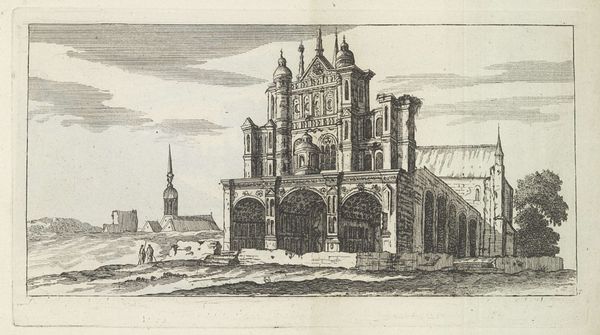
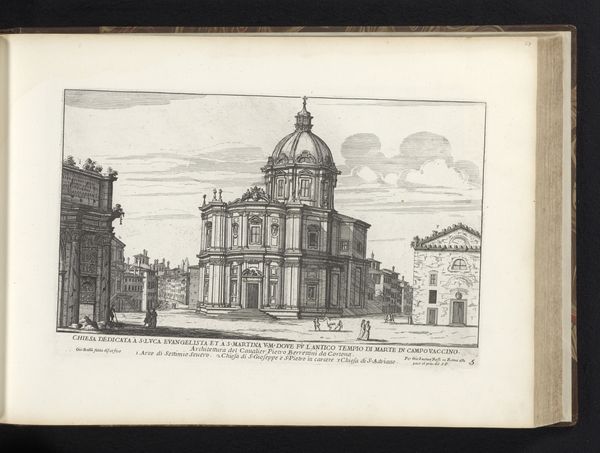
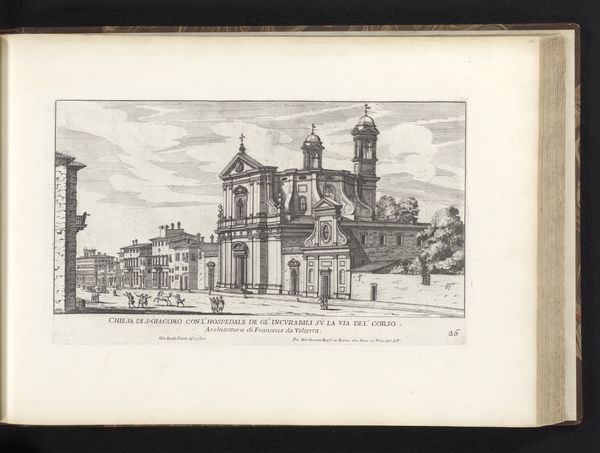
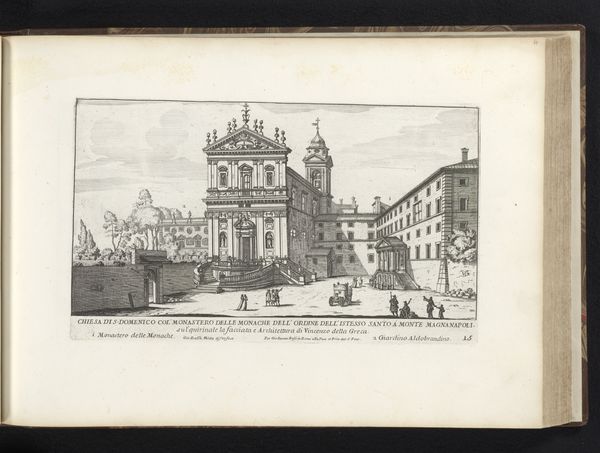
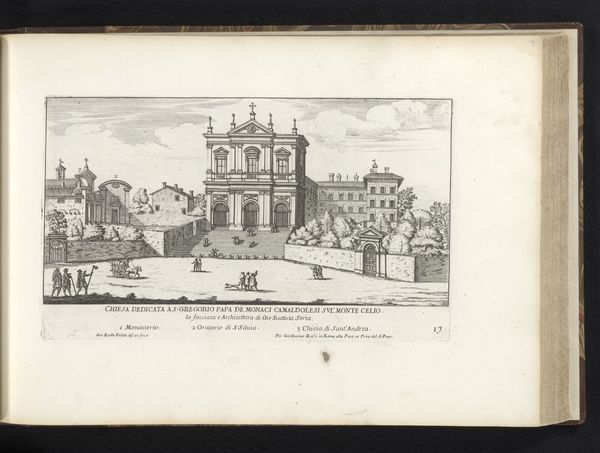
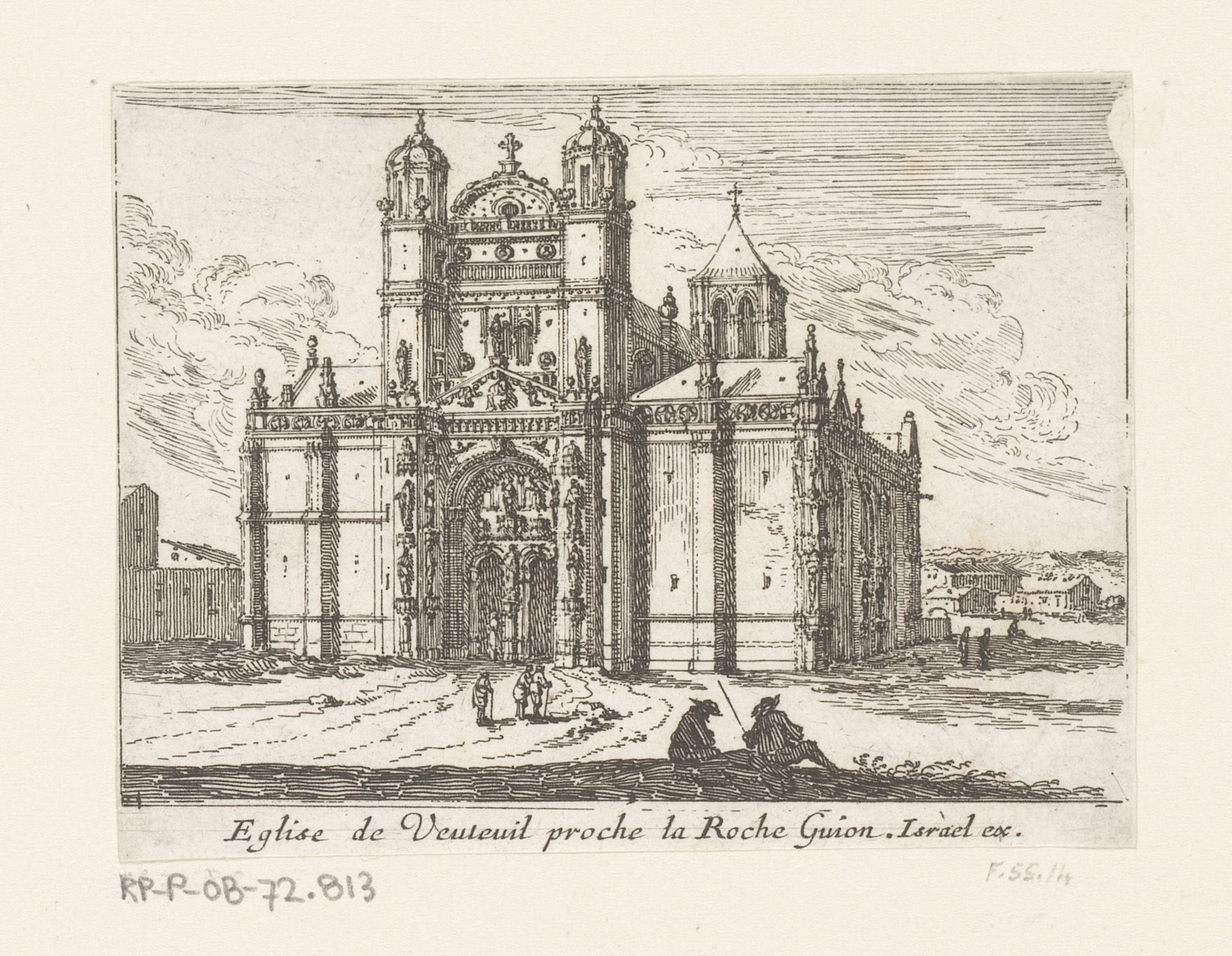
Editor: Here we have "Gezicht op de kerk van Venteuil," an etching and engraving by Israel Silvestre, created sometime between 1631 and 1661. It’s got a cool, graphic quality because of the medium… What stands out to you when you look at this print? Curator: I’m immediately drawn to the process and the implied labor. Consider the act of creating such detail through etching and engraving. It speaks to a particular kind of artisanal skill, right? Before industrialization, images like this were luxury goods, embodying both artistic and manual capital. Editor: Definitely. So the act of creating the image gives it its value, in a way. I see the artist is depicting a grand building. Does the church influence our interpretation of its meaning as a luxury good? Curator: Precisely. This is no simple town church. It signals power, status, and the dominant ideology of the period. But look closer at those tiny figures populating the foreground. What do you think their relationship to the church and its production of cultural significance is? Editor: I see what you mean. They almost seem secondary to the architectural construction, part of the scenery in some sense, perhaps alluding to an entire network of individuals involved with constructing and supporting the structure and surrounding society. Curator: Exactly! By depicting the Church and everyday life with etching and engraving processes, Israel subtly critiques conventional views about the artist's craft by engaging manual work. How might this piece resonate differently if it were a painting instead of an engraving? Editor: Hmm. That's an interesting question. The fact that it is a print implies wider dissemination and production that might change the understanding of art and accessibility today, particularly thinking about how the digital age mediates art viewership and access. Thanks, this was so interesting. Curator: My pleasure. Recognizing the embedded labor helps to disrupt assumptions around authorship, artistic production, and class.

Artwork details
- Medium
- print, etching, engraving, architecture
- Dimensions
- height 84 mm, width 110 mm
- Location
- Rijksmuseum
- Copyright
- Rijks Museum: Open Domain
Tags
baroque
etching
old engraving style
cityscape
engraving
architecture
Comments
No comments
About this artwork
Editor: Here we have "Gezicht op de kerk van Venteuil," an etching and engraving by Israel Silvestre, created sometime between 1631 and 1661. It’s got a cool, graphic quality because of the medium… What stands out to you when you look at this print? Curator: I’m immediately drawn to the process and the implied labor. Consider the act of creating such detail through etching and engraving. It speaks to a particular kind of artisanal skill, right? Before industrialization, images like this were luxury goods, embodying both artistic and manual capital. Editor: Definitely. So the act of creating the image gives it its value, in a way. I see the artist is depicting a grand building. Does the church influence our interpretation of its meaning as a luxury good? Curator: Precisely. This is no simple town church. It signals power, status, and the dominant ideology of the period. But look closer at those tiny figures populating the foreground. What do you think their relationship to the church and its production of cultural significance is? Editor: I see what you mean. They almost seem secondary to the architectural construction, part of the scenery in some sense, perhaps alluding to an entire network of individuals involved with constructing and supporting the structure and surrounding society. Curator: Exactly! By depicting the Church and everyday life with etching and engraving processes, Israel subtly critiques conventional views about the artist's craft by engaging manual work. How might this piece resonate differently if it were a painting instead of an engraving? Editor: Hmm. That's an interesting question. The fact that it is a print implies wider dissemination and production that might change the understanding of art and accessibility today, particularly thinking about how the digital age mediates art viewership and access. Thanks, this was so interesting. Curator: My pleasure. Recognizing the embedded labor helps to disrupt assumptions around authorship, artistic production, and class.
Comments
No comments