About this artwork
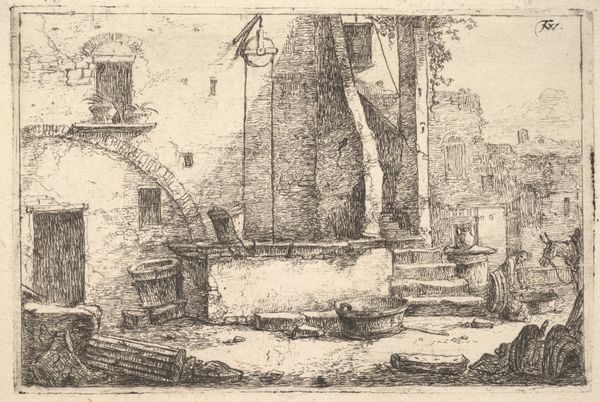
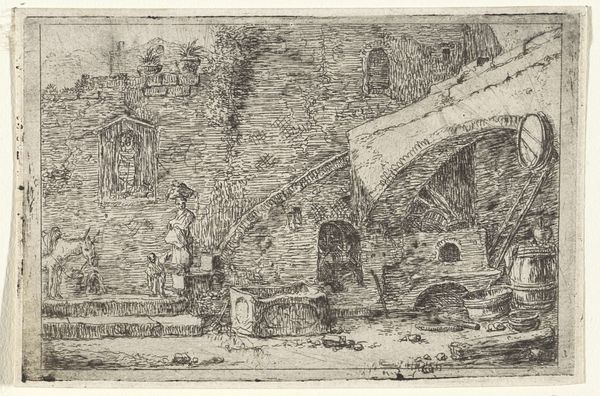
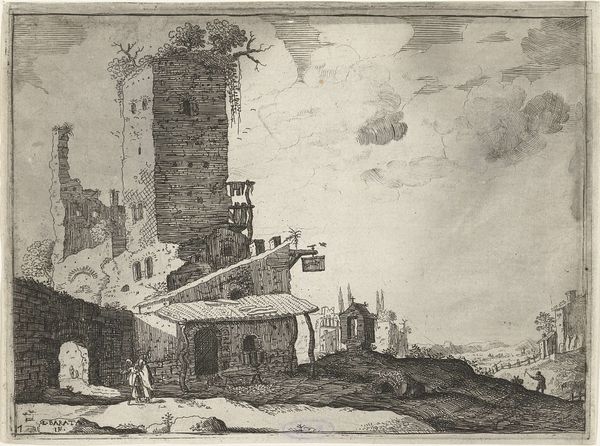
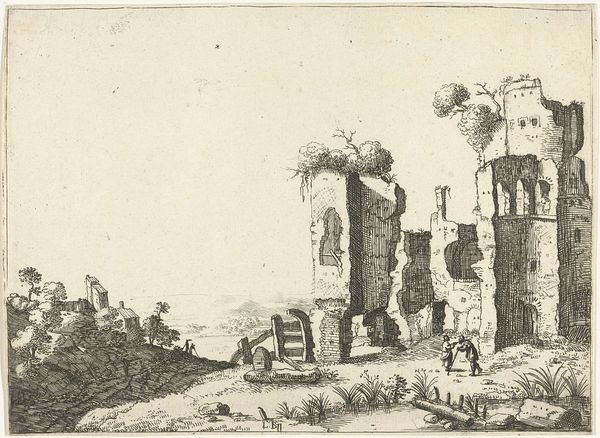
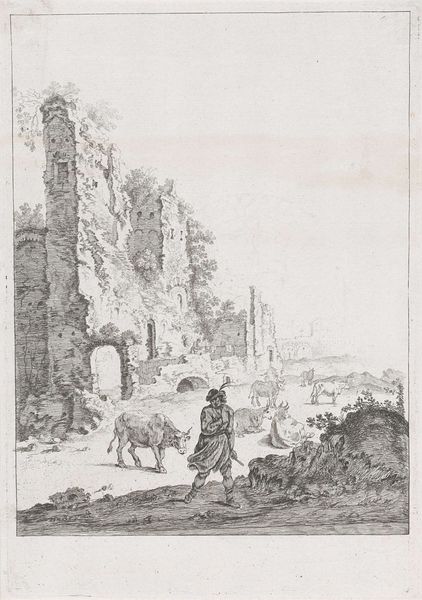
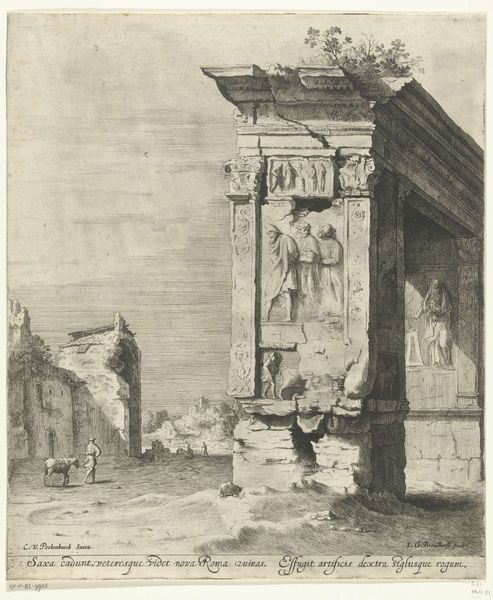
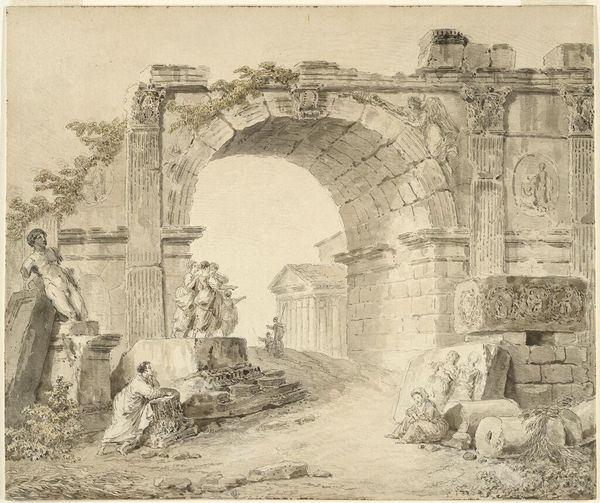
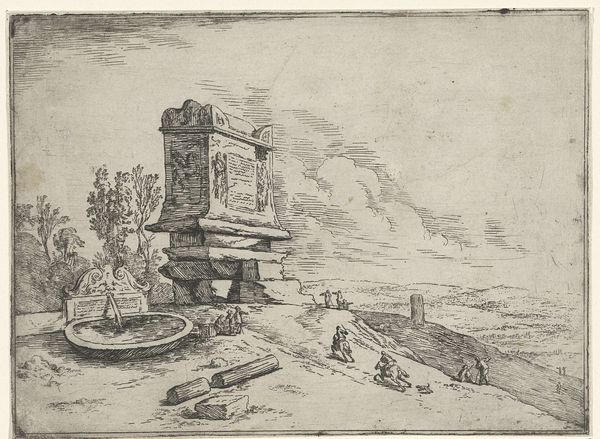
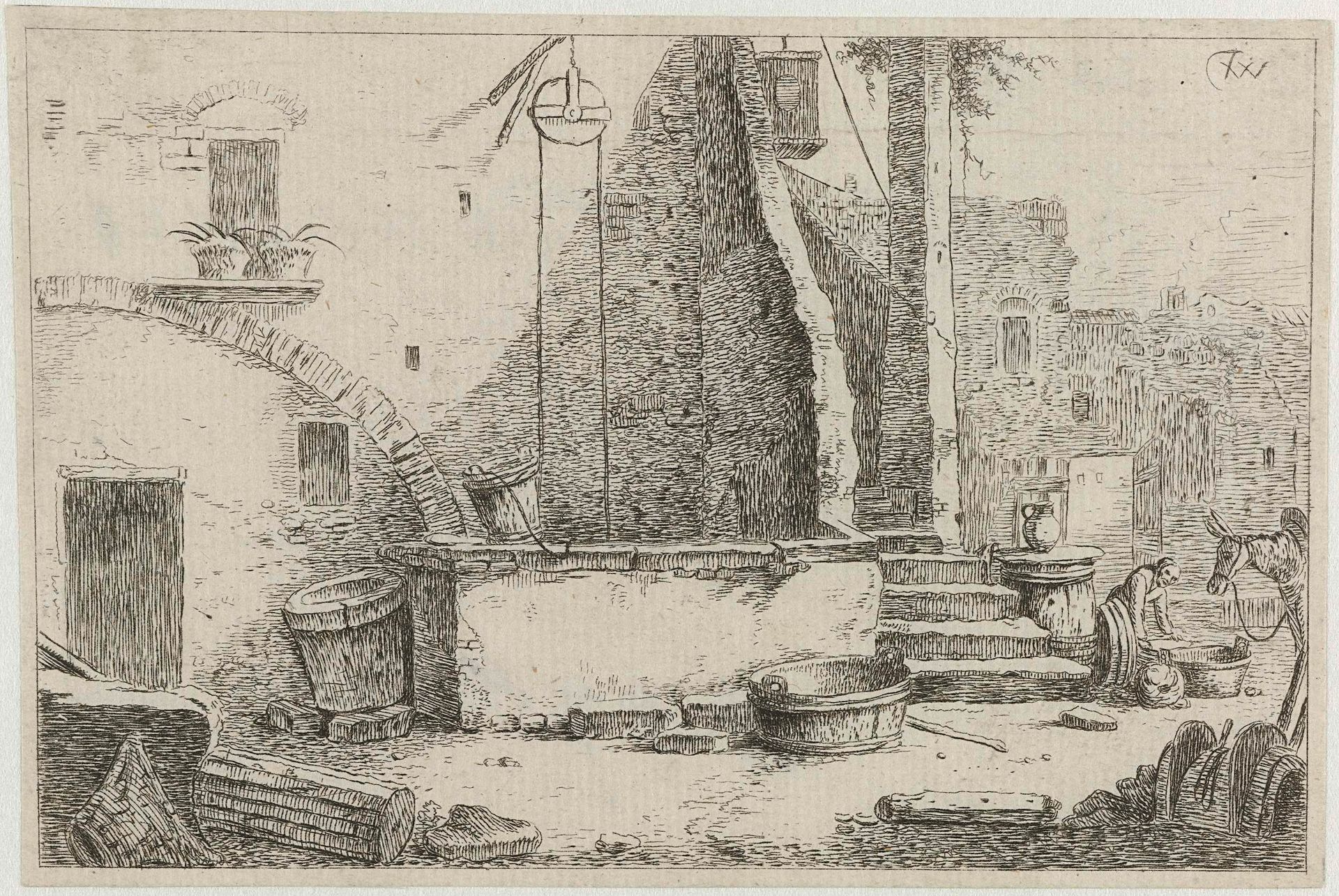
Thomas Wijck created this etching, "Waterput bij een huis," which translates to "Well at a house" in English, during the Dutch Golden Age, a period of immense economic and cultural growth for the Netherlands. The image presents a scene of daily life centered around a well, a crucial communal resource. Made in the 17th century, this work reflects a growing interest in the domestic sphere and everyday life, particularly among the Dutch middle class. You see the presence of classical ruins, which could suggest the influence of Italian art and architecture on Dutch art during this period. Dutch artists were travelling to Italy and absorbing classical influences but, perhaps more importantly, were learning how to represent an idealised version of ‘everyday’ life. Historians can use inventories, account books, and other primary sources to understand how art was made, bought, and displayed, as well as how it was understood by its original audience. The cultural and institutional contexts are crucial in understanding the artwork's place in society.

Artwork details
- Medium
- etching
- Dimensions
- height 80 mm, width 118 mm
- Location
- Rijksmuseum
- Copyright
- Rijks Museum: Open Domain
Tags
Comments
Share your thoughts
About this artwork
Thomas Wijck created this etching, "Waterput bij een huis," which translates to "Well at a house" in English, during the Dutch Golden Age, a period of immense economic and cultural growth for the Netherlands. The image presents a scene of daily life centered around a well, a crucial communal resource. Made in the 17th century, this work reflects a growing interest in the domestic sphere and everyday life, particularly among the Dutch middle class. You see the presence of classical ruins, which could suggest the influence of Italian art and architecture on Dutch art during this period. Dutch artists were travelling to Italy and absorbing classical influences but, perhaps more importantly, were learning how to represent an idealised version of ‘everyday’ life. Historians can use inventories, account books, and other primary sources to understand how art was made, bought, and displayed, as well as how it was understood by its original audience. The cultural and institutional contexts are crucial in understanding the artwork's place in society.
Comments
Share your thoughts