About this artwork
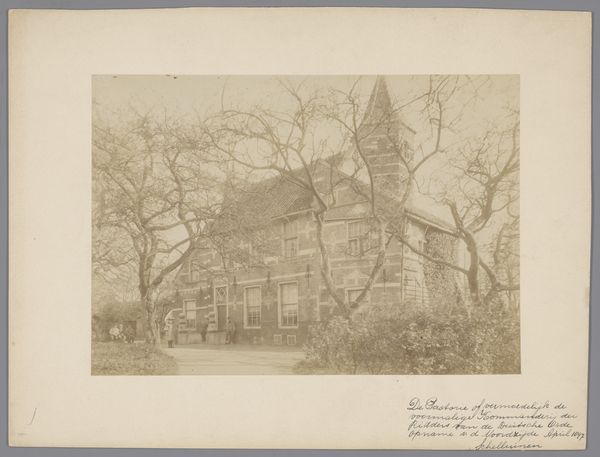
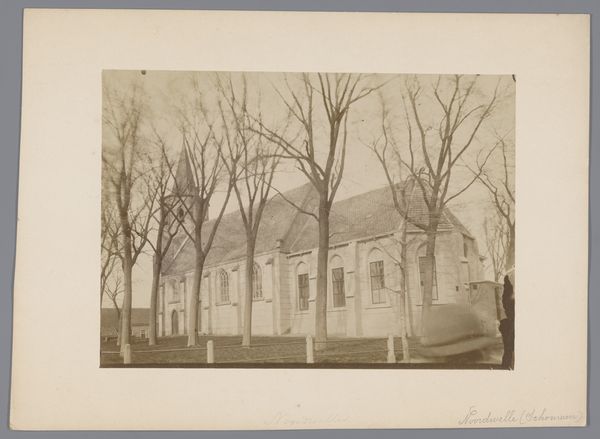
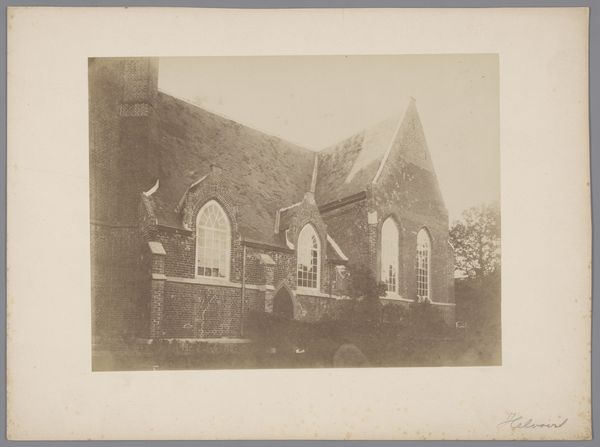
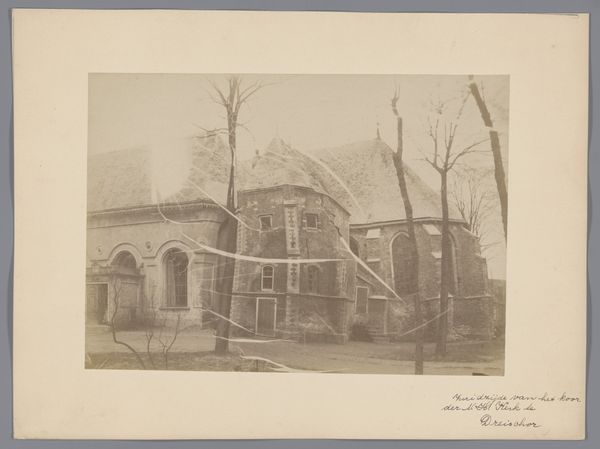
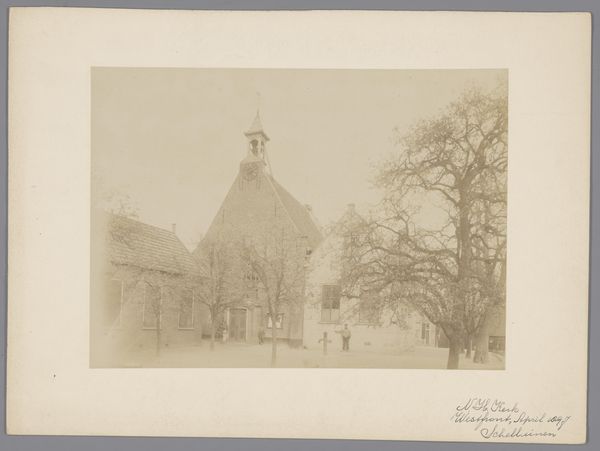
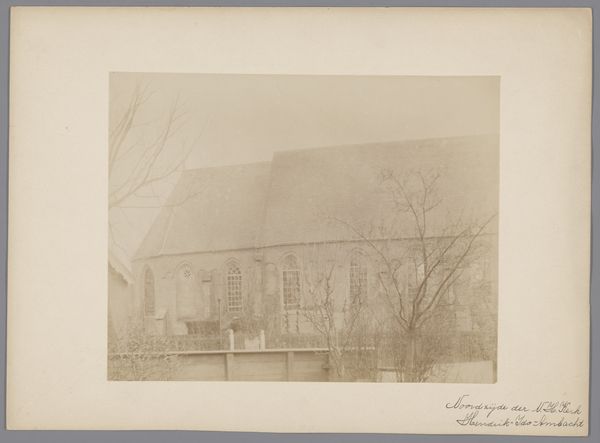
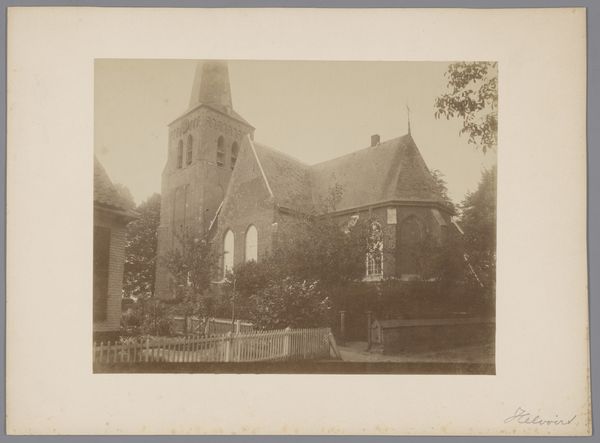
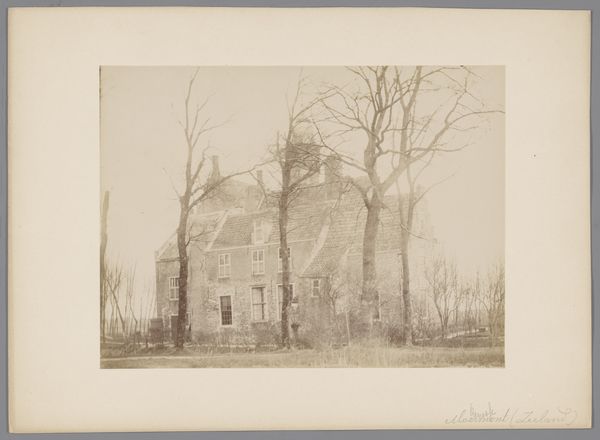
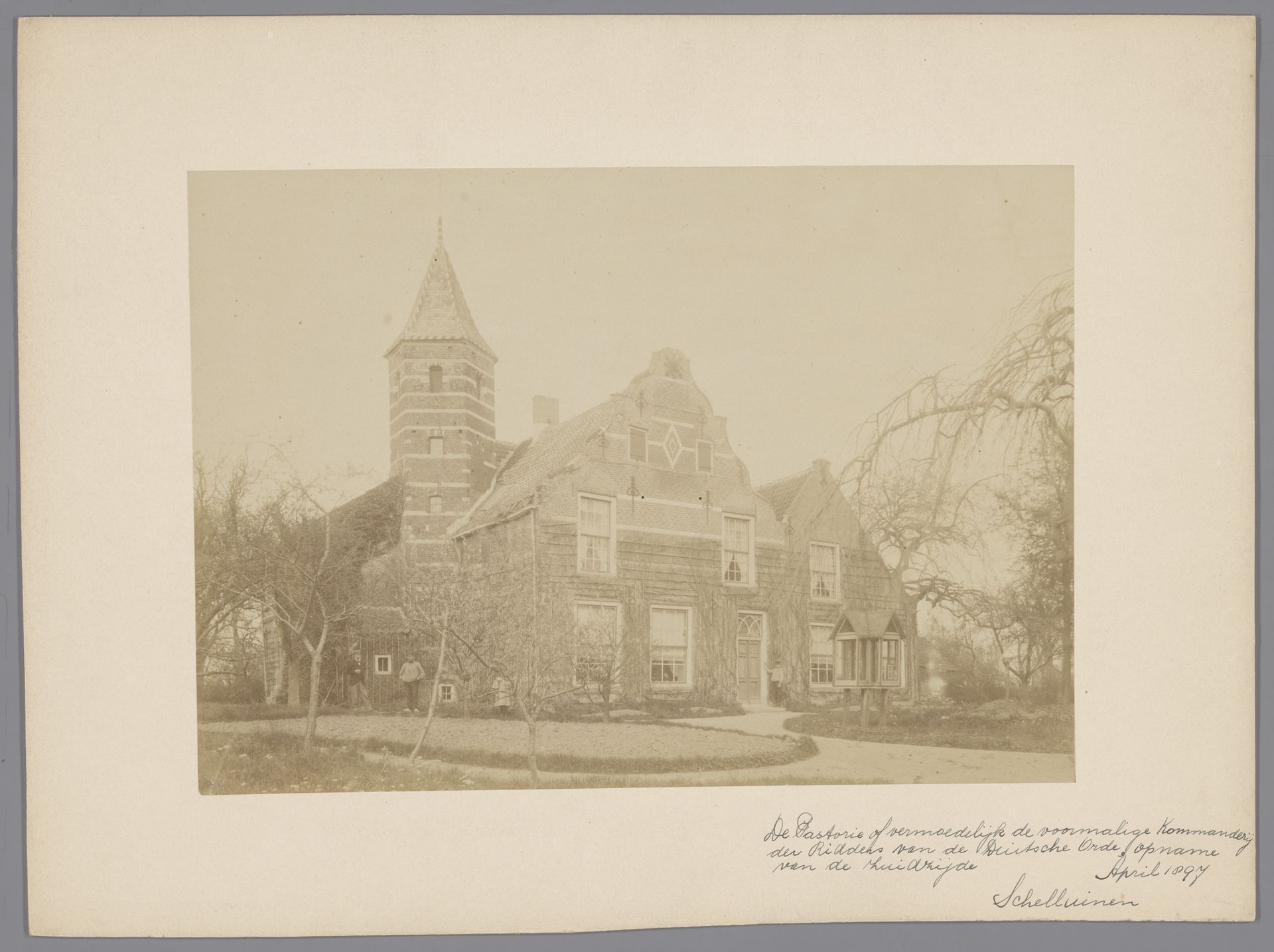
Here, we see an undated photograph titled "Gezicht op de Pastorie Hervormde Kerk te Schelluinen" by an anonymous photographer. The monochromatic print gives a textured feel, emphasizing the linear brickwork and roof tiles of the building. The photograph is structured around the prominent rectory, which commands the central space with its tower asserting a vertical counterpoint to the horizontal spread of the building. The composition balances the architectural solidity with the organic lines of the surrounding bare trees, a contrast that softens the image and hints at the building's integration with its environment. This interplay between form and context invites a semiotic reading, where the building represents stability and tradition against the natural, temporal world. The subdued palette further suggests a sense of historical continuity and the passage of time, reflecting a dialectic between permanence and change, central to cultural and architectural preservation.
Gezicht op de Pastorie Hervormde Kerk te Schelluinen
1897

Artwork details
- Dimensions
- height 163 mm, width 229 mm
- Copyright
- Rijks Museum: Open Domain
Comments
Be the first to share your thoughts about this work.
About this artwork
Here, we see an undated photograph titled "Gezicht op de Pastorie Hervormde Kerk te Schelluinen" by an anonymous photographer. The monochromatic print gives a textured feel, emphasizing the linear brickwork and roof tiles of the building. The photograph is structured around the prominent rectory, which commands the central space with its tower asserting a vertical counterpoint to the horizontal spread of the building. The composition balances the architectural solidity with the organic lines of the surrounding bare trees, a contrast that softens the image and hints at the building's integration with its environment. This interplay between form and context invites a semiotic reading, where the building represents stability and tradition against the natural, temporal world. The subdued palette further suggests a sense of historical continuity and the passage of time, reflecting a dialectic between permanence and change, central to cultural and architectural preservation.
Comments
Be the first to share your thoughts about this work.