painting, oil-paint
#
baroque
#
painting
#
oil-paint
#
sculpture
#
oil painting
#
group-portraits
#
history-painting
Copyright: Public domain
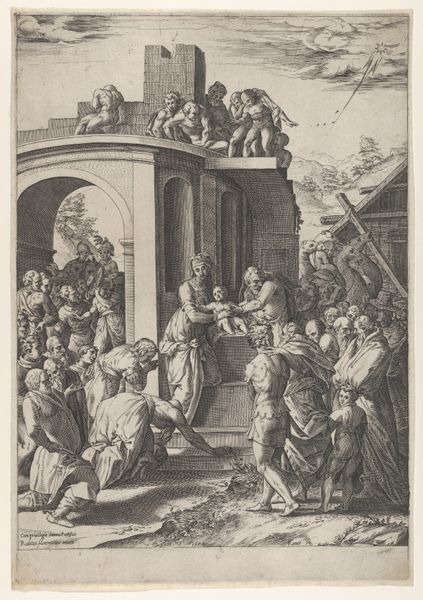
Curator: We’re standing before “Adoration of the Magi,” painted in 1595 by Bartholomeus Spranger. The biblical scene unfolds with a vibrant energy that feels very much of its time. Editor: The immediate impression is the sheer drama of it all. There’s a stage-like quality, almost as if a play is frozen mid-performance. You can almost feel the rich fabrics and heavy materials. Curator: Exactly. The opulence practically drips off the canvas. You’ve got these figures draped in lush, almost impossibly shiny, garments—that coral robe on one of the magi is especially eye-catching—presenting their treasures. It feels, dare I say, a bit decadent. Editor: It's the layering that really strikes me. All those levels, the layers of architecture in the background contrasted with those foregrounded figures - there's just so much visible labor and cost concentrated on this one scene of veneration. And the artist's craft—look at how the light dances off those meticulously rendered fabrics and jewels. It's designed to be consumed with your eyes first, perhaps more so than considered spiritually. Curator: Perhaps. Spranger had a real knack for infusing even religious subjects with this courtly sensuality, a kind of theatrical extravagance. He’s playing with the idea of reverence, but there’s also this subtle hint of… well, spectacle. It’s almost as if he is staging a dream about power, exoticism, and faith itself. It makes you wonder, what do these precious gifts symbolize? What is their raw material origin? What had to occur in the process to have those offerings exist? Editor: It’s fascinating how he bridges the divine and the tangible, focusing on those elements over some deeper meaning behind such an event. In doing so, he also highlights how the cost and labor, like this piece, are commodities in service of glorifying a faith or regime. The value then isn't just religious, but political. Curator: So, looking closer, past the immediate grandeur, it does leave us pondering the weight of all that wealth… and perhaps the intentions behind its display. Editor: It's a thought to linger on as we appreciate the craftsmanship but consider its context.
Comments
No comments
Be the first to comment and join the conversation on the ultimate creative platform.
 Collect
 React
React Comment
More like this