About this artwork
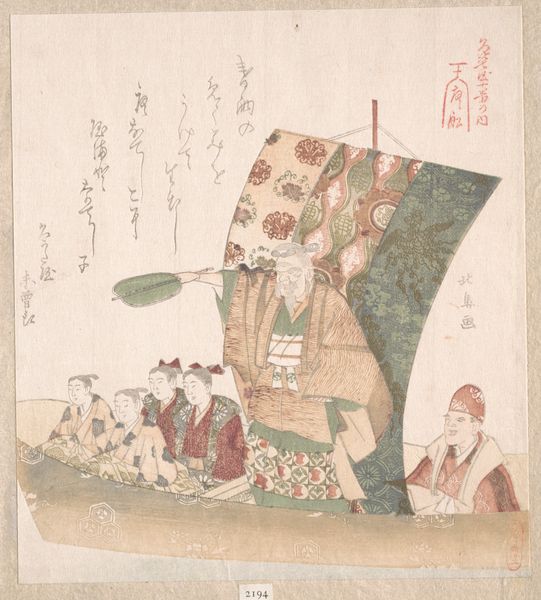
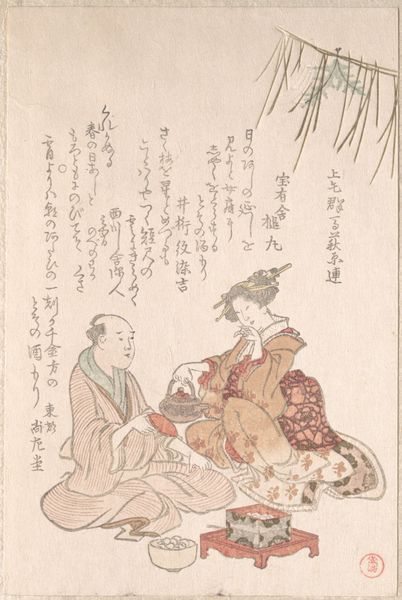
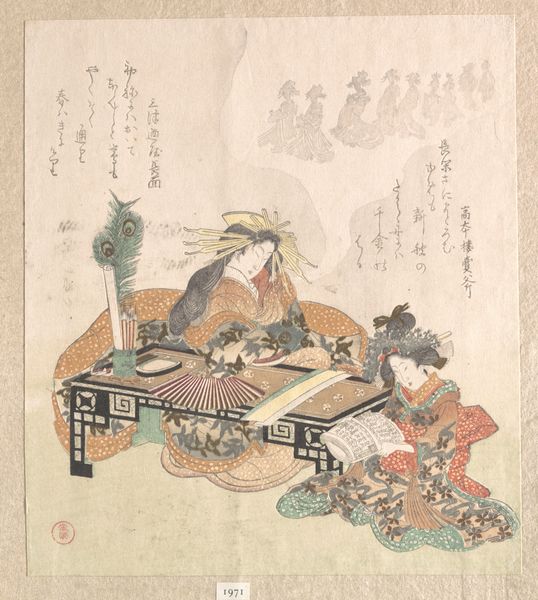
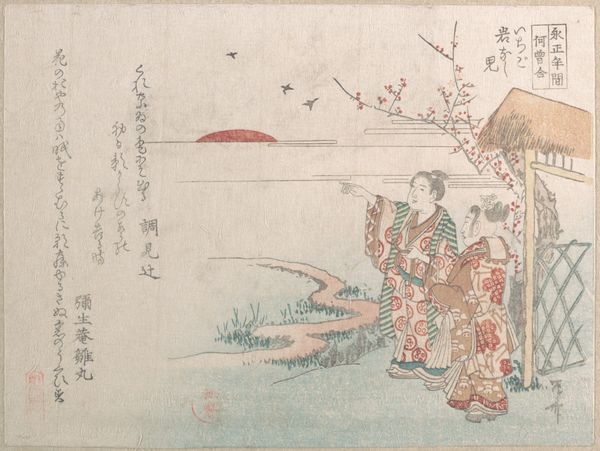
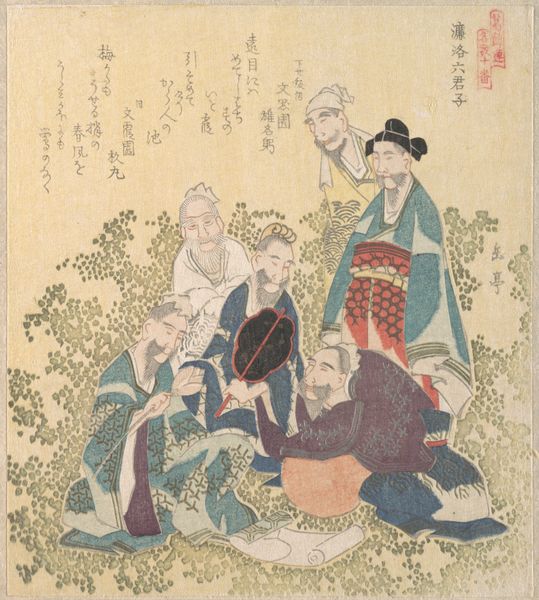
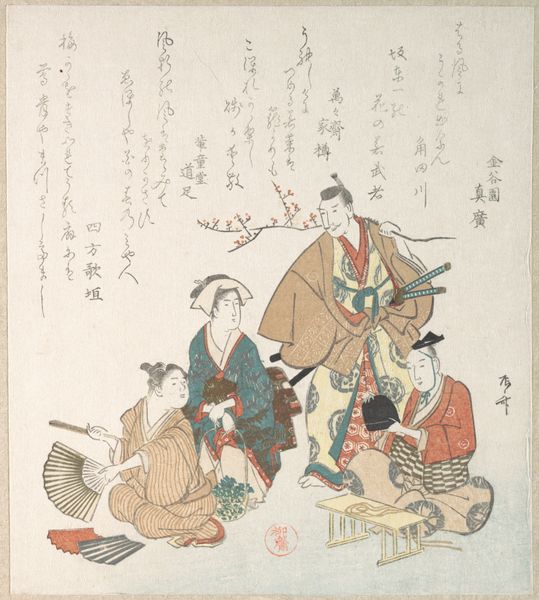
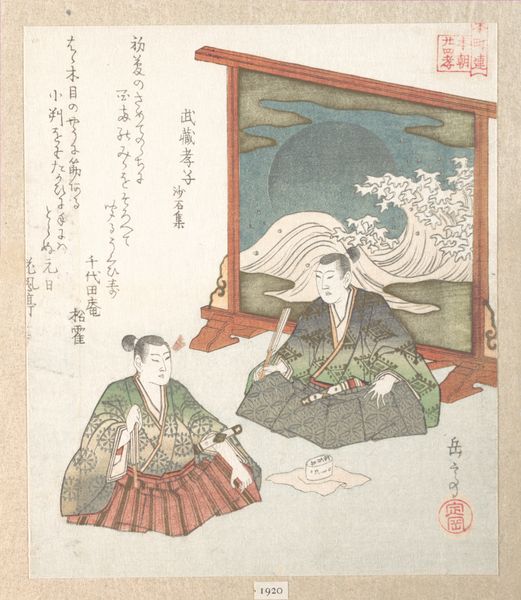
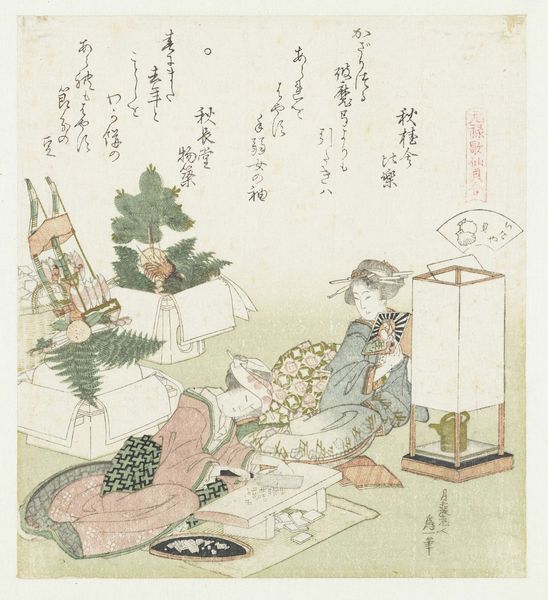
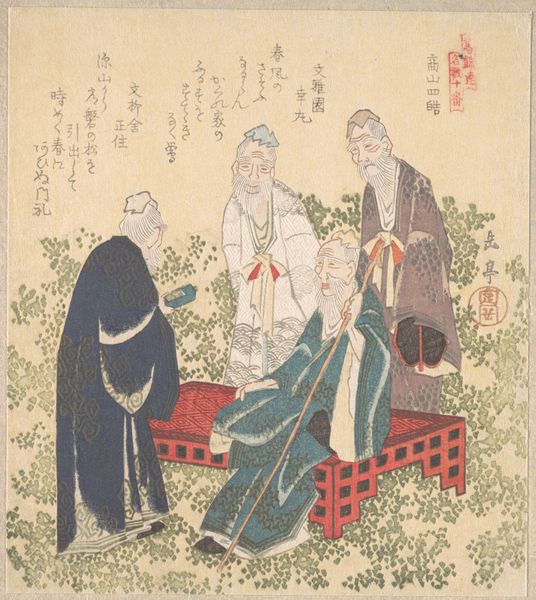
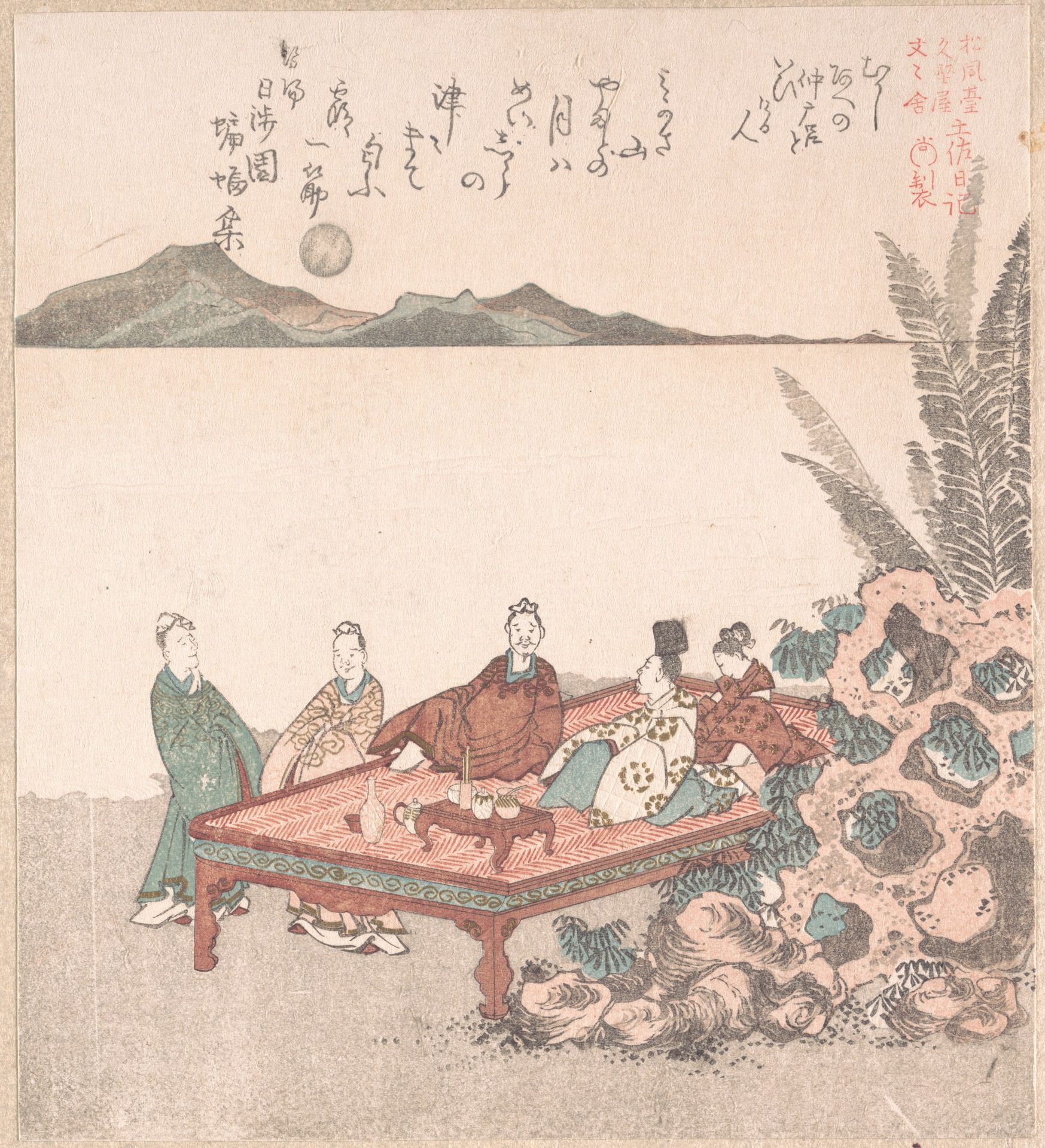
Kubo Shunman created this woodblock print called "Nanamaro and His Followers Looking at the Moon in China" sometime in the late 18th or early 19th century. It depicts a group of figures gathered on a platform, gazing at the moon over a landscape. Woodblock prints like this one were part of a thriving urban culture in Japan. The floating world, or ukiyo, was a cultural sphere including artists, publishers, and consumers. This print draws heavily on Chinese imagery, with the figures resembling Chinese scholars. Japan's elite at this time were deeply interested in Chinese culture, especially philosophical and artistic traditions. This print can be seen as a kind of cultural appropriation. By representing Japanese figures in a Chinese setting, Shunman suggests that Japanese intellectuals had inherited Chinese traditions. A historian of art would ask, was this image a comment on the changing social structures of Japan at the time? Was it self-consciously conservative or progressive? To understand this print better, we can research the history of Japanese printmaking, the circulation of Chinese ideas in Japan, and the social context of the ukiyo.
Nanamaro and His Followers Looking at the Moon in China 19th century


Artwork details
- Medium
- Dimensions
- 8 x 7 3/16 in. (20.3 x 18.3 cm)
- Location
- Metropolitan Museum of Art, New York, NY
- Copyright
- Public Domain
Tags
asian-art
landscape
ukiyo-e
genre-painting
Comments
No comments
About this artwork
Kubo Shunman created this woodblock print called "Nanamaro and His Followers Looking at the Moon in China" sometime in the late 18th or early 19th century. It depicts a group of figures gathered on a platform, gazing at the moon over a landscape. Woodblock prints like this one were part of a thriving urban culture in Japan. The floating world, or ukiyo, was a cultural sphere including artists, publishers, and consumers. This print draws heavily on Chinese imagery, with the figures resembling Chinese scholars. Japan's elite at this time were deeply interested in Chinese culture, especially philosophical and artistic traditions. This print can be seen as a kind of cultural appropriation. By representing Japanese figures in a Chinese setting, Shunman suggests that Japanese intellectuals had inherited Chinese traditions. A historian of art would ask, was this image a comment on the changing social structures of Japan at the time? Was it self-consciously conservative or progressive? To understand this print better, we can research the history of Japanese printmaking, the circulation of Chinese ideas in Japan, and the social context of the ukiyo.
Comments
No comments