About this artwork
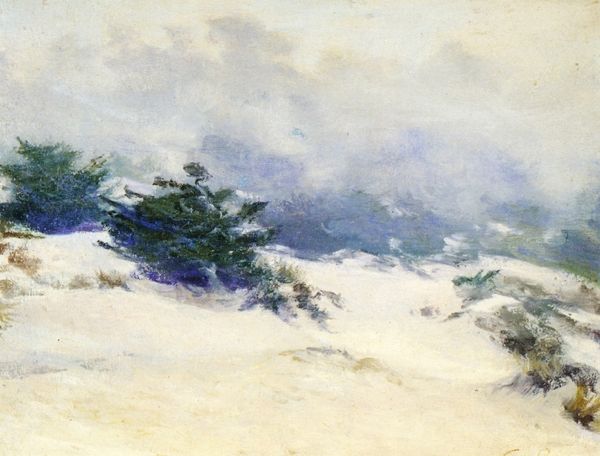
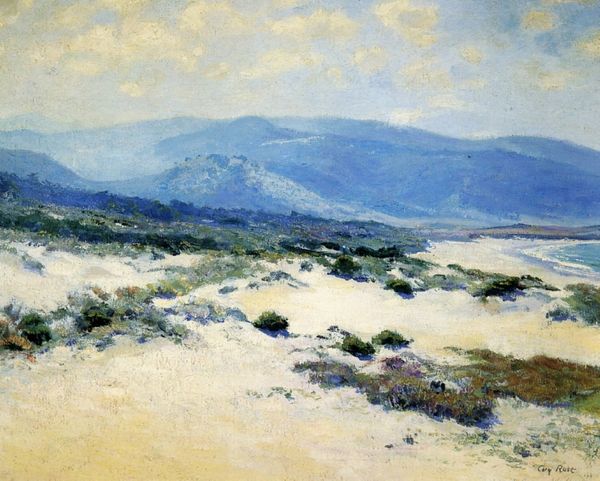
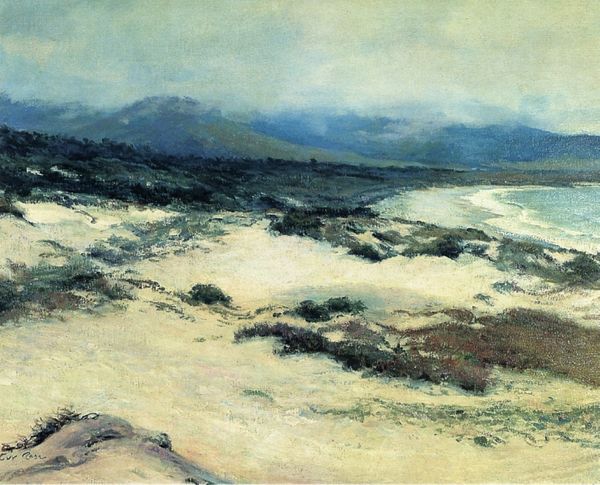
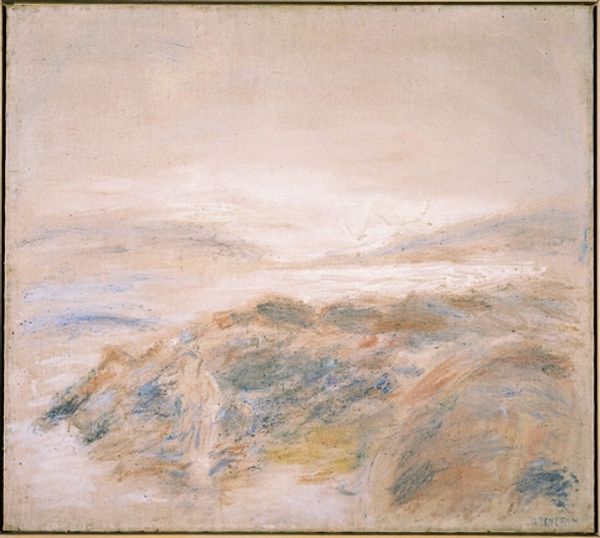
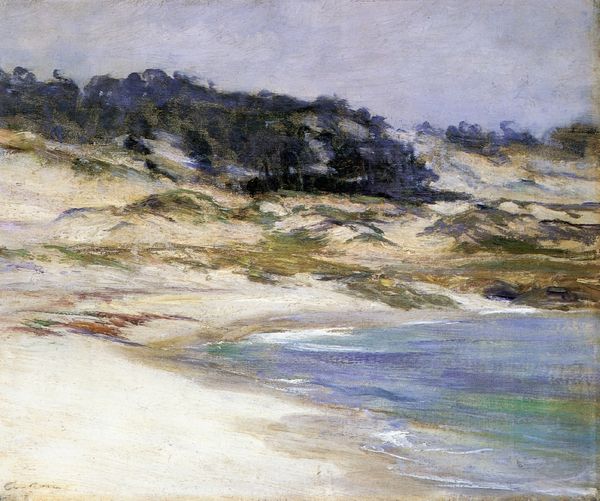
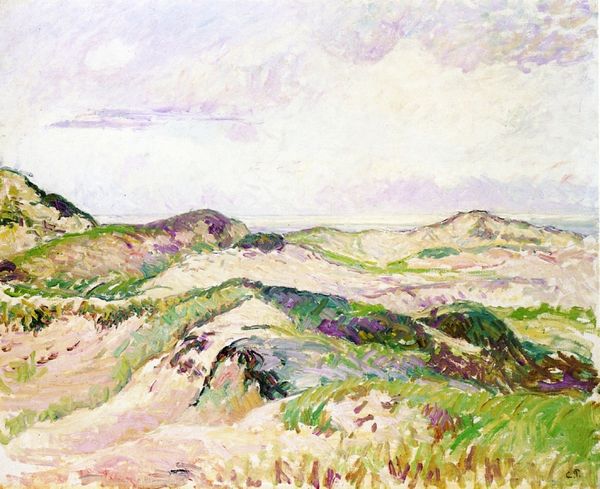
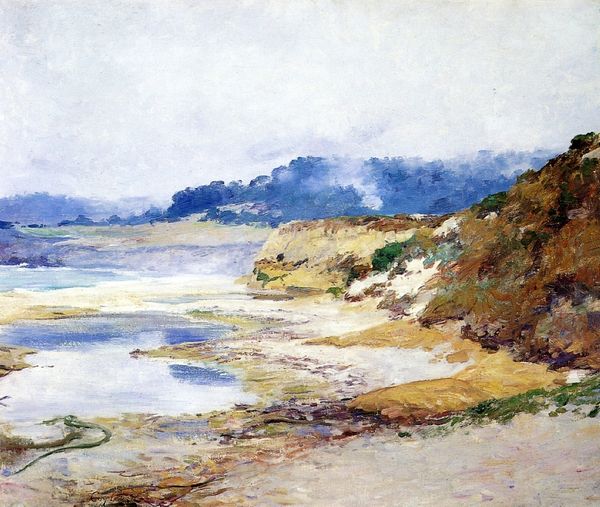
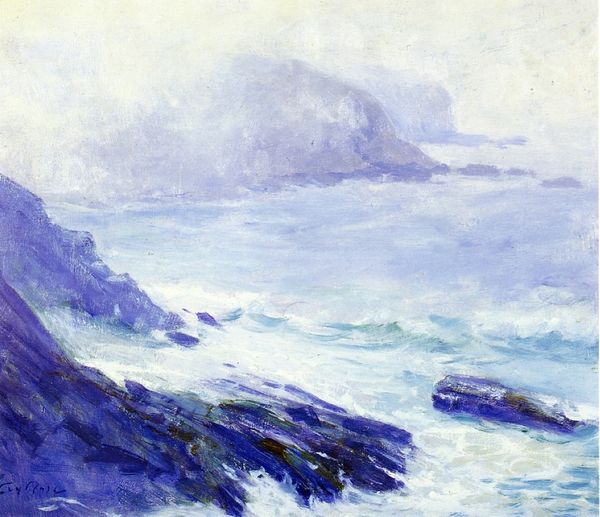
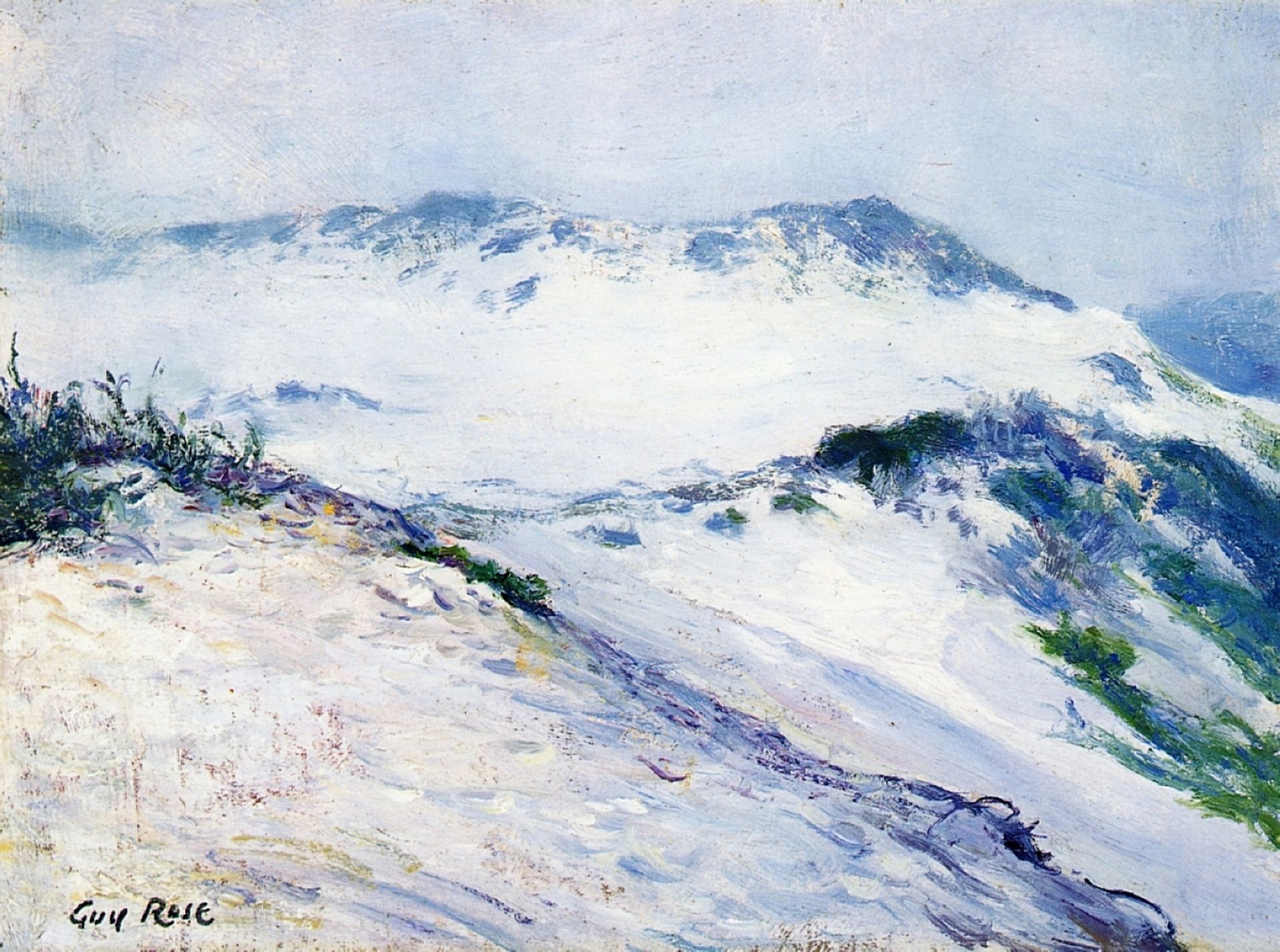
Curator: Welcome! We are standing before a landscape study called "Carmel Dunes," painted by Guy Rose. Editor: Well, immediately I notice the thick impasto – you can almost feel the weight and texture of the snow. It is likely he built up the surface with generous applications of oil. Curator: Indeed. Rose's exposure to Impressionism in France deeply influenced his technique, emphasizing light and atmosphere. We should also think about the accessibility of locations like Carmel and their popularization through art exhibitions. What did it mean to depict these burgeoning vacation spots? Editor: The materiality speaks to that industrial change, doesn't it? Mass-produced paint and readily available canvases enabled a shift toward more casual, en plein air painting practices. How did he translate a specific experience in front of nature to this panel? Curator: Good point! This vista also speaks to a broader cultural embrace of nature as refuge, but especially Carmel, which attracted wealthy tourists and art colonies alike. Was Rose thinking of marketing? He was commercially savvy. Editor: It’s not as spontaneous as it might look; look at the constructed, balanced brushstrokes across the peaks, and the lower parts – suggesting layers and dimensions within the visible topography of the canvas. There's labor evident in the layering, a physical process of pushing and pulling. Curator: His brushwork is undeniably active, creating a sense of movement. And there's a palpable sense of stillness; it could speak volumes about the commodification and packaging of California landscapes and the "California Dream." Editor: Right, and even as he aims for that marketable atmospheric quality, we should consider what those particular tools enabled and limited – think of how the choice of specific pigments affects how we read light and depth here, for example. Curator: It definitely invites a deeper consideration about our relationship with landscapes as aesthetic experiences. Editor: Absolutely; analyzing the artistic choices gives us better ways to understand what material considerations underpin this picturesque presentation.

Artwork details
- Dimensions
- 25.4 x 34.04 cm
- Location
- Private Collection
- Copyright
- Public domain
Tags
abstract expressionism
sky
cliff
abstract painting
impressionist landscape
possibly oil pastel
oil painting
ocean
rock
fluid art
neo expressionist
acrylic on canvas
mountain
paint stroke
men
expressionist
sea
Comments
No comments
About this artwork
Curator: Welcome! We are standing before a landscape study called "Carmel Dunes," painted by Guy Rose. Editor: Well, immediately I notice the thick impasto – you can almost feel the weight and texture of the snow. It is likely he built up the surface with generous applications of oil. Curator: Indeed. Rose's exposure to Impressionism in France deeply influenced his technique, emphasizing light and atmosphere. We should also think about the accessibility of locations like Carmel and their popularization through art exhibitions. What did it mean to depict these burgeoning vacation spots? Editor: The materiality speaks to that industrial change, doesn't it? Mass-produced paint and readily available canvases enabled a shift toward more casual, en plein air painting practices. How did he translate a specific experience in front of nature to this panel? Curator: Good point! This vista also speaks to a broader cultural embrace of nature as refuge, but especially Carmel, which attracted wealthy tourists and art colonies alike. Was Rose thinking of marketing? He was commercially savvy. Editor: It’s not as spontaneous as it might look; look at the constructed, balanced brushstrokes across the peaks, and the lower parts – suggesting layers and dimensions within the visible topography of the canvas. There's labor evident in the layering, a physical process of pushing and pulling. Curator: His brushwork is undeniably active, creating a sense of movement. And there's a palpable sense of stillness; it could speak volumes about the commodification and packaging of California landscapes and the "California Dream." Editor: Right, and even as he aims for that marketable atmospheric quality, we should consider what those particular tools enabled and limited – think of how the choice of specific pigments affects how we read light and depth here, for example. Curator: It definitely invites a deeper consideration about our relationship with landscapes as aesthetic experiences. Editor: Absolutely; analyzing the artistic choices gives us better ways to understand what material considerations underpin this picturesque presentation.
Comments
No comments