About this artwork
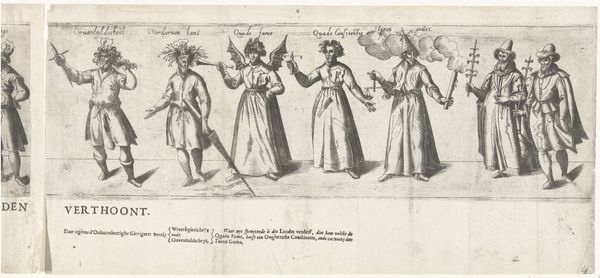
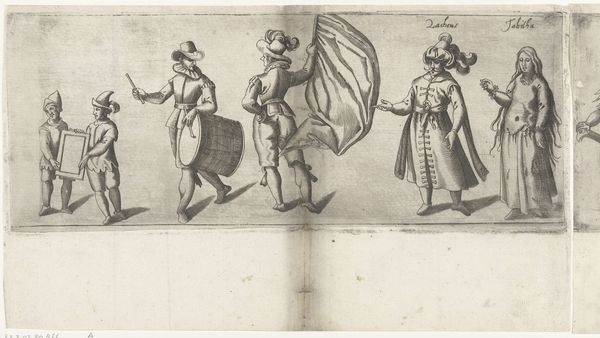
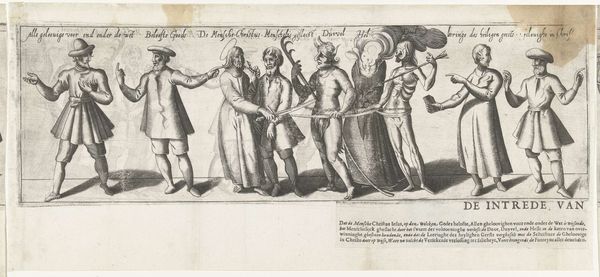
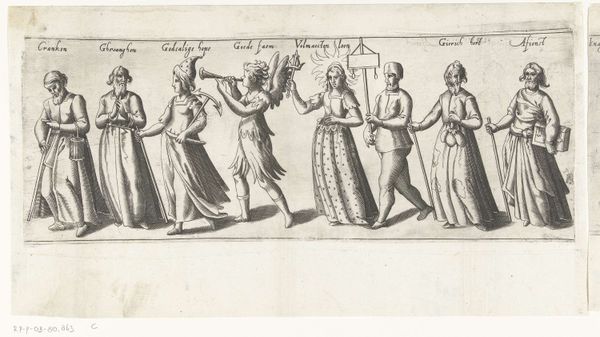
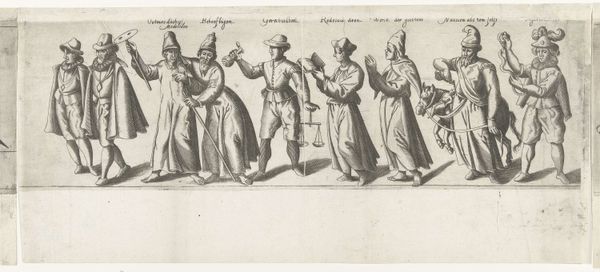
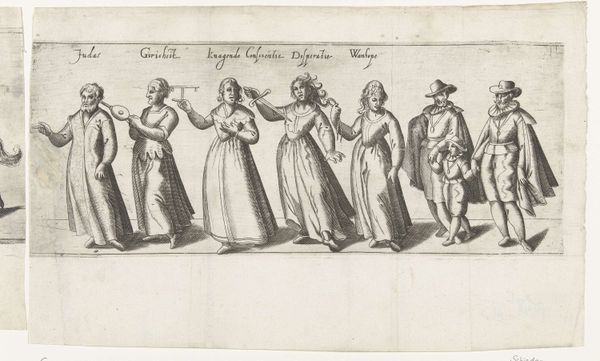
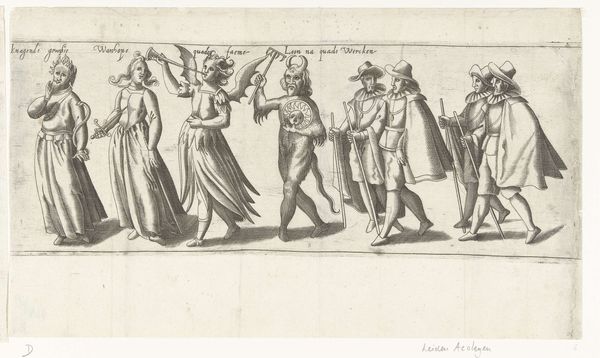
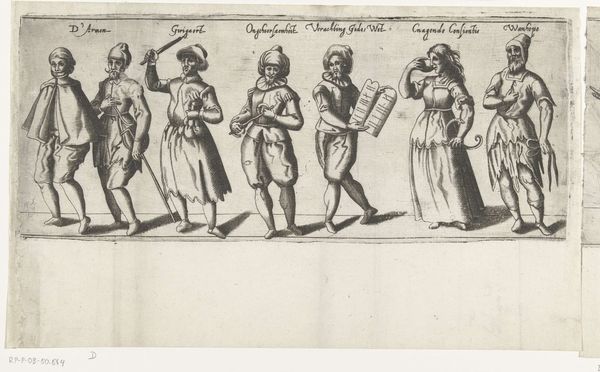
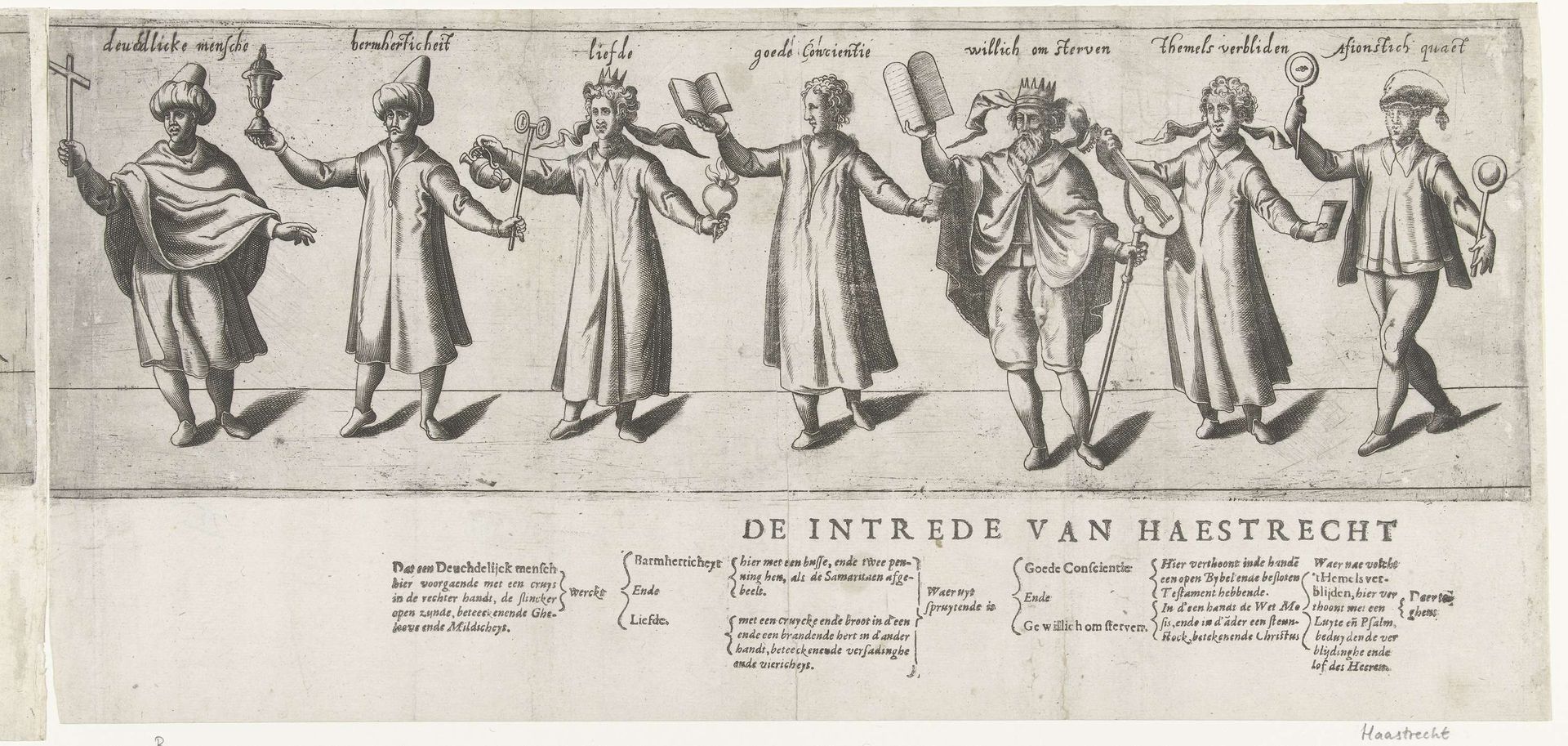
Editor: So, here we have "Procession of the Chamber of Rhetoric The Galisbloemken from Haastrecht (part two)" made in 1607. It's an engraving. The figures are wonderfully weird; their expressions seem so deliberate. What do you make of this print? Curator: Let's consider the production of this engraving within the context of Dutch society at the time. Think about the material constraints—the availability of copper, the specific skills required for engraving. How did these factors influence the visual language of the artwork? And how did the chamber of rhetoric commission and use it to display social authority? Editor: That's interesting. I hadn't considered how the limitations of the medium might have shaped the way these figures are represented, in what way the choice of the characters impacts the local society... It makes the image itself a sort of historical artifact of both the subject it represents and the material conditions of its creation. Curator: Exactly. We must investigate the cultural value invested in printed matter. Consider how such imagery circulates and contributes to forming shared understanding of cultural symbols, as those weird characters seem to mean. Were these engravings luxury items, or were they meant for broader consumption? How did access to this kind of image impact the viewing public? Editor: So, you’re saying that by looking at the process and materials, we gain insight into the societal and cultural context of the artwork? Curator: Precisely! And, in doing so, challenge the established hierarchy of "high art." Is this image just a record, or did the choice of materials affect what meanings could be created, conveyed, and preserved through time? Editor: I see! So, understanding the materials and the methods gives another way of understanding the values and intention of those commissioning the work. Thank you! Curator: It's about questioning our assumptions and expanding our understanding of art's role in society.
Optocht door de rederijkerskamer Het Galisbloemken uit Haastrecht (tweede deel), 1607
1607

Anonymous
@anonymousLocation
RijksmuseumArtwork details
- Medium
- print, engraving
- Dimensions
- height 197 mm, width 411 mm
- Location
- Rijksmuseum
- Copyright
- Rijks Museum: Open Domain
Tags
Comments
Share your thoughts
About this artwork
Editor: So, here we have "Procession of the Chamber of Rhetoric The Galisbloemken from Haastrecht (part two)" made in 1607. It's an engraving. The figures are wonderfully weird; their expressions seem so deliberate. What do you make of this print? Curator: Let's consider the production of this engraving within the context of Dutch society at the time. Think about the material constraints—the availability of copper, the specific skills required for engraving. How did these factors influence the visual language of the artwork? And how did the chamber of rhetoric commission and use it to display social authority? Editor: That's interesting. I hadn't considered how the limitations of the medium might have shaped the way these figures are represented, in what way the choice of the characters impacts the local society... It makes the image itself a sort of historical artifact of both the subject it represents and the material conditions of its creation. Curator: Exactly. We must investigate the cultural value invested in printed matter. Consider how such imagery circulates and contributes to forming shared understanding of cultural symbols, as those weird characters seem to mean. Were these engravings luxury items, or were they meant for broader consumption? How did access to this kind of image impact the viewing public? Editor: So, you’re saying that by looking at the process and materials, we gain insight into the societal and cultural context of the artwork? Curator: Precisely! And, in doing so, challenge the established hierarchy of "high art." Is this image just a record, or did the choice of materials affect what meanings could be created, conveyed, and preserved through time? Editor: I see! So, understanding the materials and the methods gives another way of understanding the values and intention of those commissioning the work. Thank you! Curator: It's about questioning our assumptions and expanding our understanding of art's role in society.
Comments
Share your thoughts