About this artwork
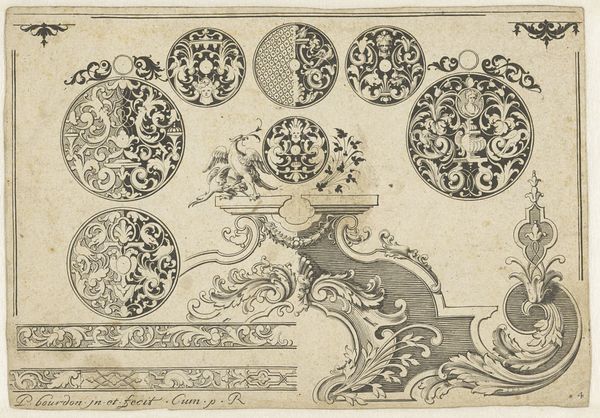
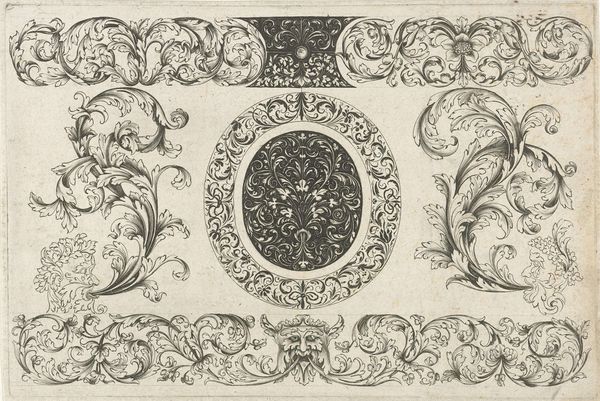
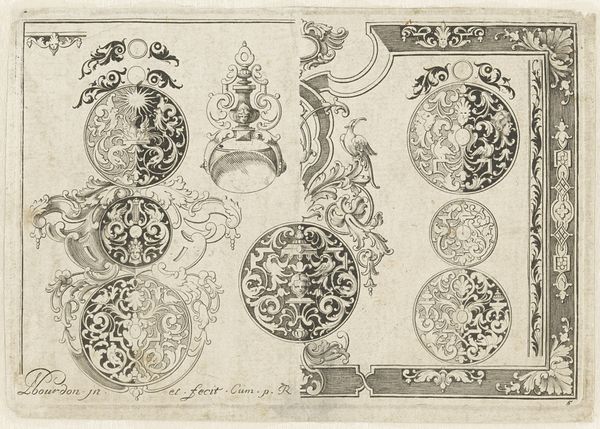
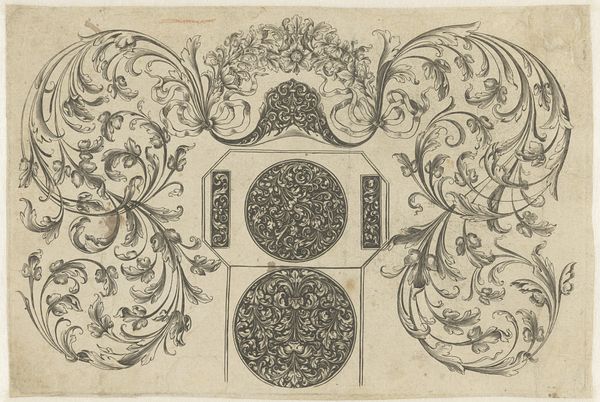
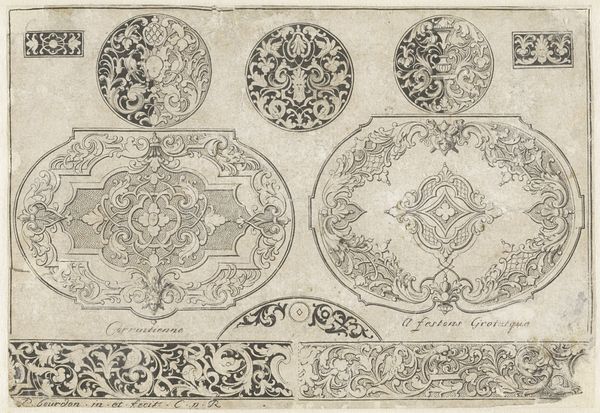
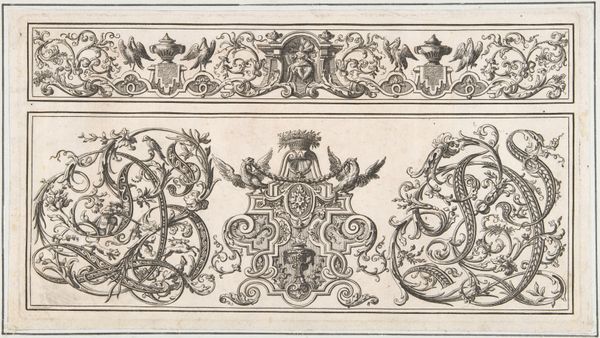
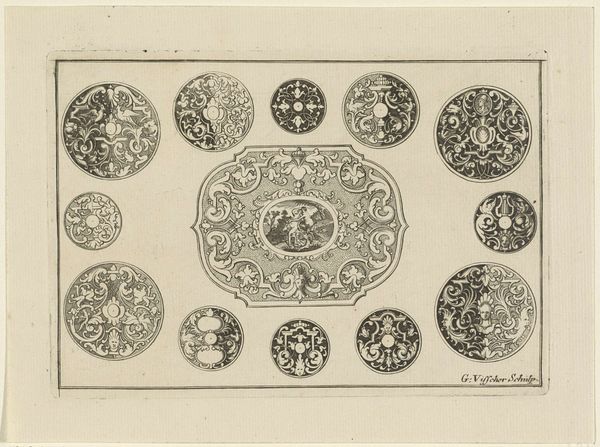
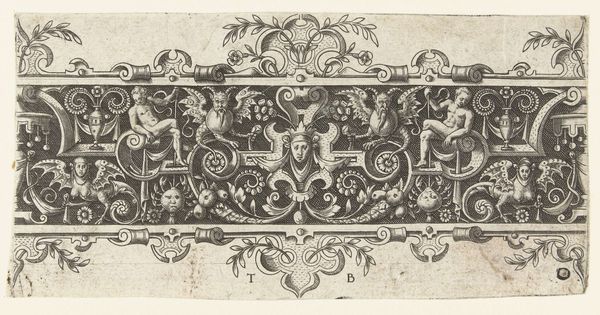
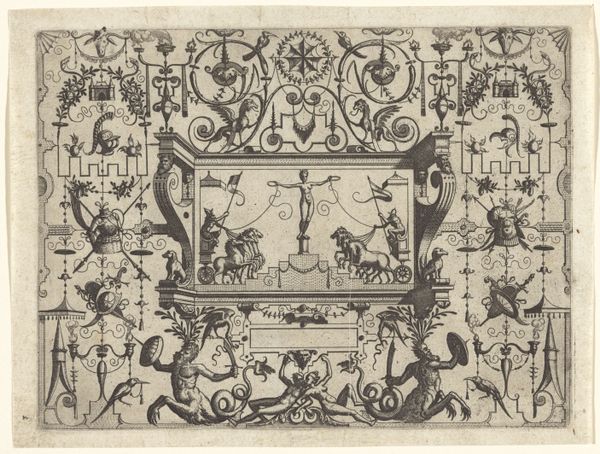
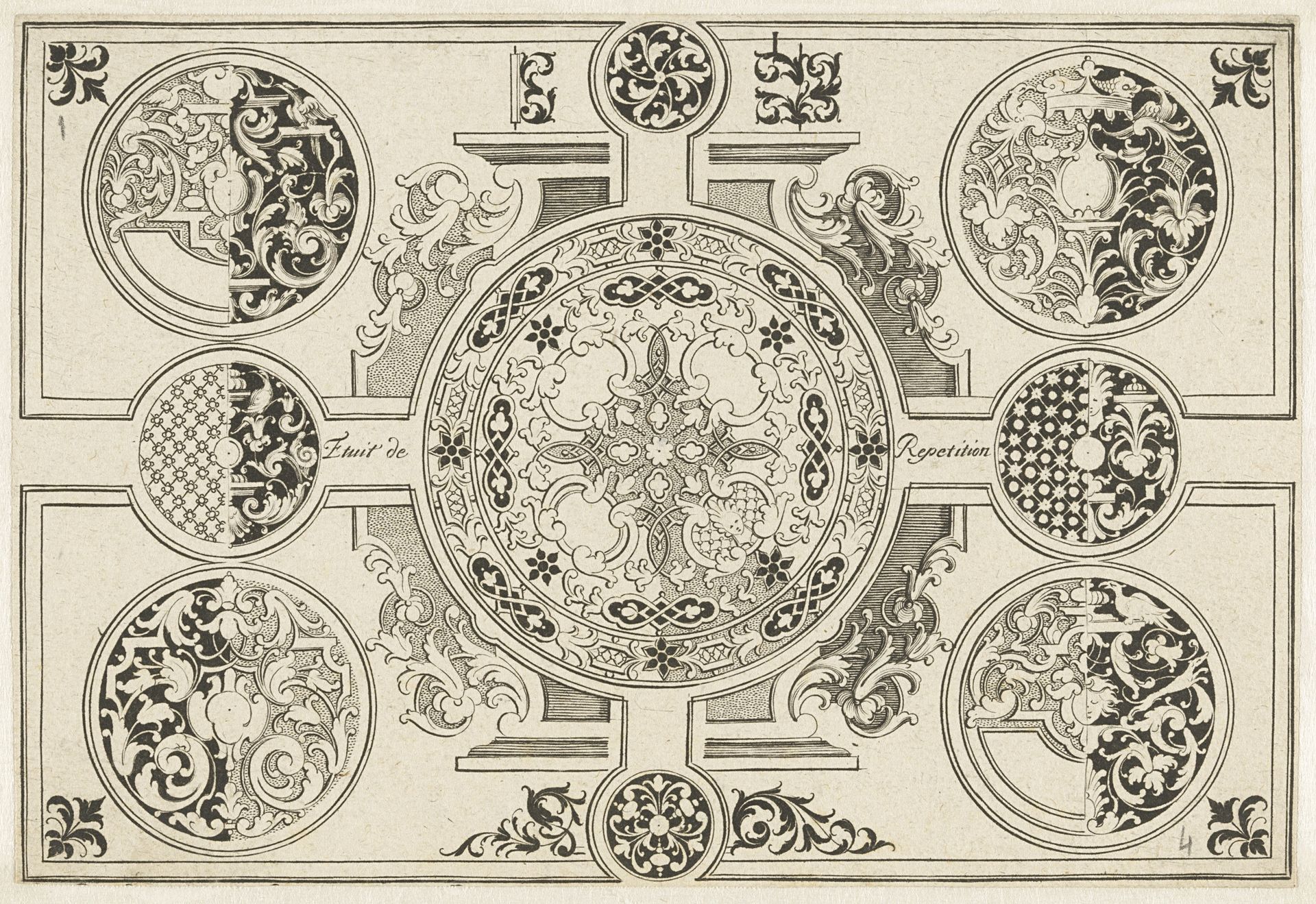
Editor: Here we have "Designs for Clock Cases," a drawing in ink, engraving, and paper by Pierre Bourdon, dating back to 1703. The Baroque style is clear. It’s the intricate pattern of the clock case designs that I find the most interesting, like complex, layered pen work. How might these drawings reflect the socio-political atmosphere of their time? Curator: The proliferation of intricate designs like this during the Baroque period reflects the increasing power and wealth of the aristocracy and a growing merchant class who desired ornate and luxurious items to display their status. The detailed pen work wasn't merely decorative; it signified the skill and refinement valued by these patrons, indicating a shift towards more secular, showy displays of authority rather than solely religious iconography. Editor: That makes sense. So, would displaying such an intricate clock have been seen as a form of social climbing, showing one’s refined tastes? Curator: Precisely. Clockmaking, and the design of the cases, was supported by royal patronage and burgeoning capitalism. Consider where these clocks might have been placed: public spaces within the homes of the elite. Each curlicue was part of a visual language intended to convey sophistication and command attention, reinforcing the social hierarchy. Can you see how these weren't simply time-telling devices, but statements about their owners? Editor: Absolutely, now that I'm looking at them through that lens, I see more than just designs; I see statements of power and position in society! Curator: And how our interpretation of art is often shaped by its historical role and the people who commissioned and used it. A new perspective on looking at Decorative Art, right? Editor: Definitely! Thanks for shedding light on the world that shaped these drawings; I now appreciate these timepieces in a whole new light!

Artwork details
- Medium
- drawing, paper, ink, engraving
- Dimensions
- height 110 mm, width 162 mm
- Location
- Rijksmuseum
- Copyright
- Rijks Museum: Open Domain
Tags
Comments
Share your thoughts
About this artwork
Editor: Here we have "Designs for Clock Cases," a drawing in ink, engraving, and paper by Pierre Bourdon, dating back to 1703. The Baroque style is clear. It’s the intricate pattern of the clock case designs that I find the most interesting, like complex, layered pen work. How might these drawings reflect the socio-political atmosphere of their time? Curator: The proliferation of intricate designs like this during the Baroque period reflects the increasing power and wealth of the aristocracy and a growing merchant class who desired ornate and luxurious items to display their status. The detailed pen work wasn't merely decorative; it signified the skill and refinement valued by these patrons, indicating a shift towards more secular, showy displays of authority rather than solely religious iconography. Editor: That makes sense. So, would displaying such an intricate clock have been seen as a form of social climbing, showing one’s refined tastes? Curator: Precisely. Clockmaking, and the design of the cases, was supported by royal patronage and burgeoning capitalism. Consider where these clocks might have been placed: public spaces within the homes of the elite. Each curlicue was part of a visual language intended to convey sophistication and command attention, reinforcing the social hierarchy. Can you see how these weren't simply time-telling devices, but statements about their owners? Editor: Absolutely, now that I'm looking at them through that lens, I see more than just designs; I see statements of power and position in society! Curator: And how our interpretation of art is often shaped by its historical role and the people who commissioned and used it. A new perspective on looking at Decorative Art, right? Editor: Definitely! Thanks for shedding light on the world that shaped these drawings; I now appreciate these timepieces in a whole new light!
Comments
Share your thoughts