About this artwork
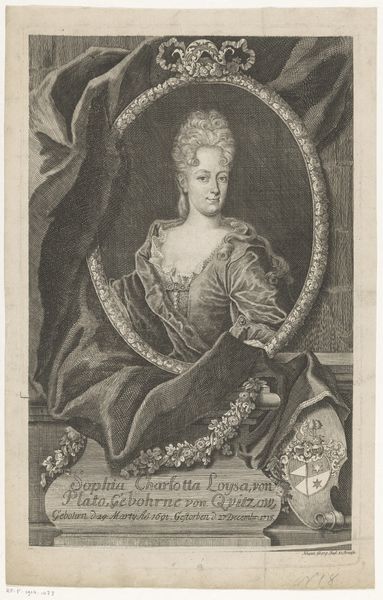
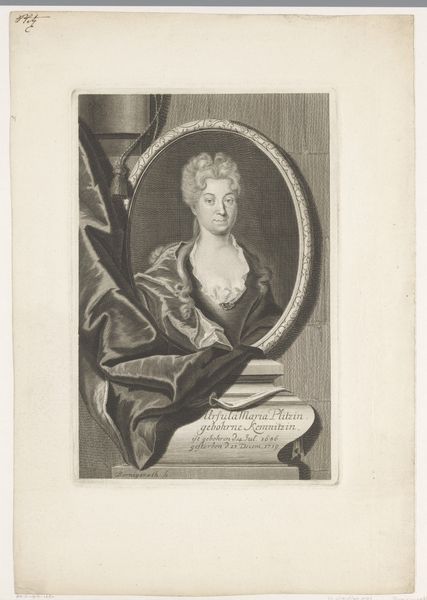
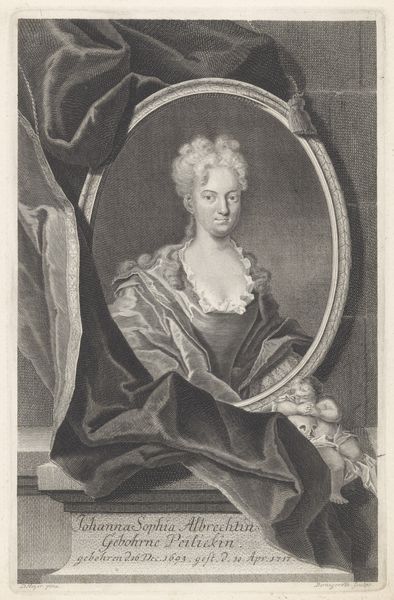
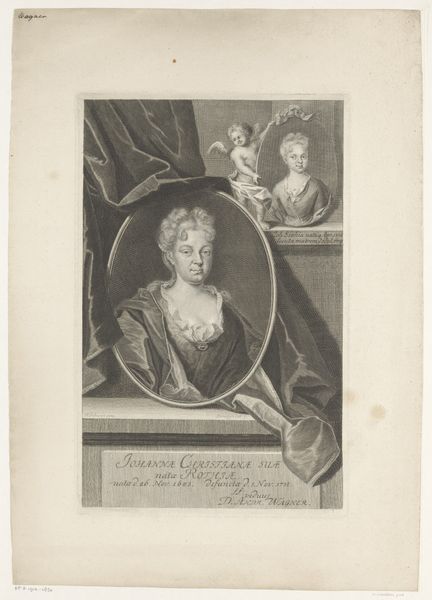
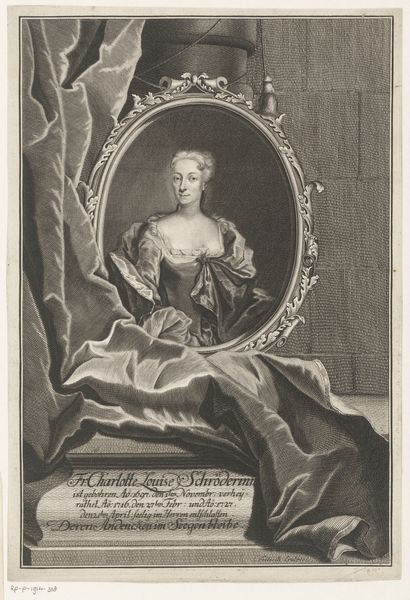
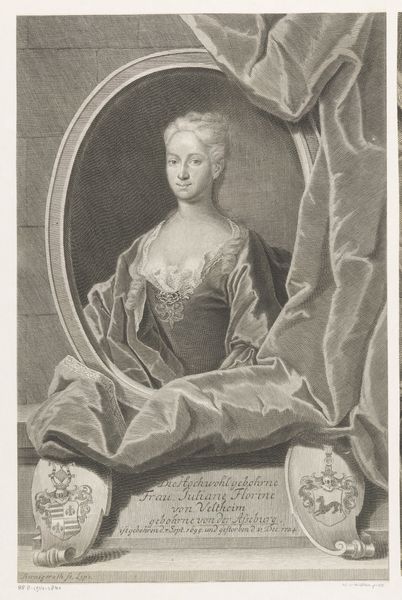
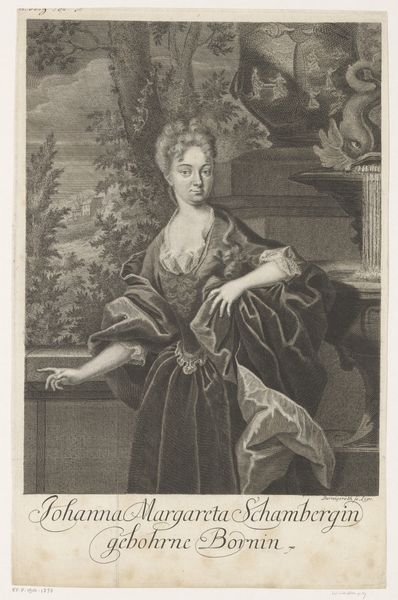
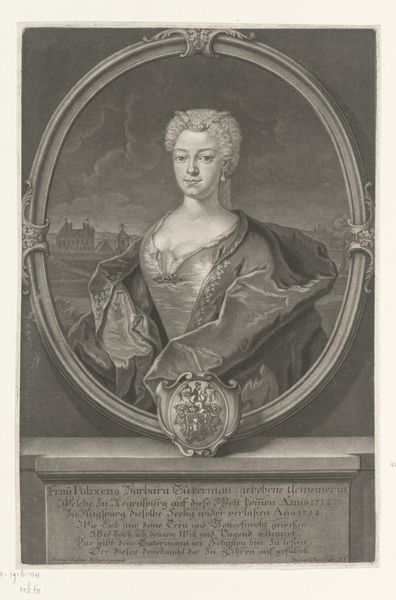
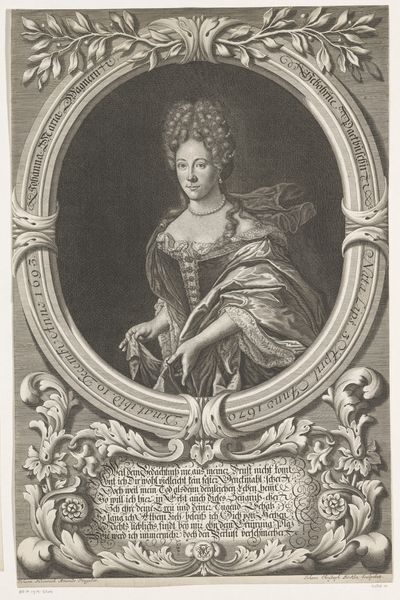
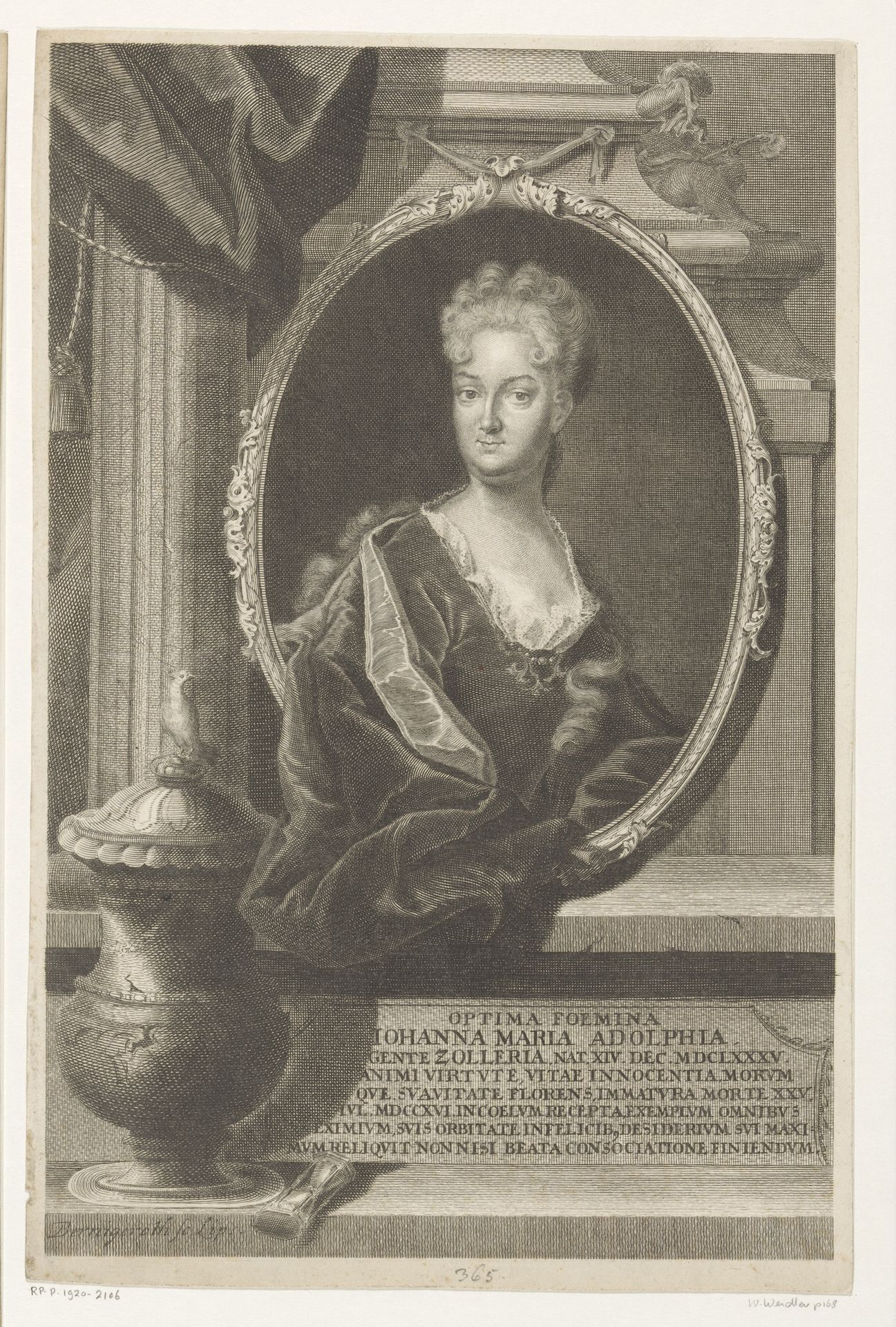
This is Martin Bernigeroth’s portrait of Johanna Maria Adolph, an engraving. The oval frame, a motif recurrent throughout history, encases Johanna, presenting her as an emblem of beauty and virtue. Notice how she’s framed by the classical elements of a column and a draped curtain, a symbolic gateway to understanding the interplay between visibility and concealment. The inclusion of such elements points back to the classical world, where similar architectural components framed gods and heroes. Consider the vase, an object which reappears across various cultures, from ancient Greek pottery to Renaissance still life paintings, acting as a symbol of containment and transformation. In each instance, the vase’s meaning shifts slightly, mirroring the cultural values of its time, yet it remains a vessel of the collective unconscious, engaging viewers across centuries. These elements aren’t merely decorative; they evoke a deep emotional response. The portrait invites us to contemplate the cyclical nature of symbols, echoing through time and carrying echoes of the past.

Artwork details
- Medium
- print, engraving
- Dimensions
- height 308 mm, width 203 mm
- Location
- Rijksmuseum
- Copyright
- Rijks Museum: Open Domain
Tags
Comments
Share your thoughts
About this artwork
This is Martin Bernigeroth’s portrait of Johanna Maria Adolph, an engraving. The oval frame, a motif recurrent throughout history, encases Johanna, presenting her as an emblem of beauty and virtue. Notice how she’s framed by the classical elements of a column and a draped curtain, a symbolic gateway to understanding the interplay between visibility and concealment. The inclusion of such elements points back to the classical world, where similar architectural components framed gods and heroes. Consider the vase, an object which reappears across various cultures, from ancient Greek pottery to Renaissance still life paintings, acting as a symbol of containment and transformation. In each instance, the vase’s meaning shifts slightly, mirroring the cultural values of its time, yet it remains a vessel of the collective unconscious, engaging viewers across centuries. These elements aren’t merely decorative; they evoke a deep emotional response. The portrait invites us to contemplate the cyclical nature of symbols, echoing through time and carrying echoes of the past.
Comments
Share your thoughts