About this artwork
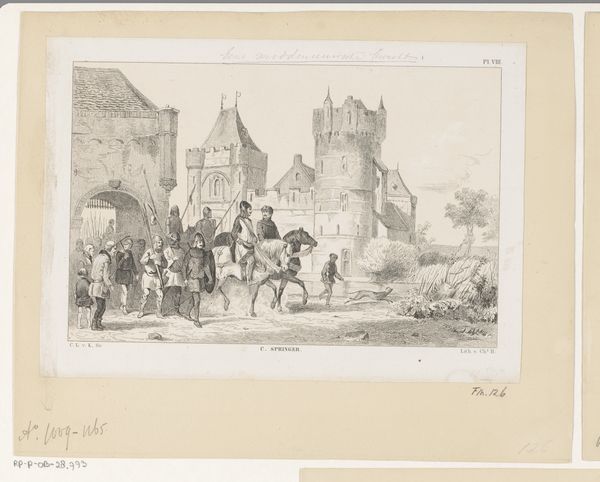
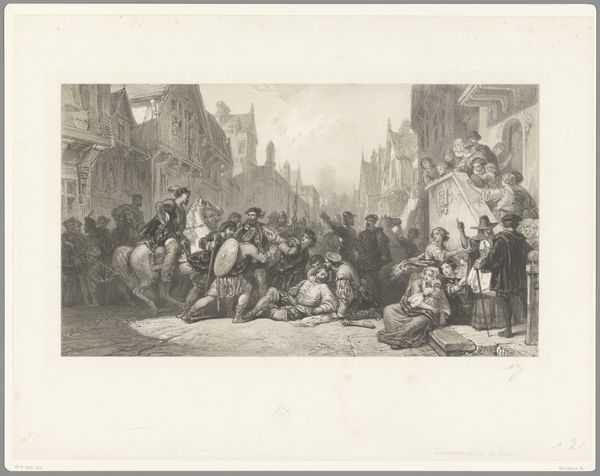
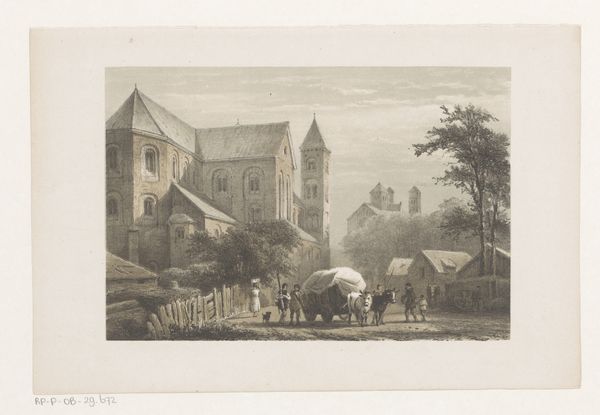
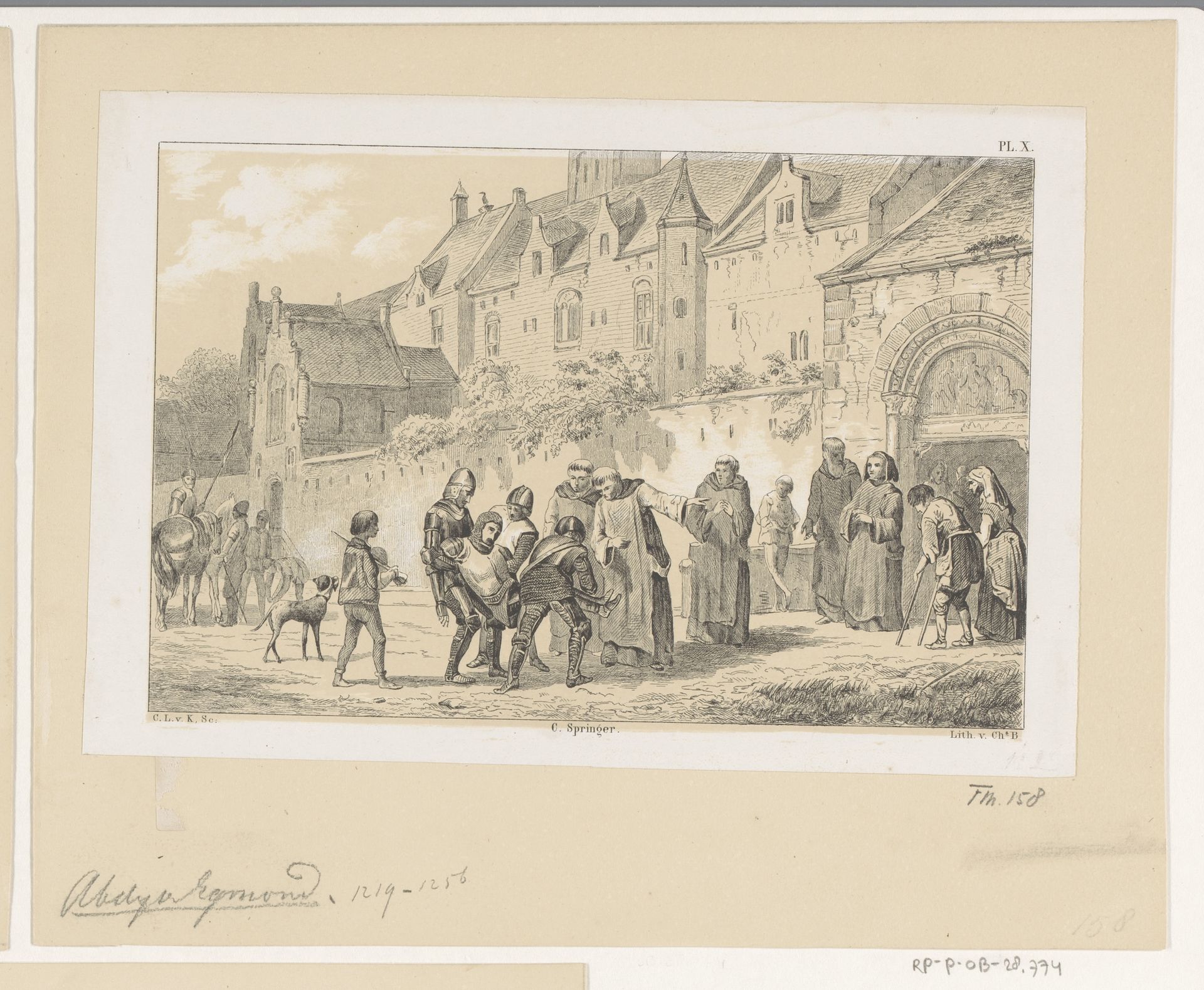
Christiaan Lodewijk van Kesteren created this print of Egmond Abbey in the 19th century, although the Abbey itself dates back to the 10th century. Van Kesteren's image depicts a scene that evokes the medieval era, with knights and monks populating the courtyard of the abbey. The artist highlights the way that religious institutions were historically imbricated with secular power. We see a wounded knight being carried into the abbey for sanctuary, while monks offer aid and refuge. The black and white print emphasizes the stark contrast between the armor-clad knights and the simple robes of the monks, highlighting their differing roles within the social hierarchy. The inclusion of peasants and children further enriches the social tapestry represented in the print. This representation suggests that the Abbey served as a place of refuge, healing, and spiritual guidance for a diverse population during the medieval period. Van Kesteren’s work acts as a window into a romanticized past, inviting us to reflect on the power dynamics and social structures that have shaped our history.
Abdij van Egmond, 13e eeuw
1853 - 1861

Christiaan Lodewijk van Kesteren
1832 - 1897Location
RijksmuseumArtwork details
- Medium
- print, etching
- Dimensions
- height 158 mm, width 234 mm
- Location
- Rijksmuseum
- Copyright
- Rijks Museum: Open Domain
Tags
Comments
Share your thoughts
About this artwork
Christiaan Lodewijk van Kesteren created this print of Egmond Abbey in the 19th century, although the Abbey itself dates back to the 10th century. Van Kesteren's image depicts a scene that evokes the medieval era, with knights and monks populating the courtyard of the abbey. The artist highlights the way that religious institutions were historically imbricated with secular power. We see a wounded knight being carried into the abbey for sanctuary, while monks offer aid and refuge. The black and white print emphasizes the stark contrast between the armor-clad knights and the simple robes of the monks, highlighting their differing roles within the social hierarchy. The inclusion of peasants and children further enriches the social tapestry represented in the print. This representation suggests that the Abbey served as a place of refuge, healing, and spiritual guidance for a diverse population during the medieval period. Van Kesteren’s work acts as a window into a romanticized past, inviting us to reflect on the power dynamics and social structures that have shaped our history.
Comments
Share your thoughts