About this artwork
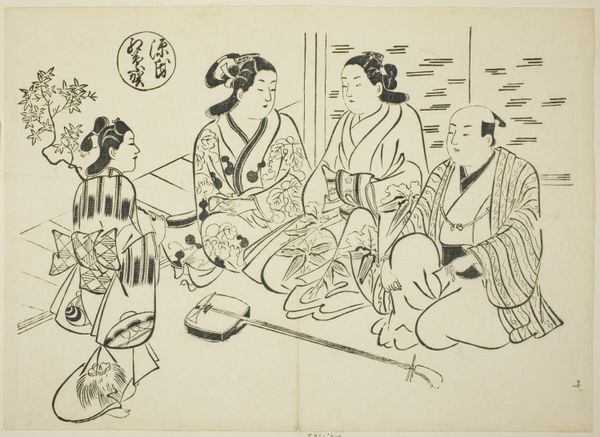
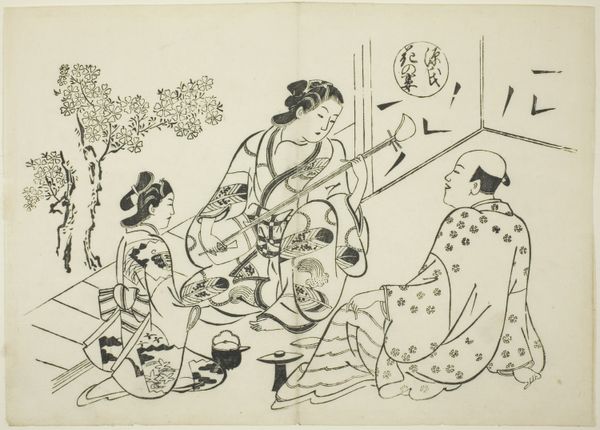
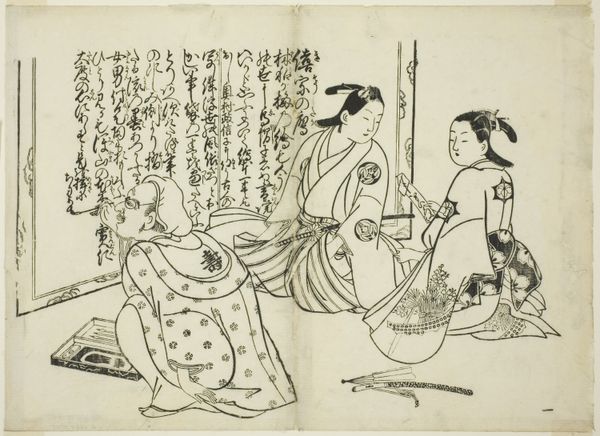
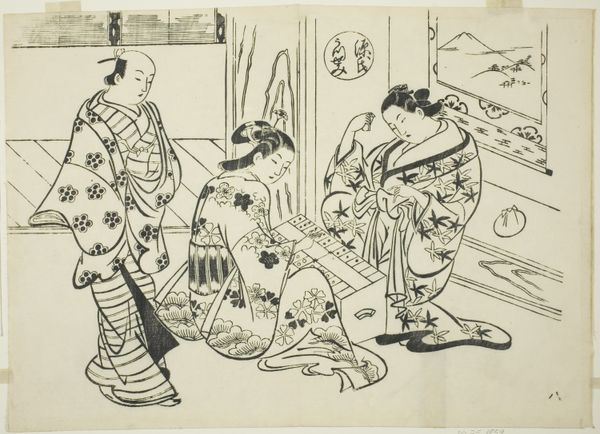
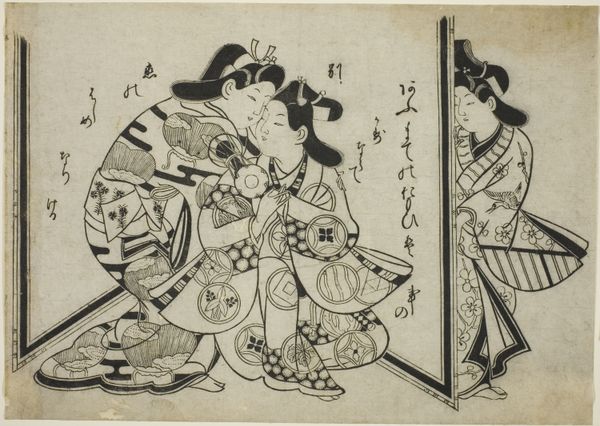
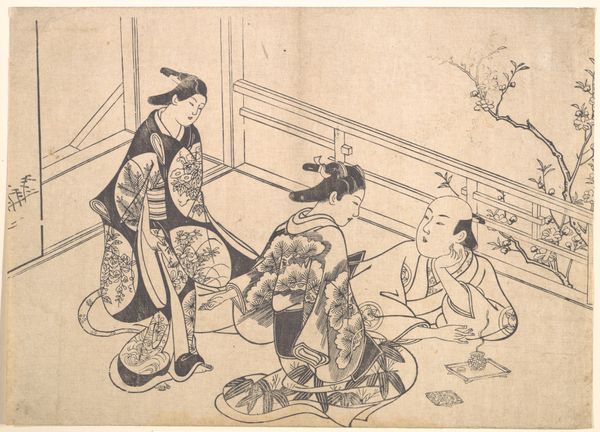
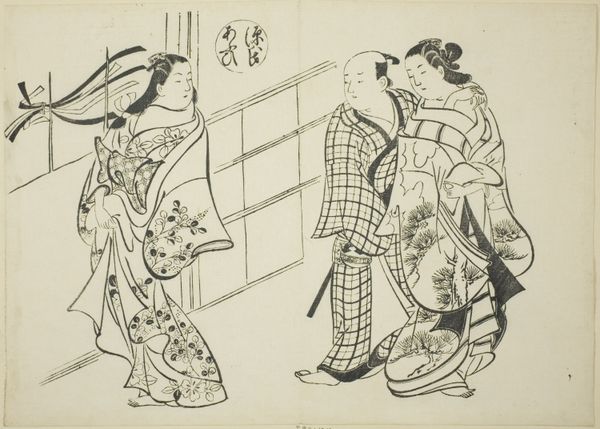
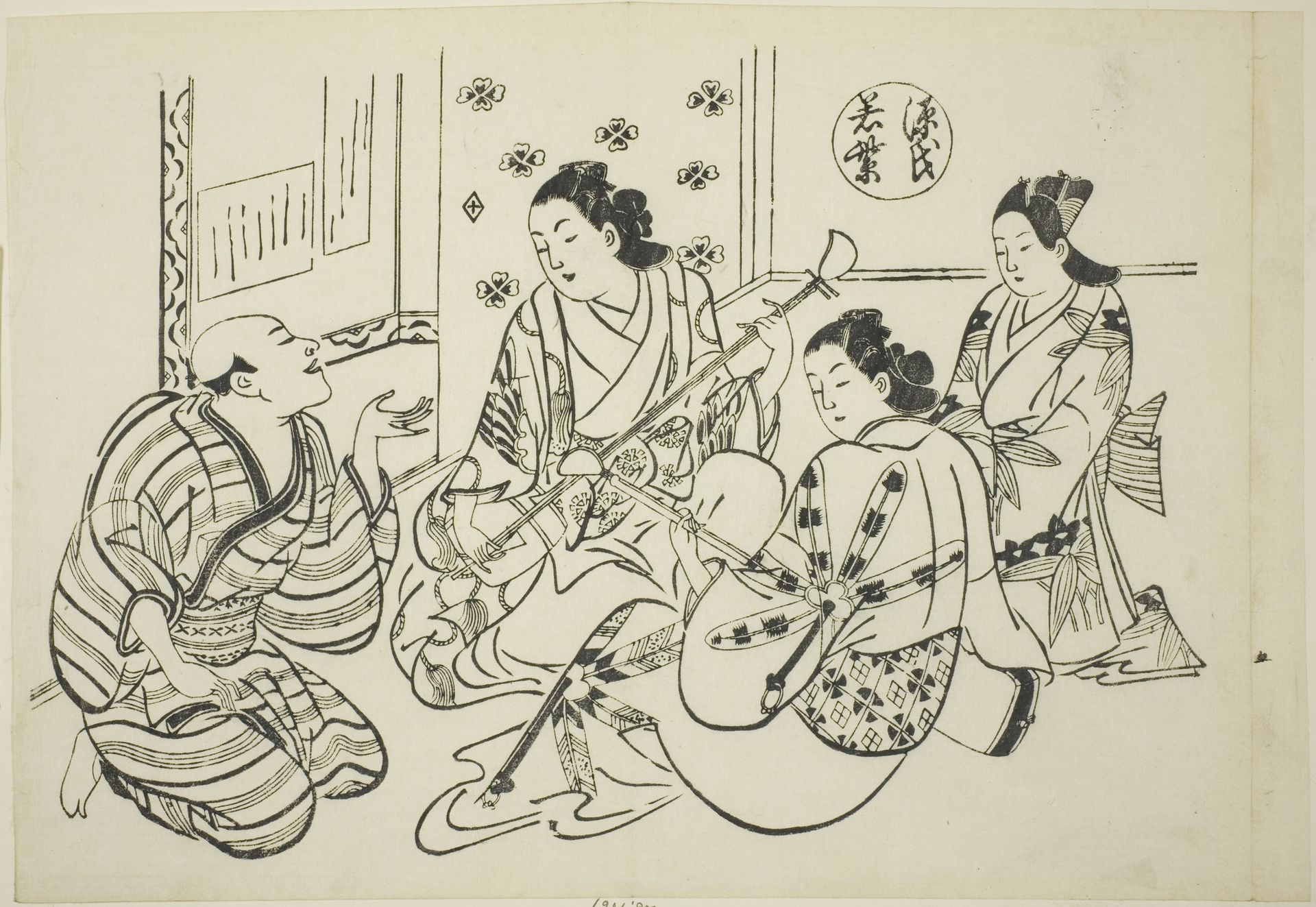
"The Waka Murasaki Chapter from “The Tale of Genji” is a woodblock print by Okumura Masanobu, made in Japan during the Edo period. Masanobu was working in a society undergoing significant cultural and economic changes. His art provides an intimate look at the social dynamics of 18th-century Japan. This print is part of a series that parodies “The Tale of Genji,” which was a classic of Japanese literature. By reinterpreting this classic, Masanobu engages in a dialogue about cultural values, gender roles, and class distinctions, with a bit of humor. The figures are depicted with a level of informality that contrasts with the formality of the original tale. The man kneeling on the left seems to be speaking to the women, but his bald head and striped robe denote a class below them. The women, finely dressed and playing instruments, exude an air of serene detachment. Masanobu’s work can be seen as a commentary on the social hierarchy of his time. It asks us to consider the roles and expectations placed upon individuals based on their gender and class."
The Waka Murasaki Chapter from "The Tale of Genji" (Genji Waka Murasaki), from a series of Genji parodies
c. 1710


Artwork details
- Medium
- print, paper, woodblock-print
- Dimensions
- 27.3 × 39.7 cm
- Location
- The Art Institute of Chicago
- Copyright
- Public Domain
Tags
narrative-art
asian-art
ukiyo-e
figuration
paper
woodblock-print
Comments
Be the first to share your thoughts about this work.
About this artwork
"The Waka Murasaki Chapter from “The Tale of Genji” is a woodblock print by Okumura Masanobu, made in Japan during the Edo period. Masanobu was working in a society undergoing significant cultural and economic changes. His art provides an intimate look at the social dynamics of 18th-century Japan. This print is part of a series that parodies “The Tale of Genji,” which was a classic of Japanese literature. By reinterpreting this classic, Masanobu engages in a dialogue about cultural values, gender roles, and class distinctions, with a bit of humor. The figures are depicted with a level of informality that contrasts with the formality of the original tale. The man kneeling on the left seems to be speaking to the women, but his bald head and striped robe denote a class below them. The women, finely dressed and playing instruments, exude an air of serene detachment. Masanobu’s work can be seen as a commentary on the social hierarchy of his time. It asks us to consider the roles and expectations placed upon individuals based on their gender and class."
Comments
Be the first to share your thoughts about this work.