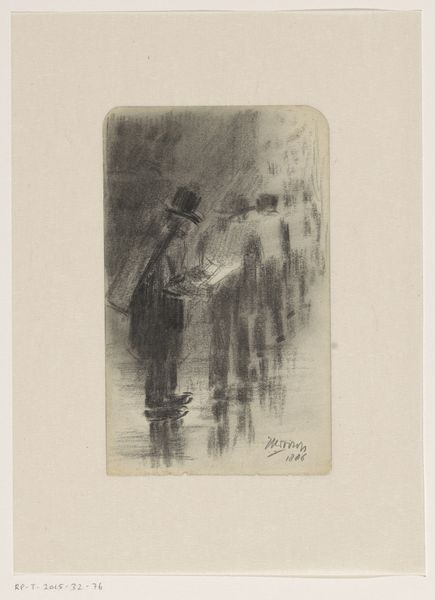
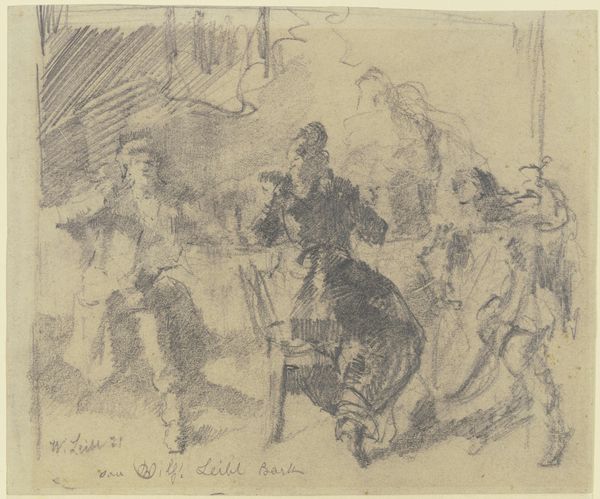
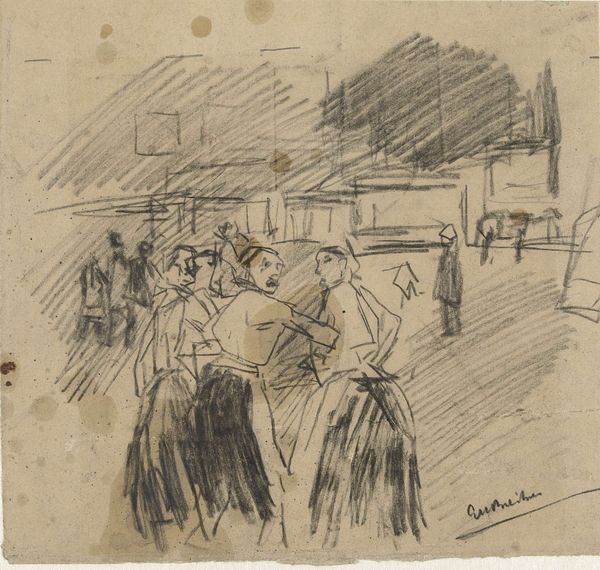
Koningin Wilhelmina en Prins Hendrik tijdens hun bezoek aan de koningin-moeder te 's-Gravenhage, 20 maart 1901 1868 - 1933
0:00
0:00

drawing, ink, pencil
#
portrait
#
drawing
#
ink drawing
#
ink
#
pencil
#
genre-painting
#
realism
Dimensions: height 293 mm, width 155 mm
Copyright: Rijks Museum: Open Domain
This sketch by Jan Hoynck van Papendrecht captures Queen Wilhelmina and Prince Hendrik's visit in 1901. The figures are adorned in military attire, symbols of power and duty deeply rooted in European history. Note the raised hand in salute, a gesture evolved from ancient forms of respect and fealty. Its modern usage can be traced through Roman military customs, where it signified loyalty to the emperor, down through medieval knighthood, each era imbuing it with layers of honor and allegiance. This gesture reappears across time, from ancient friezes to Renaissance paintings, each context subtly shifting its meaning while preserving its core of respect and authority. Consider how collective memory and subconscious processes affect both the performer and the viewer of this salute. This simple, time-honored gesture engages us on a subconscious level, evoking the powerful emotions tied to nation, leadership, and shared identity. Observe how symbols like these are never static; they resurface, evolve, and take on new meanings, their potency undiminished across the ages.
Comments
No comments
Be the first to comment and join the conversation on the ultimate creative platform.
 Collect
 React
React Comment
More like this