before 1872
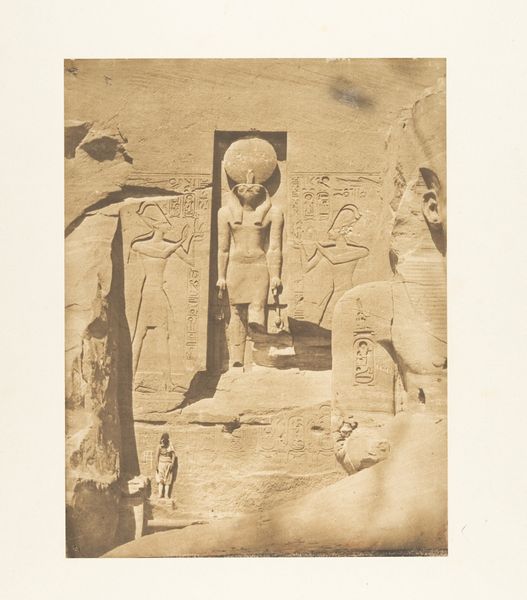
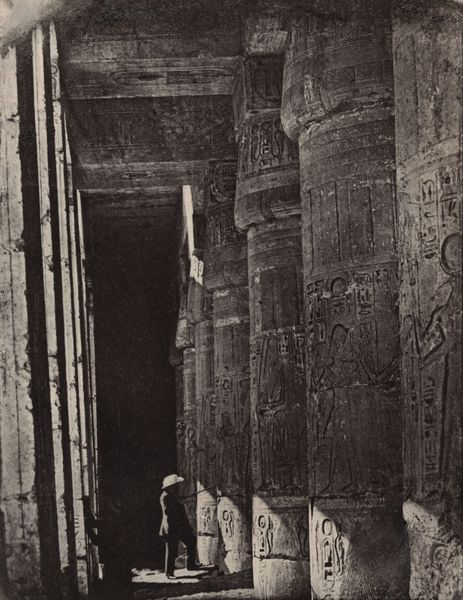
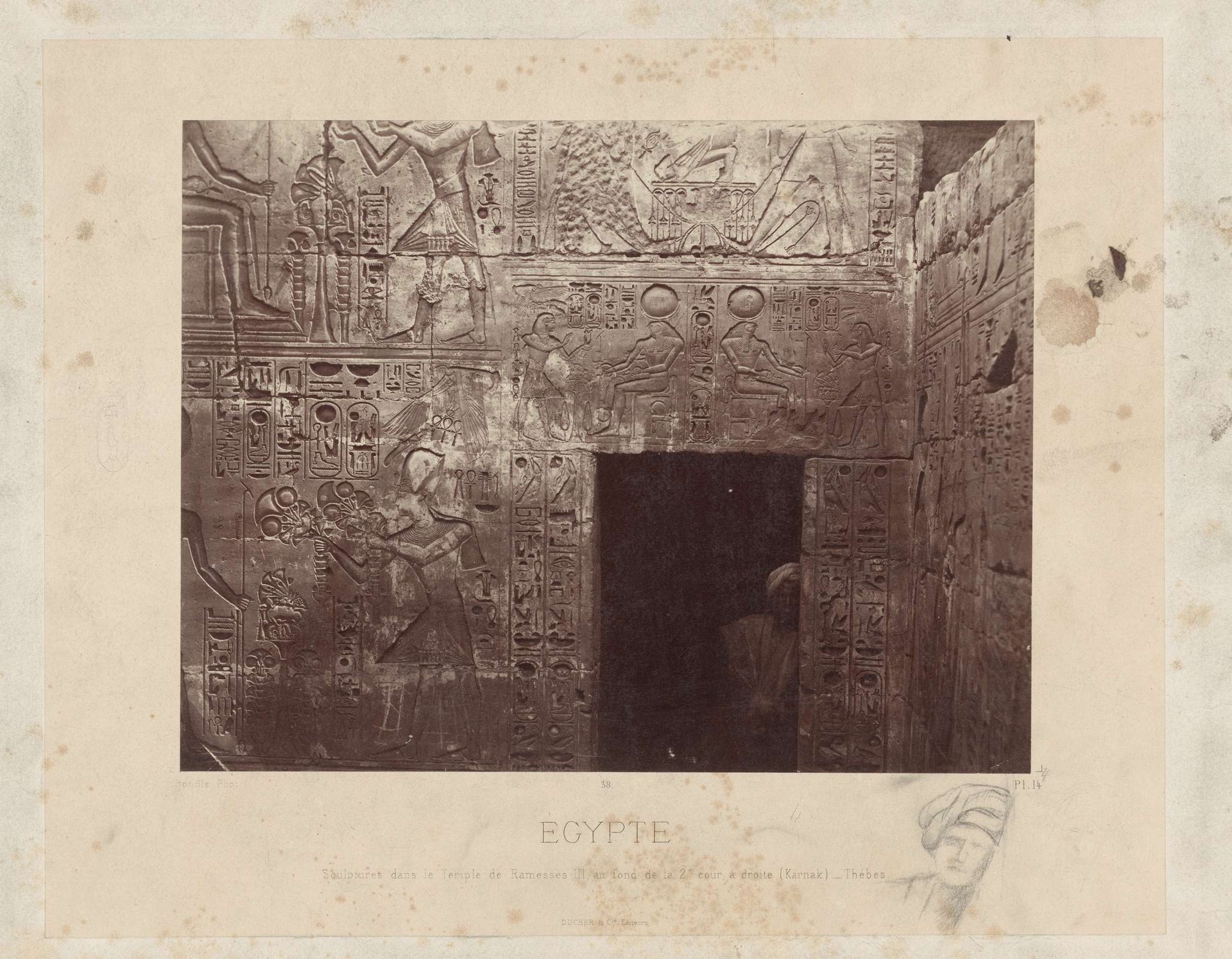
Man in een deuropening in de tempel van Ramses III in Egypte

Félix Bonfils
1831 - 1885Location
RijksmuseumListen to curator's interpretation
Curatorial notes
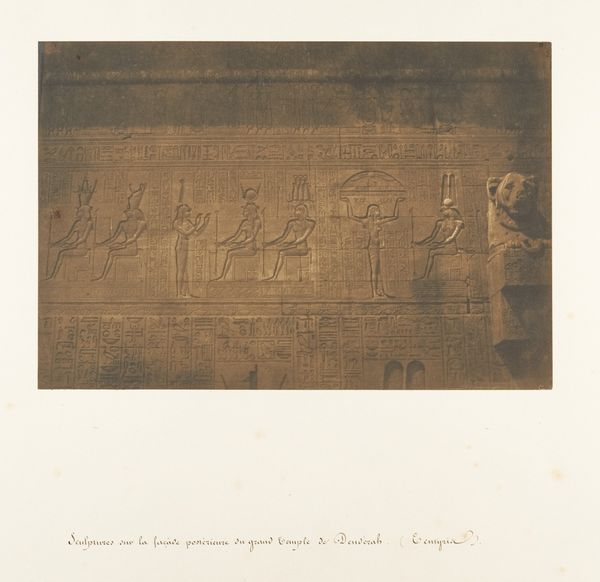
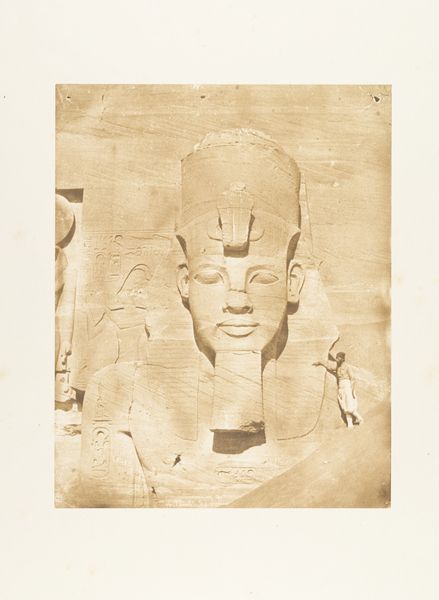
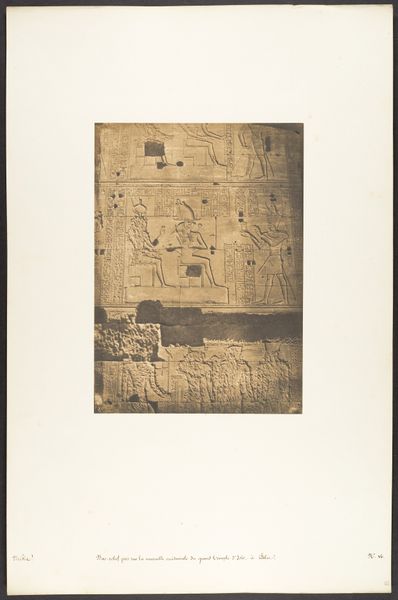
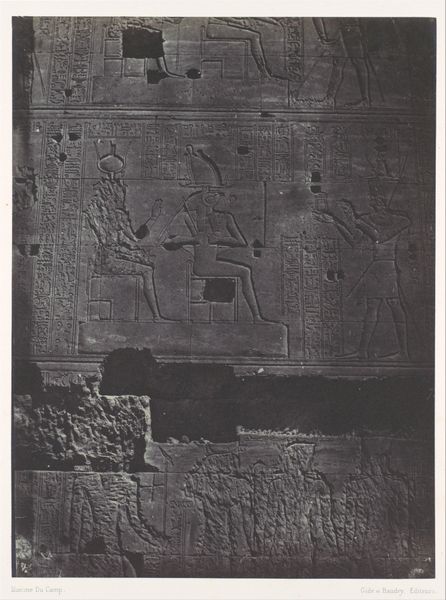
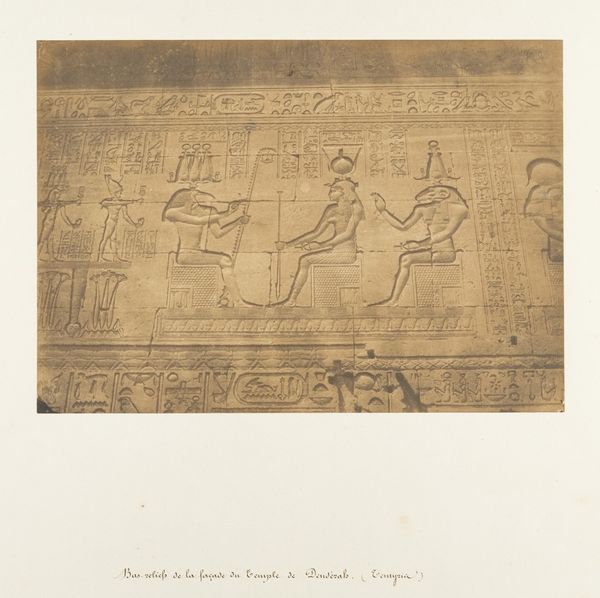
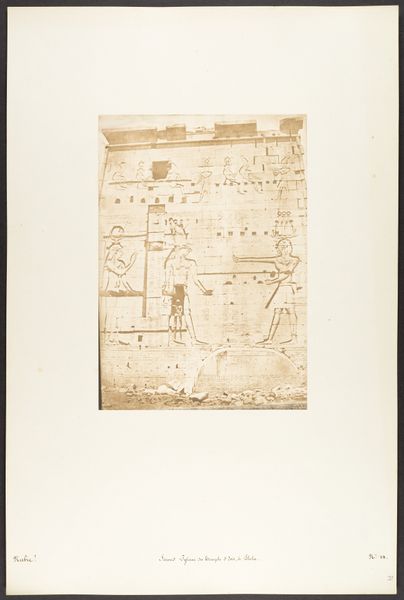
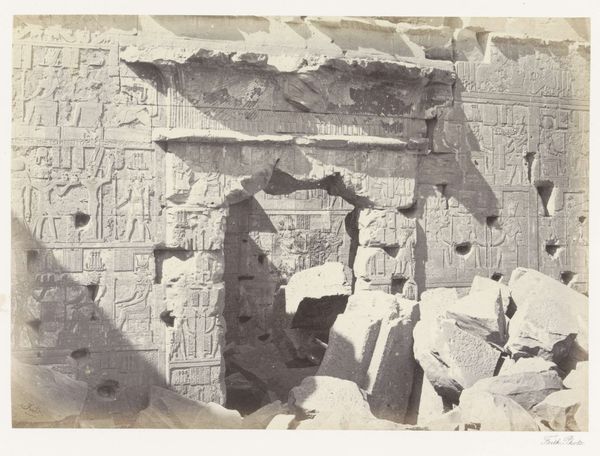
Curator: This gelatin-silver print by Félix Bonfils, titled "Man in een deuropening in de tempel van Ramses III in Egypte," dating from before 1872, captures a poignant moment within the ancient temple walls. Editor: Immediately, the monochrome and the textures grab me. You see the rough stone juxtaposed with that soft rendering of a man, almost ghost-like, peering out of the darkness. How striking! Curator: Indeed. Bonfils' meticulous capture of the hieroglyphs and carved reliefs—those cartouches and figural representations—preserves not only a physical space but also the cultural memory embedded within. It evokes centuries of symbolism. Editor: Symbolism rooted in exploitation though. Don’t forget Bonfils was part of a larger machine, bringing back these views for Western consumption. The labor of producing the photographic plates, the transportation, the imposition of a Western gaze… it all plays into the final image we’re seeing here. Curator: Certainly, we cannot divorce it from that colonial context. Still, I am drawn to how Bonfils has used the doorway itself as a visual metaphor. The shadowed figure beckons questions about time, history, and the boundaries between worlds. Editor: For me, it speaks volumes about the consumption of the past, filtered and resold as commodity. Consider the physical print itself – a manufactured object, a piece of paper transformed through chemical processes, packaged, and then sold for profit. Curator: And yet, does the medium diminish or amplify the cultural weight it carries? The symbolism of pharaohs, gods, and scribes, now mediated through light, silver, and a photographer’s perspective. There is almost a palpable echo of ancient voices. Editor: True, it also presents the raw materials for us to re-interpret that visual echo. I mean, think about the darkroom and the processes needed. The labor wasn’t about understanding Ramses; it was about industrial methods and how those translate meaning onto paper and later, a gallery wall. Curator: So the past becomes, in essence, material itself – reworked and represented for new consumption, yes. But also for study, introspection. We gain insight by looking closer, by questioning our perceptions. Editor: Agreed. The image operates as evidence of power structures both past and present. Bonfils captures more than just a temple, he’s documented a moment of encounter, and in his turn, we encounter that too. A palimpsest of intentions.