About this artwork
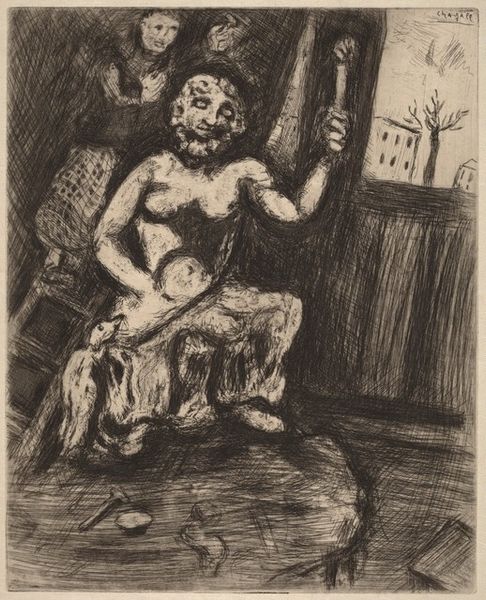
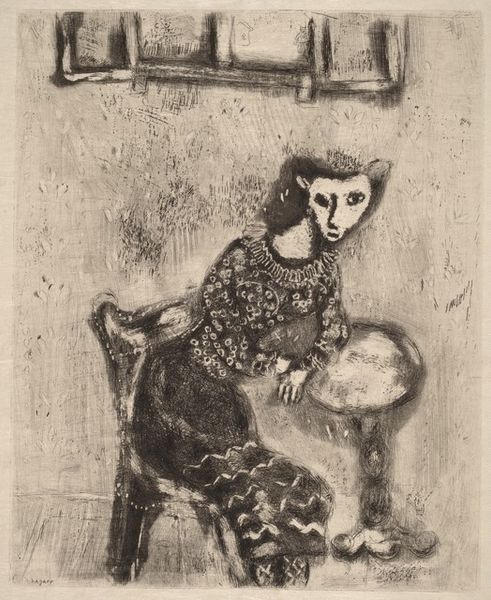
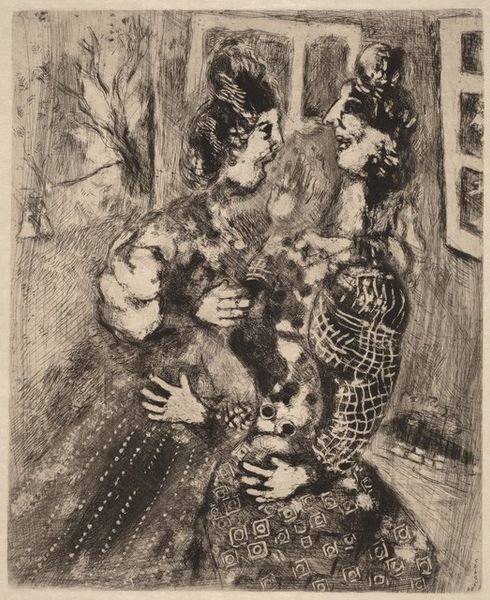
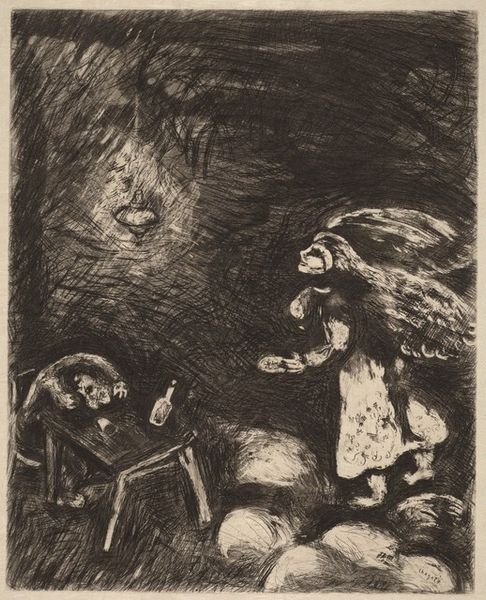
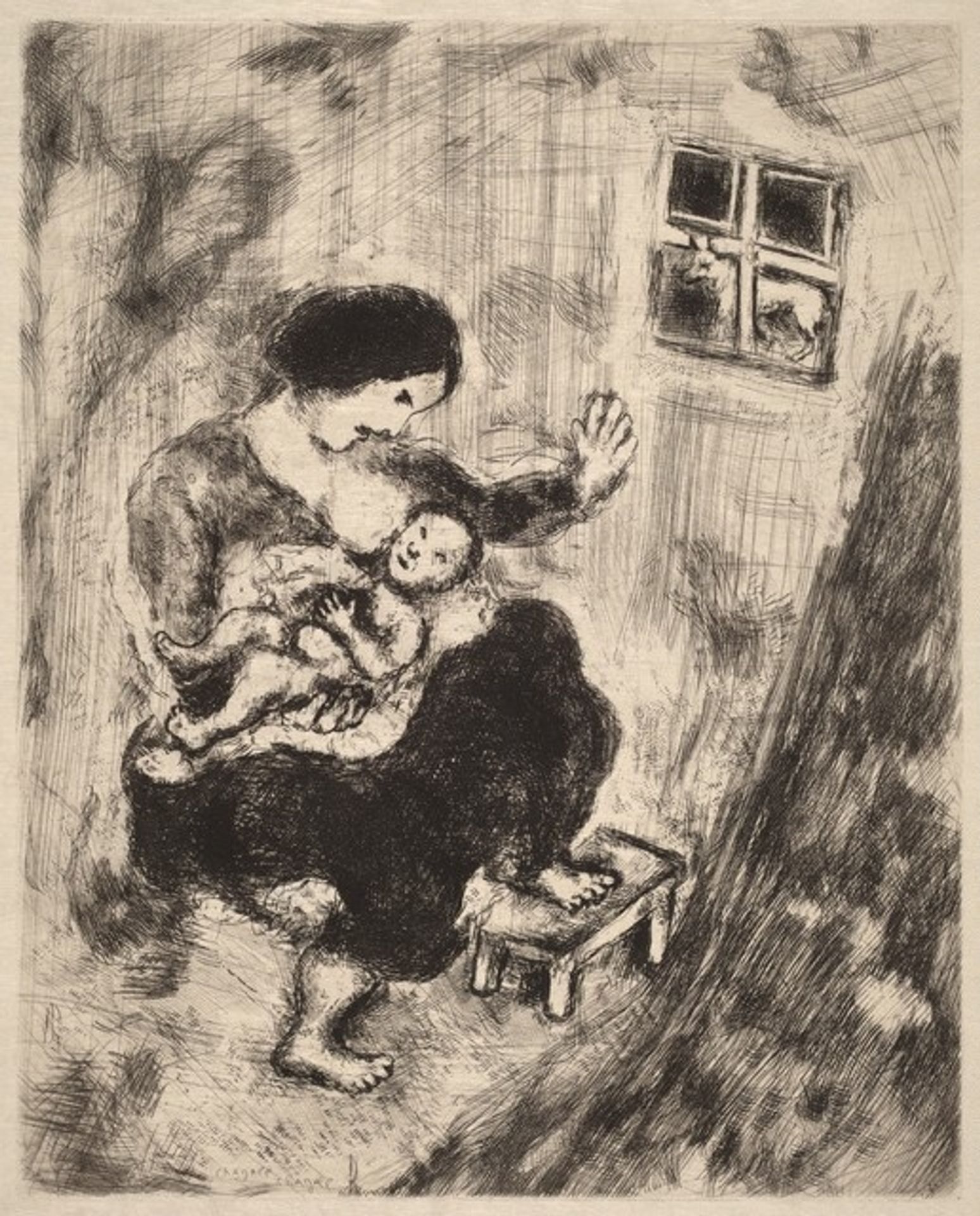
Editor: Here we have Marc Chagall's etching, "The Wolf, the Mother, and the Child," created between 1927 and 1930. The stark contrasts in the print create a kind of tense domestic scene, but the wolf at the window is somewhat unexpected. What sort of story do you think Chagall is telling here? Curator: Well, consider the recurring image of the wolf, a powerful symbol often associated with danger, but also with maternal care—think of Romulus and Remus. What happens when that primal force enters the domestic sphere? Is it a threat, or does it reflect a more profound, perhaps even unconscious, aspect of motherhood itself? Editor: So, the wolf isn't necessarily literal? More symbolic of something else? Curator: Precisely. The image plays on archetypes. Observe the mother's gesture: is she warding off the wolf, or acknowledging it? Consider, too, the child—unaware, seemingly safe in her arms. It speaks to the dual nature of protection and the ever-present undercurrent of the wild, both within and without. What cultural memories might Chagall, with his Russian-Jewish background, be drawing upon? Editor: I hadn't thought about it that way. Maybe it’s about the fears and anxieties a mother might feel, represented by the wolf. Curator: Indeed. And etching as a medium adds another layer. The stark blacks and whites, the sharp lines—they amplify the emotional tension and highlight the rawness of the scene, underscoring primal fear and tenderness. Editor: This has given me a completely new way to approach Chagall's symbolism! I never considered the multiple layers inherent in the "wolf" image itself. Curator: Art often asks more questions than it answers. Looking for symbols within cultural memory unlocks deeper levels of understanding.
The Wolf, the Mother, and the Child
1927 - 1930


Artwork details
- Medium
- print, etching
- Copyright
- National Gallery of Art: CC0 1.0
Tags
Comments
Share your thoughts
About this artwork
Editor: Here we have Marc Chagall's etching, "The Wolf, the Mother, and the Child," created between 1927 and 1930. The stark contrasts in the print create a kind of tense domestic scene, but the wolf at the window is somewhat unexpected. What sort of story do you think Chagall is telling here? Curator: Well, consider the recurring image of the wolf, a powerful symbol often associated with danger, but also with maternal care—think of Romulus and Remus. What happens when that primal force enters the domestic sphere? Is it a threat, or does it reflect a more profound, perhaps even unconscious, aspect of motherhood itself? Editor: So, the wolf isn't necessarily literal? More symbolic of something else? Curator: Precisely. The image plays on archetypes. Observe the mother's gesture: is she warding off the wolf, or acknowledging it? Consider, too, the child—unaware, seemingly safe in her arms. It speaks to the dual nature of protection and the ever-present undercurrent of the wild, both within and without. What cultural memories might Chagall, with his Russian-Jewish background, be drawing upon? Editor: I hadn't thought about it that way. Maybe it’s about the fears and anxieties a mother might feel, represented by the wolf. Curator: Indeed. And etching as a medium adds another layer. The stark blacks and whites, the sharp lines—they amplify the emotional tension and highlight the rawness of the scene, underscoring primal fear and tenderness. Editor: This has given me a completely new way to approach Chagall's symbolism! I never considered the multiple layers inherent in the "wolf" image itself. Curator: Art often asks more questions than it answers. Looking for symbols within cultural memory unlocks deeper levels of understanding.
Comments
Share your thoughts