About this artwork
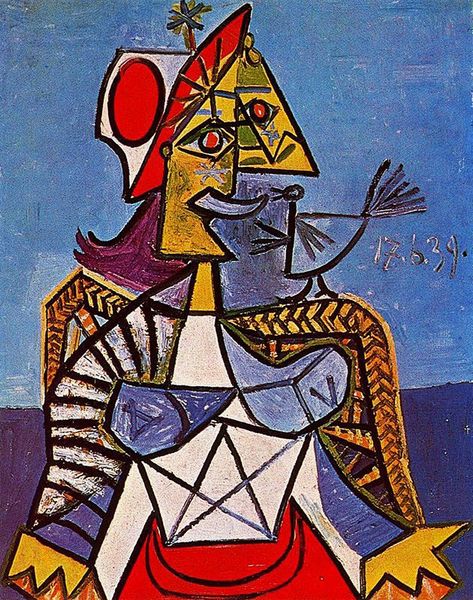
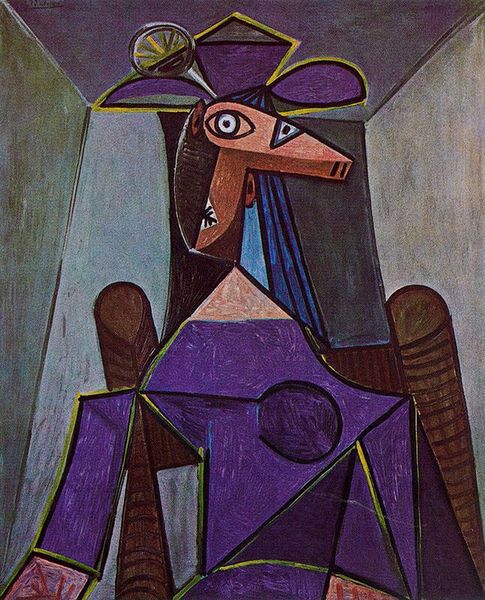
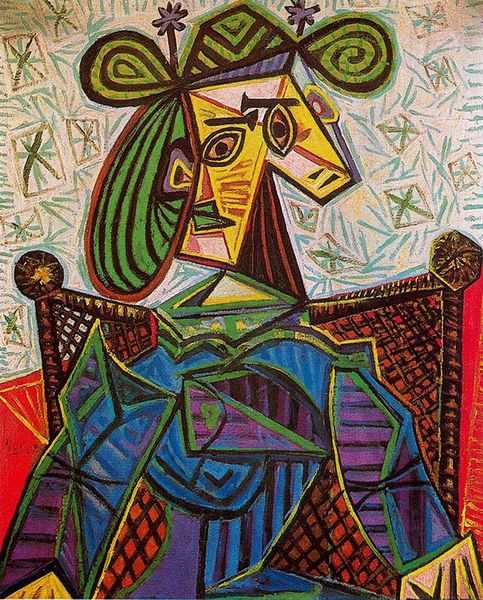
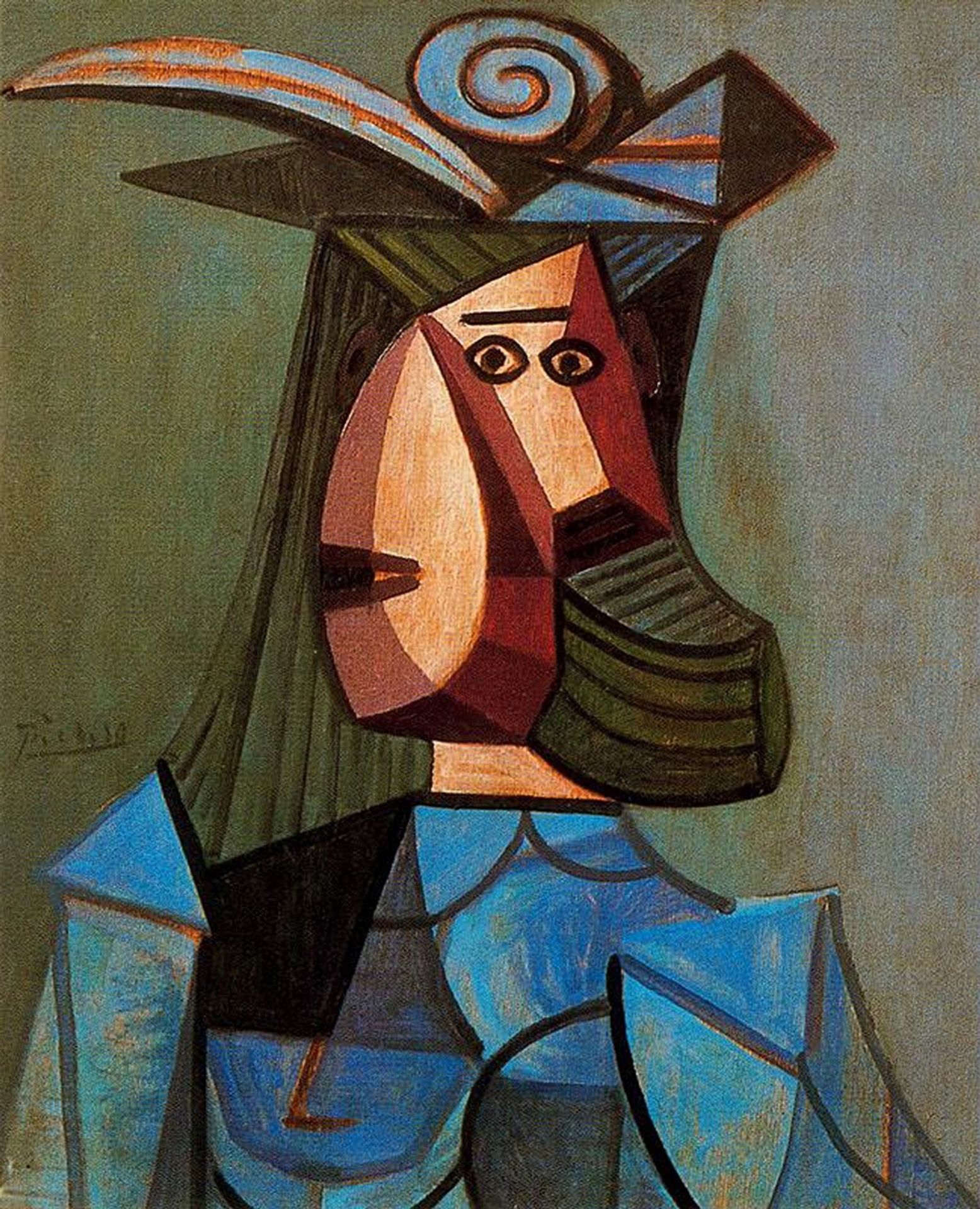
This is Picasso’s “Portrait of a Woman (Dora Maar)”, made with oil on canvas, though its exact date remains unconfirmed. You know, it’s pretty special because Picasso isn't trying to copy what he sees. Instead, he's showing us how he *thinks* about seeing. The colors feel both intentional and intuitive. Like, that blue... it's not just blue, is it? It's sad, maybe a little intense, but also kinda stylish. Look closely, you can almost feel the texture of the paint. It's not smooth; there are little ridges and bumps, like he was wrestling with the canvas. Notice how the lines aren't perfect, but they carve out shapes and shadows that are full of attitude. That dark triangle around the neckline seems like a punchy accent, right? Picasso always feels like he’s in conversation with artists like Cezanne, who was also trying to crack open new ways of representing the world. For him, and for so many artists, it's not about getting it "right," but about how we make sense of it all.
Portrait of woman (Dora Maar)
1942


Artwork details
- Medium
- painting, oil-paint
- Dimensions
- 60.5 x 53.8 cm
- Location
- Folkwang Museum, Essen, Germany
- Copyright
- Pablo Picasso,Fair Use
Tags
portrait
cubism
painting
oil-paint
figuration
form
geometric
female-portraits
modernism
Comments
Be the first to share your thoughts about this work.
About this artwork
This is Picasso’s “Portrait of a Woman (Dora Maar)”, made with oil on canvas, though its exact date remains unconfirmed. You know, it’s pretty special because Picasso isn't trying to copy what he sees. Instead, he's showing us how he *thinks* about seeing. The colors feel both intentional and intuitive. Like, that blue... it's not just blue, is it? It's sad, maybe a little intense, but also kinda stylish. Look closely, you can almost feel the texture of the paint. It's not smooth; there are little ridges and bumps, like he was wrestling with the canvas. Notice how the lines aren't perfect, but they carve out shapes and shadows that are full of attitude. That dark triangle around the neckline seems like a punchy accent, right? Picasso always feels like he’s in conversation with artists like Cezanne, who was also trying to crack open new ways of representing the world. For him, and for so many artists, it's not about getting it "right," but about how we make sense of it all.
Comments
Be the first to share your thoughts about this work.