About this artwork
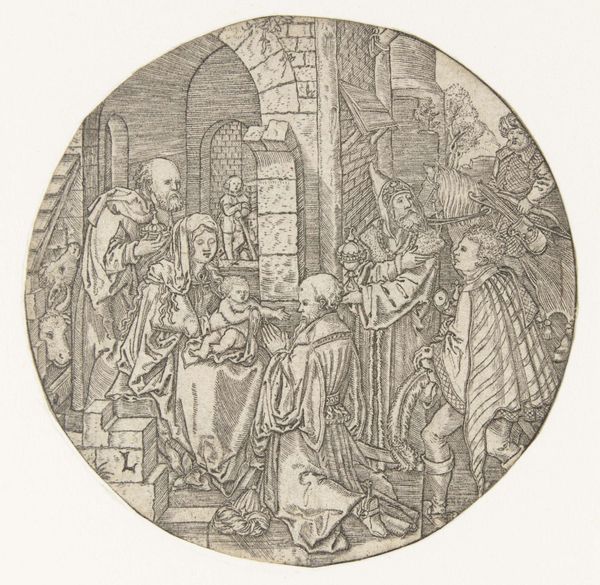
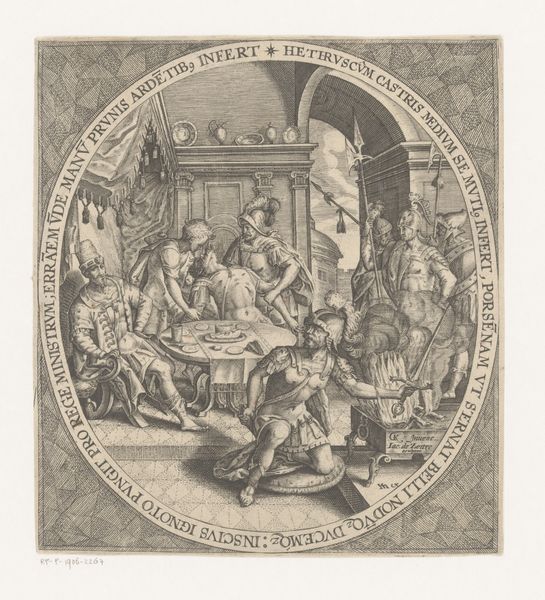
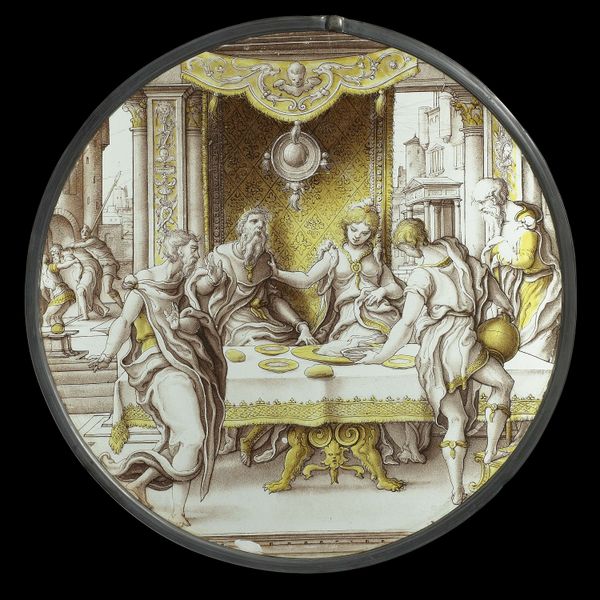
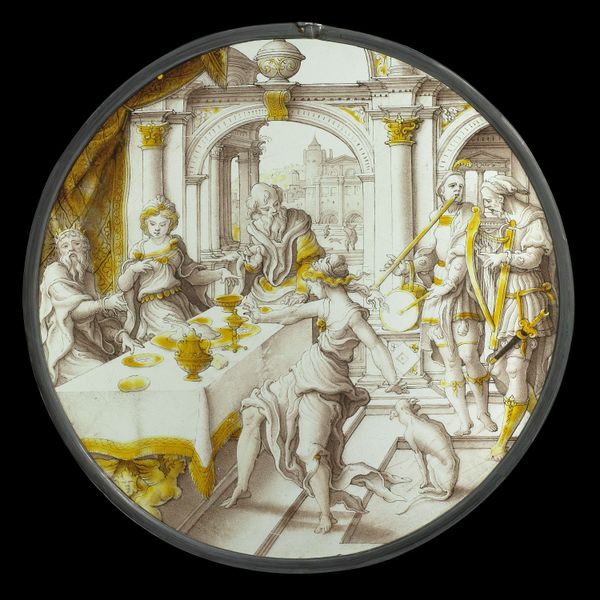
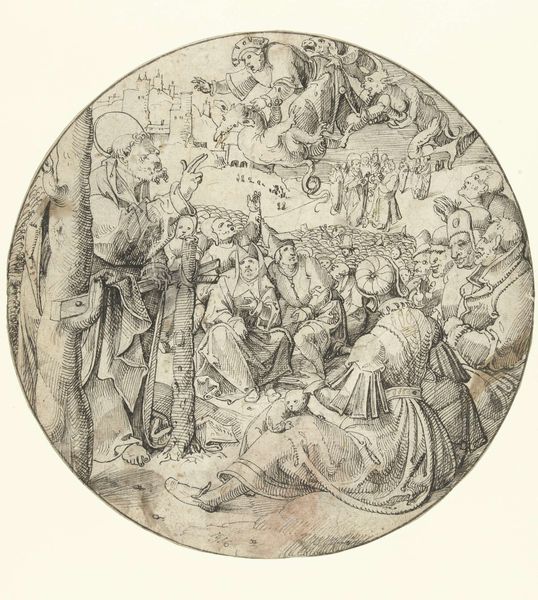
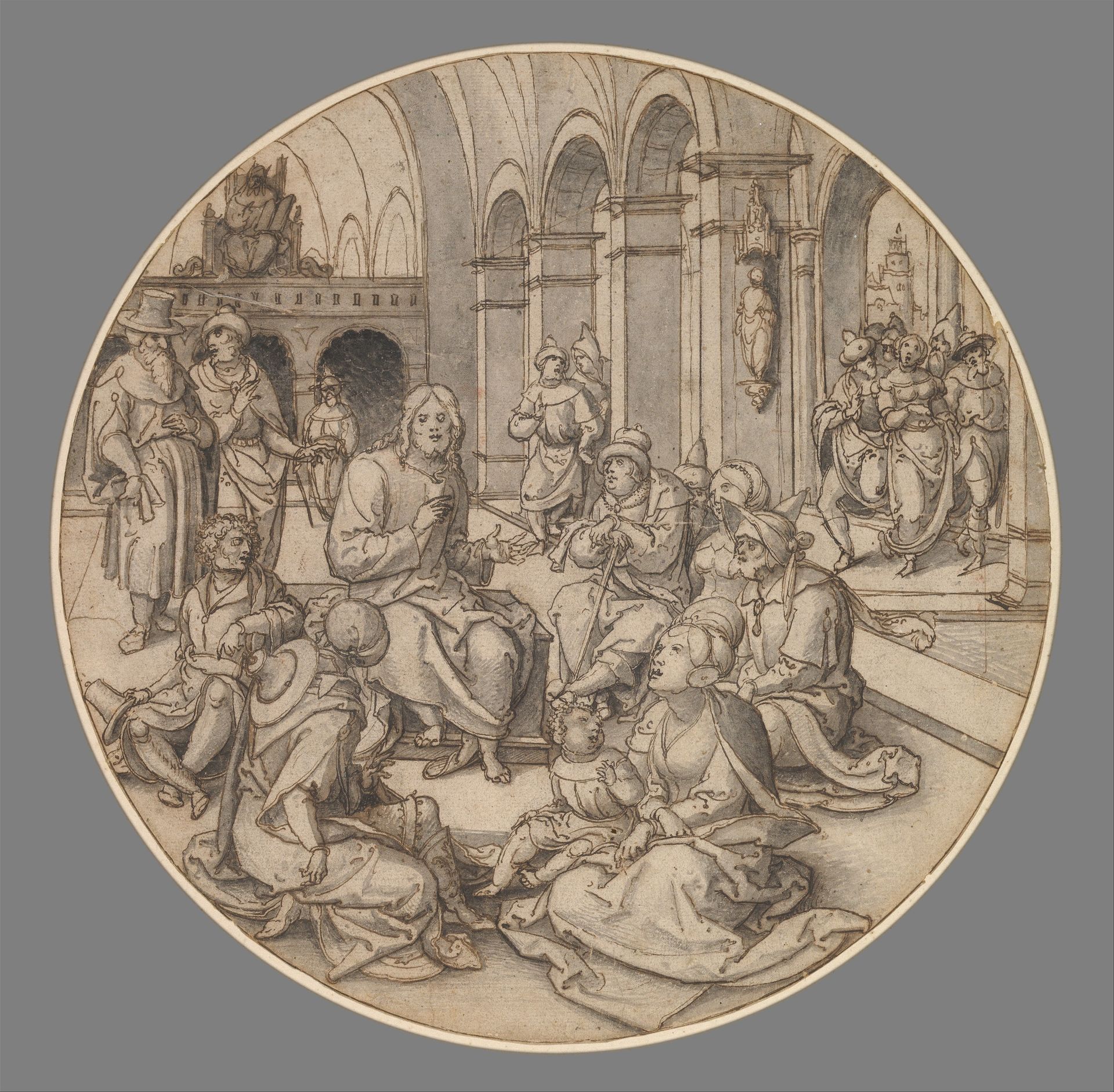
Dirck Vellert rendered this circular drawing, using pen and brown ink with gray wash, presenting us with a scene brimming with symbolic resonance. The central figure, Christ, engages in discourse, surrounded by a throng that includes those who bring the adulterous woman. Observe Christ’s gesture, reminiscent of the raised hand found in depictions of ancient philosophers and orators—a signal of profound insight. The act of bringing forth the adulterous woman is heavy with symbolism. It echoes themes of judgment and mercy, a dichotomy that resurfaces across cultures. We see it mirrored, for instance, in classical depictions of divine judgment, where similar acts of exposure carry connotations of moral reckoning. This scene is not merely a biblical narrative but a stage for recurring human dramas. The psychological weight of judgment versus compassion plays out—an oscillation ingrained in our collective memory. These symbols, embedded in art across centuries, act as conduits, tapping into our subconscious understanding of morality, shame, and redemption. The wheel turns.
Christ Preaching in the Synagogue, with the Pharisees Bringing the Woman Taken in Adultery
1523


Artwork details
- Medium
- drawing, print, engraving
- Dimensions
- Diameter: 10 3/16 in. (25.8 cm)
- Location
- Metropolitan Museum of Art, New York, NY
- Copyright
- Public Domain
Tags
Comments
Share your thoughts
About this artwork
Dirck Vellert rendered this circular drawing, using pen and brown ink with gray wash, presenting us with a scene brimming with symbolic resonance. The central figure, Christ, engages in discourse, surrounded by a throng that includes those who bring the adulterous woman. Observe Christ’s gesture, reminiscent of the raised hand found in depictions of ancient philosophers and orators—a signal of profound insight. The act of bringing forth the adulterous woman is heavy with symbolism. It echoes themes of judgment and mercy, a dichotomy that resurfaces across cultures. We see it mirrored, for instance, in classical depictions of divine judgment, where similar acts of exposure carry connotations of moral reckoning. This scene is not merely a biblical narrative but a stage for recurring human dramas. The psychological weight of judgment versus compassion plays out—an oscillation ingrained in our collective memory. These symbols, embedded in art across centuries, act as conduits, tapping into our subconscious understanding of morality, shame, and redemption. The wheel turns.
Comments
Share your thoughts