1777 - 1778
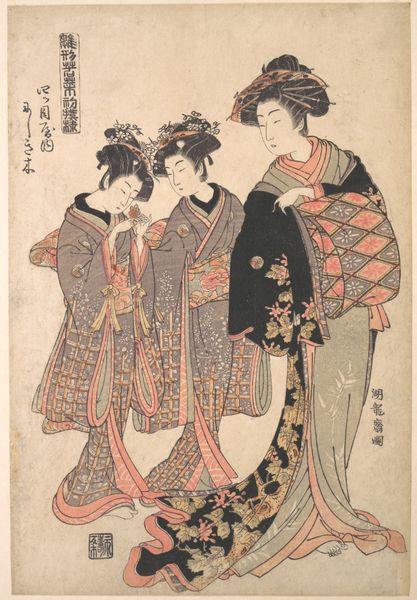
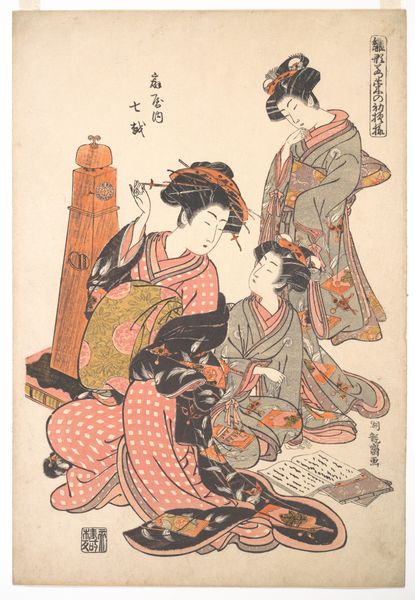
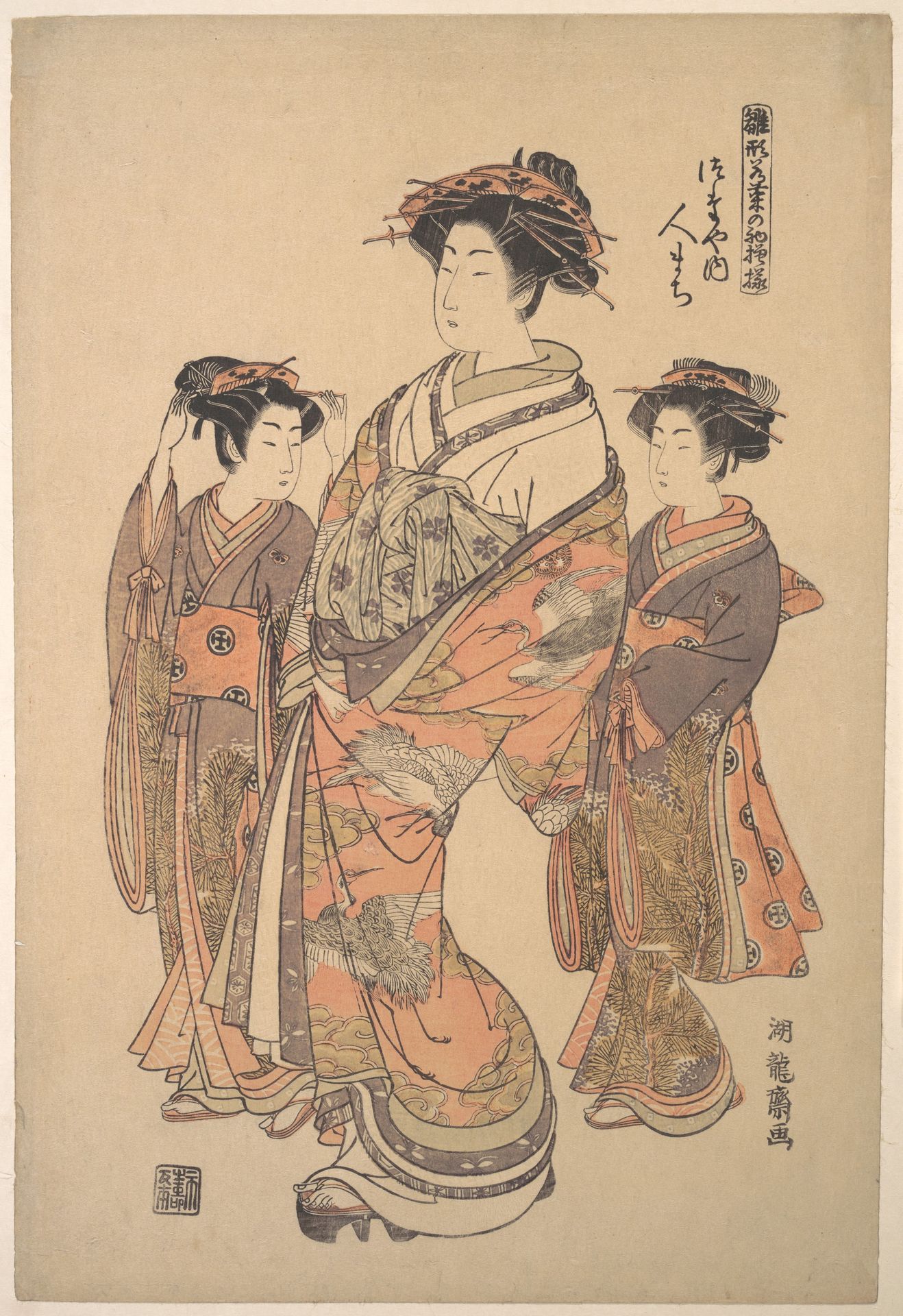
The Courtesan Hitomachi of the Tsutaya Brothel, from the series “A Pat-tern Book of the Year’s First Designs, Fresh as Spring Herbs” (“Hinagata wakana no hatsu moyō”)


Listen to curator's interpretation
Curatorial notes
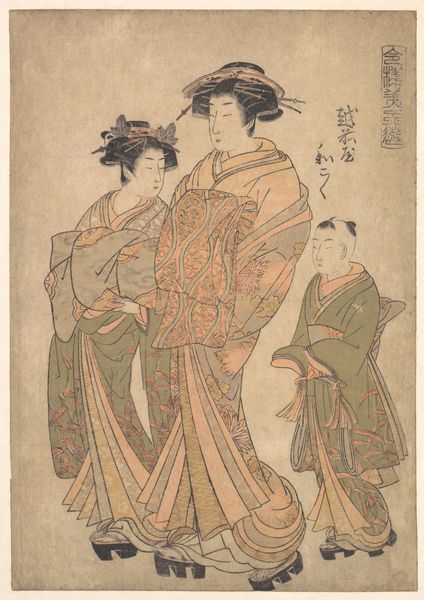
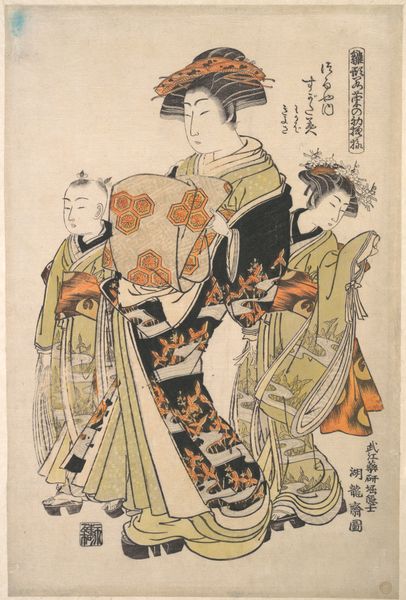
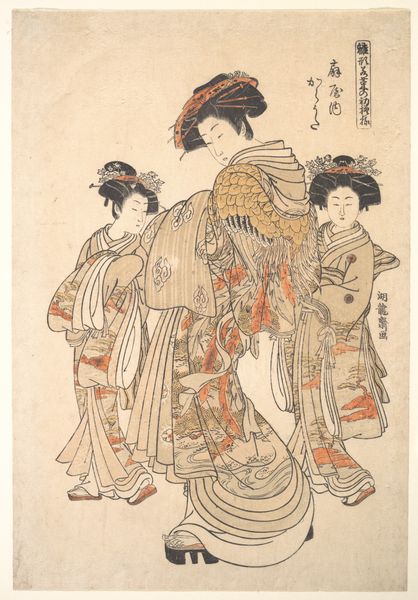
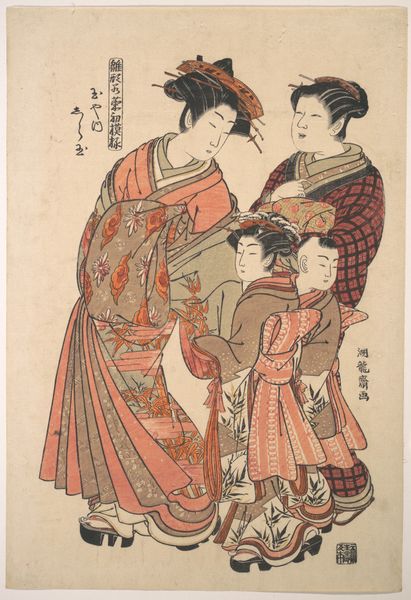
Isoda Koryūsai made this print of Hitomachi, a courtesan in the Tsutaya brothel, using woodblock printing, a technique that transformed image-making in Japan. The process begins with a drawing, which is then carefully transferred onto a wooden block, usually cherry. A carver then meticulously cuts away the wood around the lines, leaving a raised image. Ink is applied to the block, and paper is pressed onto it to create the print. Each color requires a separate block, demanding precision and skill to align perfectly, which can be seen in the layered kimono designs. This print belongs to a series that showcases the latest kimono fashions. These prints were not only artworks but also served as pattern books for the fashion-conscious. Woodblock printing allowed for the mass production of images, linking art with commerce and consumption. This print offers insight into the world of fashion, labor, and the cultural values of the time, blurring boundaries between art, craft, and commercial design.