About this artwork
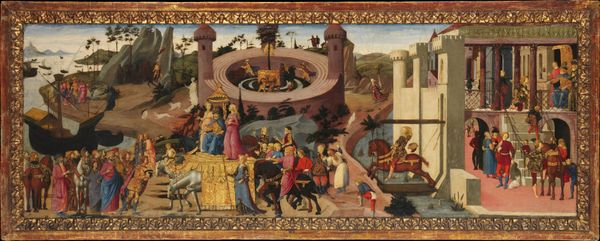
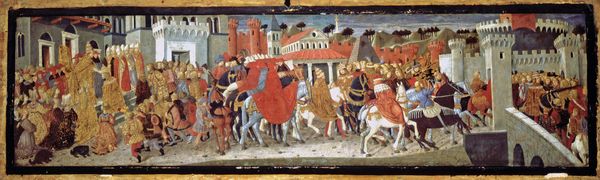
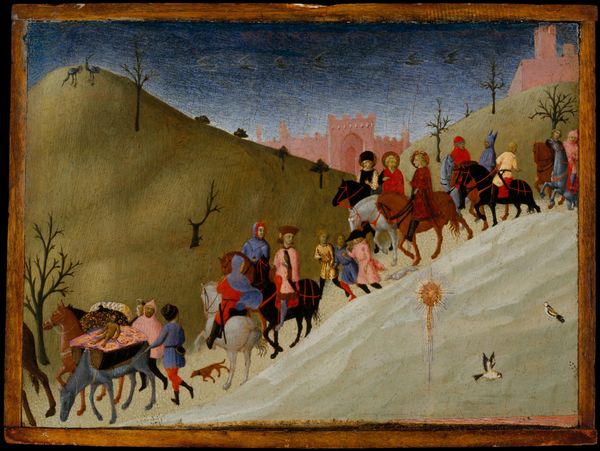
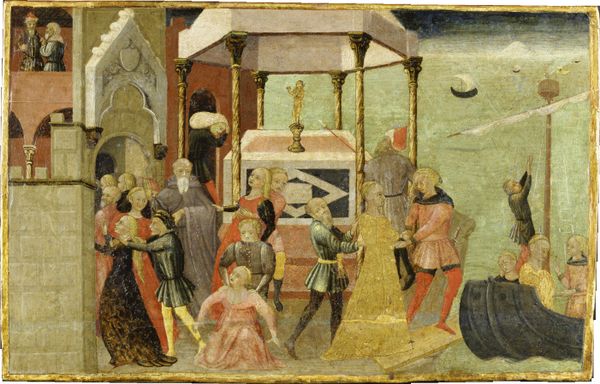
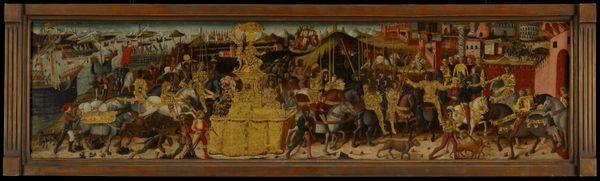
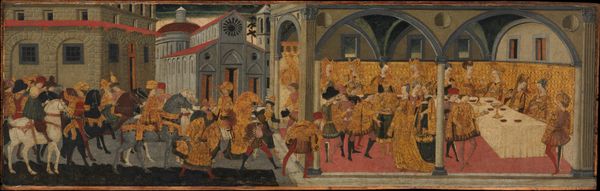
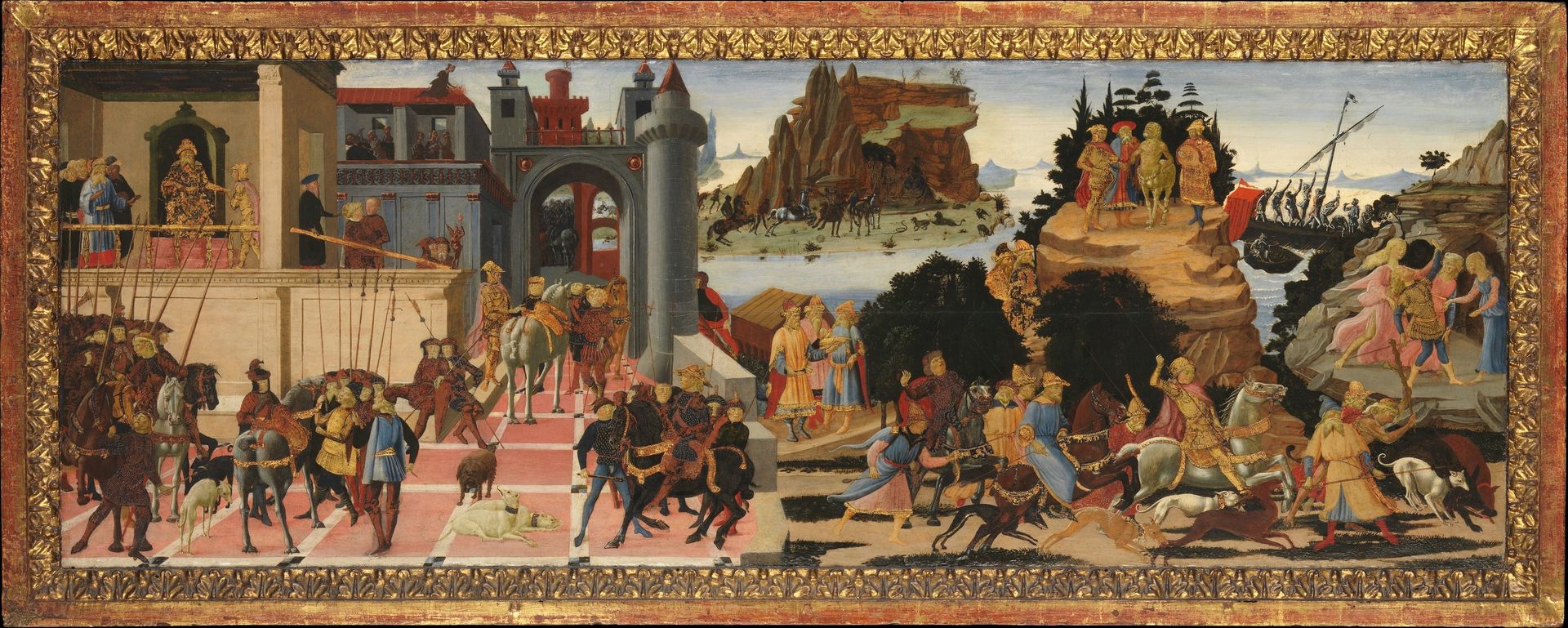
Jacopo del Sellaio painted these scenes from the story of the Argonauts, likely in the 1470s, using tempera on wood. Notice the recurring motif of processions. These formal arrangements carry echoes of ancient triumphal entries, scenes lauding victorious returns, seen in Roman art. The procession, often symbolizing power and order, is not merely a display. It’s a conduit for collective emotions, a ritual that stirs the subconscious. Consider, for instance, how similar arrangements appear in religious contexts like the entry into Jerusalem, or even modern-day political rallies. Yet, the orderly procession from Sellaio's painting bears within it the seeds of chaos—the unpredictable nature of human ambition, the irrationality of myth. This dichotomy is crucial. For in the tension between order and disorder lies the essence of the human condition, a perpetual cycle of control and chaos. The symbol of processions as a formal, organized motif of power, continues to evolve.
Scenes from the Story of the Argonauts 1460 - 1470

Jacopo di Arcangelo (called Jacopo del Sellaio)
1441 - 1493
The Metropolitan Museum of Art
Metropolitan Museum of Art, New York, NYArtwork details
- Medium
- painting, oil-paint
- Dimensions
- Overall 24 1/8 x 60 1/8 in. (61.3 x 152.7 cm); painted surface 19 5/8 x 56 in. (49.8 x 142.2 cm)
- Location
- Metropolitan Museum of Art, New York, NY
- Copyright
- Public Domain
Tags
narrative-art
painting
oil-paint
landscape
figuration
oil painting
history-painting
italian-renaissance
Comments
No comments
About this artwork
Jacopo del Sellaio painted these scenes from the story of the Argonauts, likely in the 1470s, using tempera on wood. Notice the recurring motif of processions. These formal arrangements carry echoes of ancient triumphal entries, scenes lauding victorious returns, seen in Roman art. The procession, often symbolizing power and order, is not merely a display. It’s a conduit for collective emotions, a ritual that stirs the subconscious. Consider, for instance, how similar arrangements appear in religious contexts like the entry into Jerusalem, or even modern-day political rallies. Yet, the orderly procession from Sellaio's painting bears within it the seeds of chaos—the unpredictable nature of human ambition, the irrationality of myth. This dichotomy is crucial. For in the tension between order and disorder lies the essence of the human condition, a perpetual cycle of control and chaos. The symbol of processions as a formal, organized motif of power, continues to evolve.
Comments
No comments