About this artwork
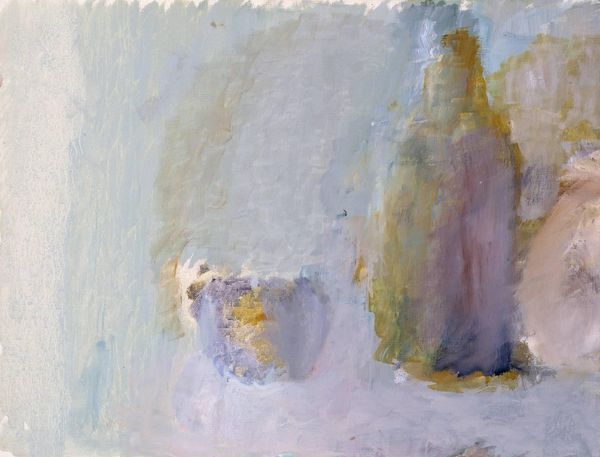
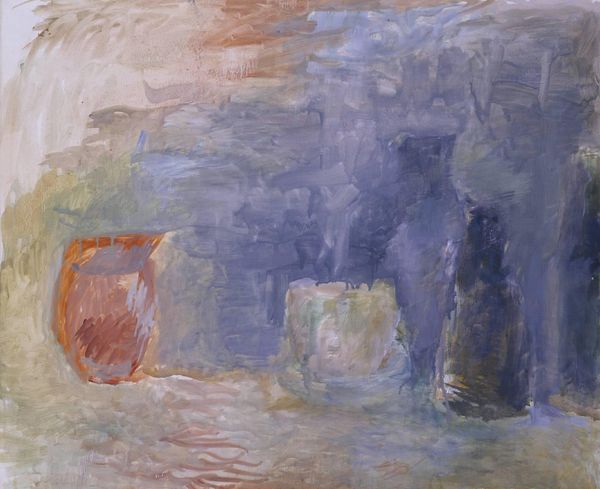
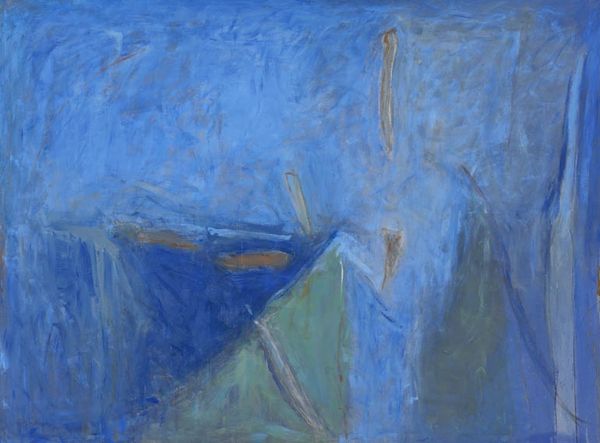
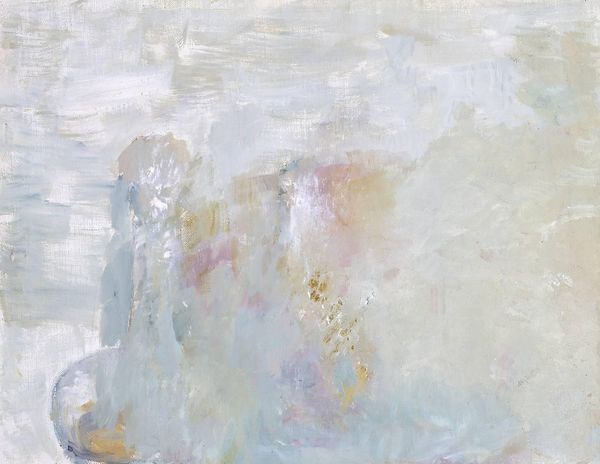
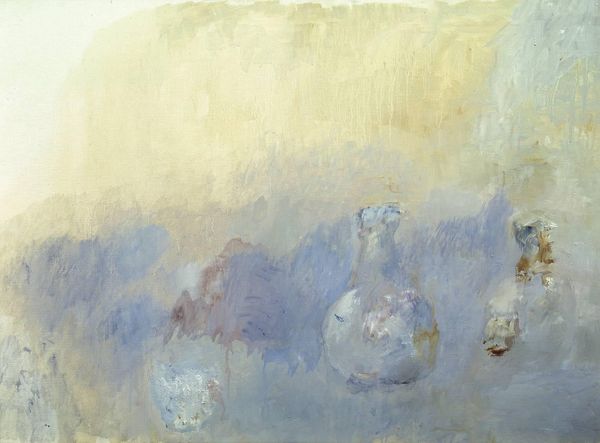
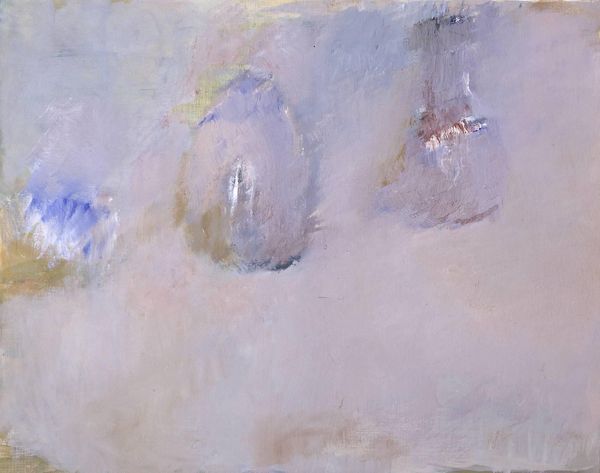
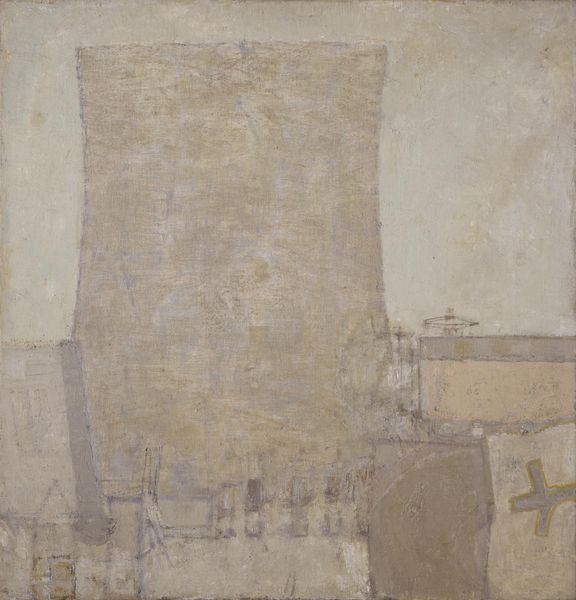
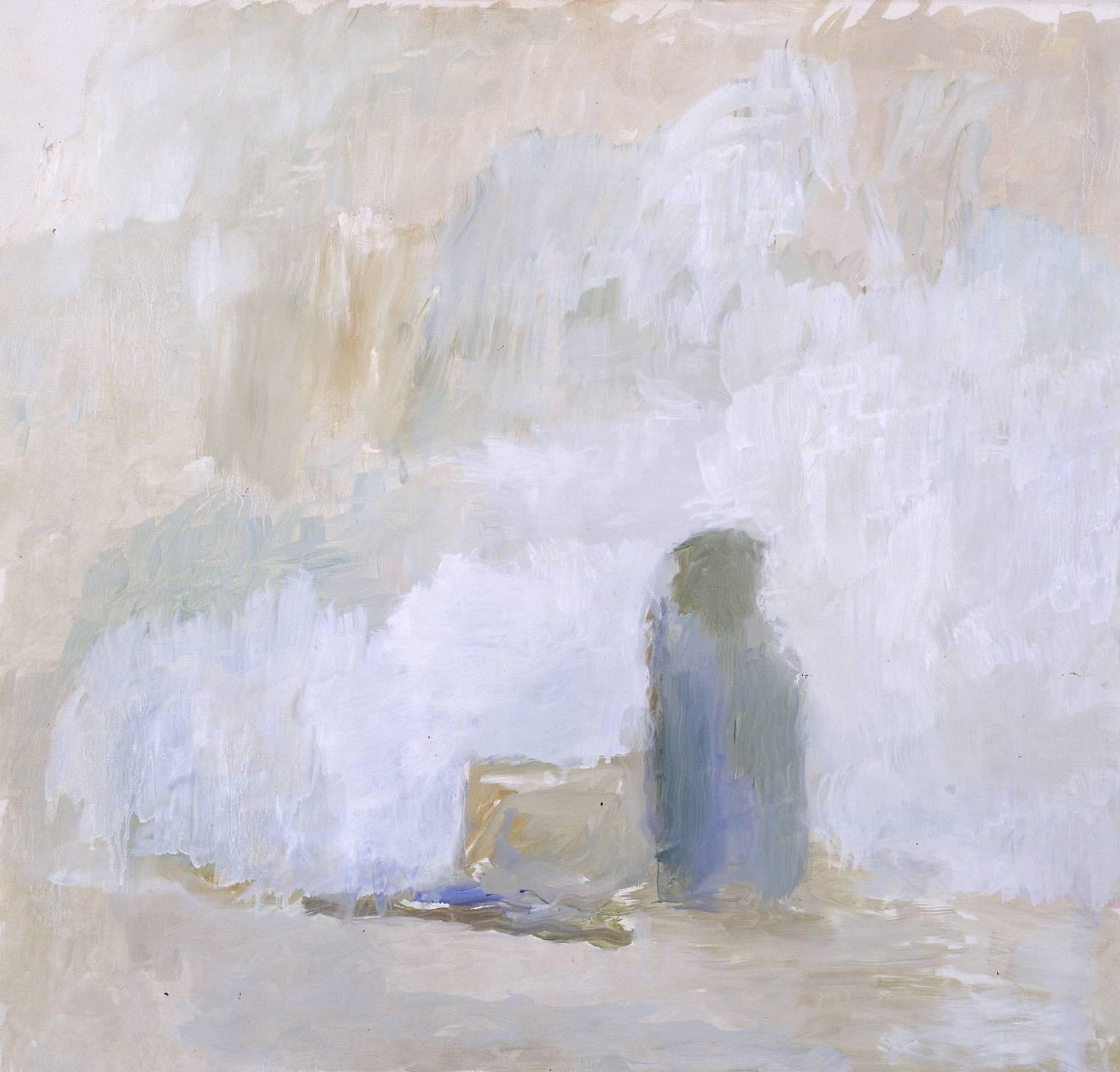
Editor: This is Adrian Stokes’s "Still Life: Last Eleven (No. 9)," and I’m struck by its muted palette. What do you see in this piece beyond the apparent simplicity? Curator: Stokes, writing during and after the Second World War, captures a sense of postwar austerity. These objects, almost ghostly, become symbols of loss and resilience. How does this quietness speak to broader cultural anxieties? Editor: So, it's not just a still life, but a reflection on a specific moment in history? Curator: Precisely. Think about the historical context of austerity and reconstruction. These "last eleven" become metonyms for what remains after devastation. Stokes invites us to consider art as a form of memorialization. Editor: I hadn't thought of it that way. Thank you for shedding light on that!

Artwork details
- Dimensions
- support: 508 x 534 mm
- Location
- Tate Collections
- Copyright
- © The estate of Adrian Stokes | CC-BY-NC-ND 4.0 DEED, Photo: Tate
Comments

http://www.tate.org.uk/art/artworks/stokes-still-life-last-eleven-no-9-t03586
About this artwork
Editor: This is Adrian Stokes’s "Still Life: Last Eleven (No. 9)," and I’m struck by its muted palette. What do you see in this piece beyond the apparent simplicity? Curator: Stokes, writing during and after the Second World War, captures a sense of postwar austerity. These objects, almost ghostly, become symbols of loss and resilience. How does this quietness speak to broader cultural anxieties? Editor: So, it's not just a still life, but a reflection on a specific moment in history? Curator: Precisely. Think about the historical context of austerity and reconstruction. These "last eleven" become metonyms for what remains after devastation. Stokes invites us to consider art as a form of memorialization. Editor: I hadn't thought of it that way. Thank you for shedding light on that!
Comments
http://www.tate.org.uk/art/artworks/stokes-still-life-last-eleven-no-9-t03586