About this artwork
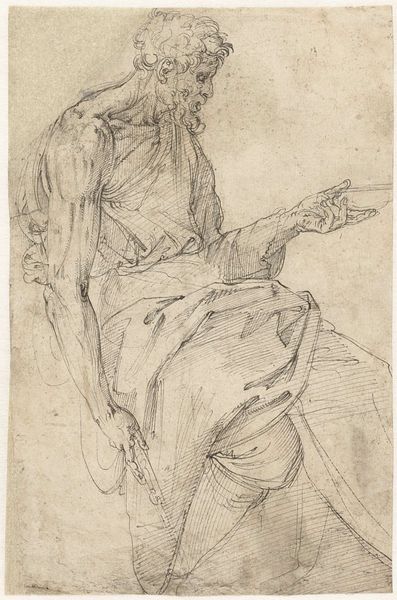
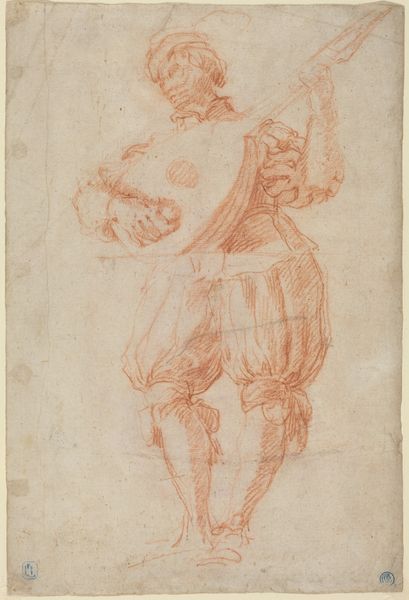
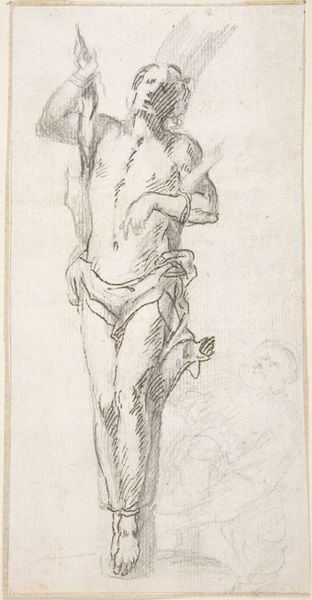
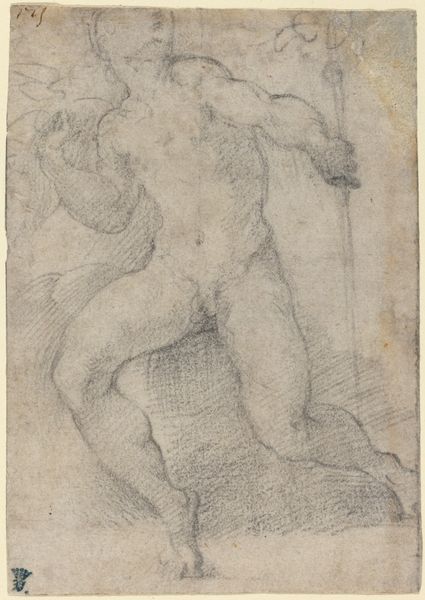
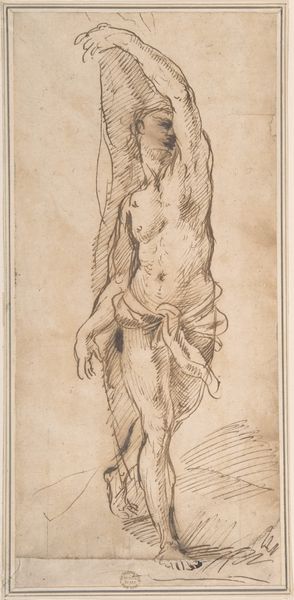
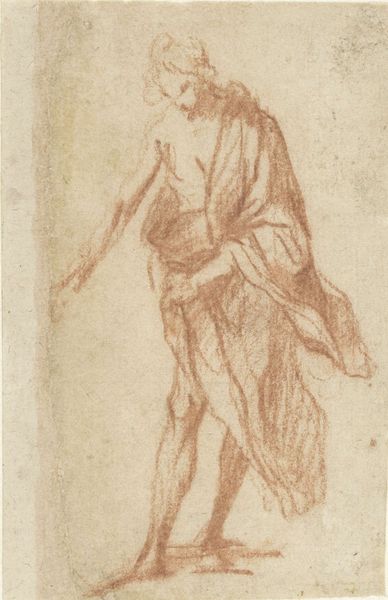
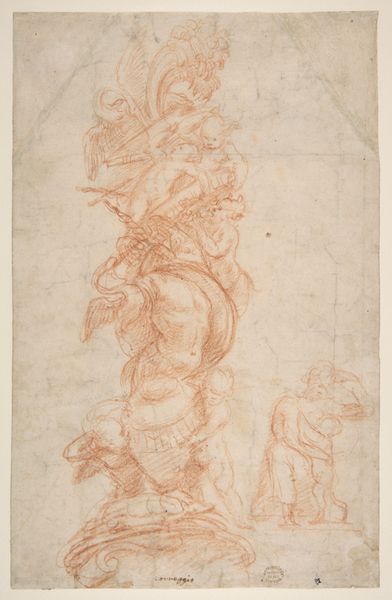
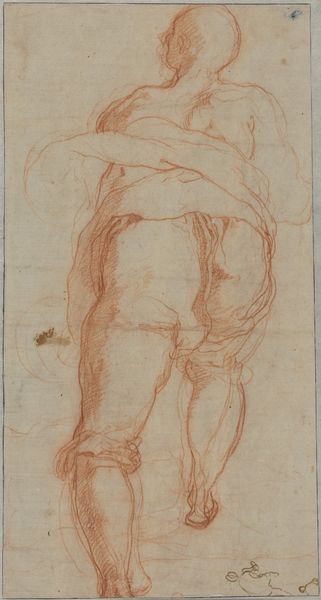
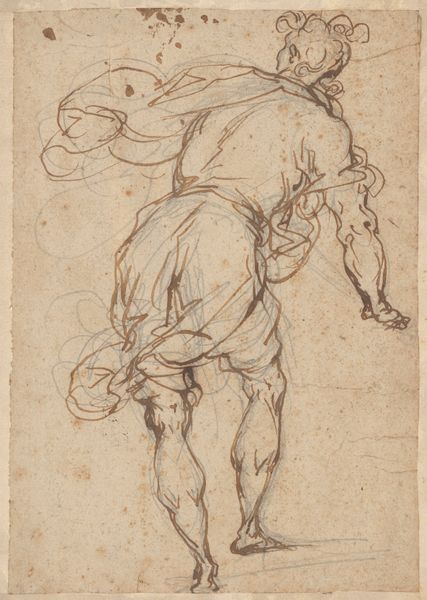
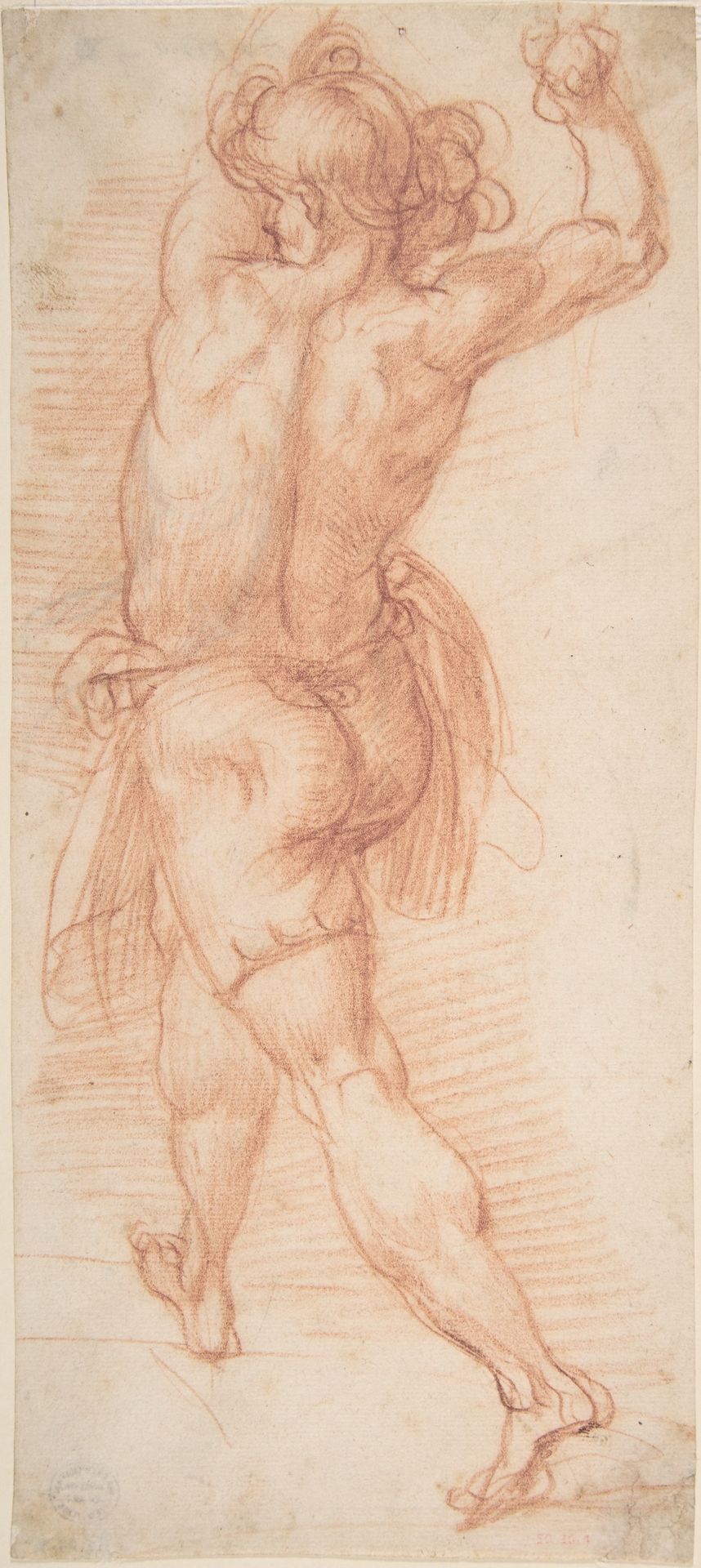
Cavaliere d'Arpino, also known as Giuseppe Cesari, made this drawing of a man throwing stones, sometime between 1583 and 1640, using a reddish-brown chalk. The effect relies on the directness and simplicity of the medium. Chalk is nothing more than a prepared stone, made into a stylus. The artist would have held it just so, and with an expert hand, laid down these marks on paper, to create a figure in dynamic pose. The method is straightforward, and the marks left behind show the pressure and speed with which the artist worked, capturing the feeling of an action about to happen. The use of chalk allowed for the economical and fast production of preparatory sketches, with the intention of developing the idea into a larger painting. It's a good reminder that materials are never neutral; they always carry social meaning, influencing the way the artist thought and the kind of work he made. In this case, it enabled an art of rapid, fluid gestures, attuned to the demands of a busy workshop.
Figure of a Man Throwing Stones (recto); Study of a Man (?) (verso)
1568 - 1640

Cavaliere d'Arpino (Giuseppe Cesari)
1568 - 1640
The Metropolitan Museum of Art
Metropolitan Museum of Art, New York, NYArtwork details
- Medium
- drawing, print, pencil
- Dimensions
- 10 7/8 x 4 13/16in. (27.7 x 12.2cm)
- Location
- Metropolitan Museum of Art, New York, NY
- Copyright
- Public Domain
Tags
Comments
Share your thoughts
About this artwork
Cavaliere d'Arpino, also known as Giuseppe Cesari, made this drawing of a man throwing stones, sometime between 1583 and 1640, using a reddish-brown chalk. The effect relies on the directness and simplicity of the medium. Chalk is nothing more than a prepared stone, made into a stylus. The artist would have held it just so, and with an expert hand, laid down these marks on paper, to create a figure in dynamic pose. The method is straightforward, and the marks left behind show the pressure and speed with which the artist worked, capturing the feeling of an action about to happen. The use of chalk allowed for the economical and fast production of preparatory sketches, with the intention of developing the idea into a larger painting. It's a good reminder that materials are never neutral; they always carry social meaning, influencing the way the artist thought and the kind of work he made. In this case, it enabled an art of rapid, fluid gestures, attuned to the demands of a busy workshop.
Comments
Share your thoughts