About this artwork
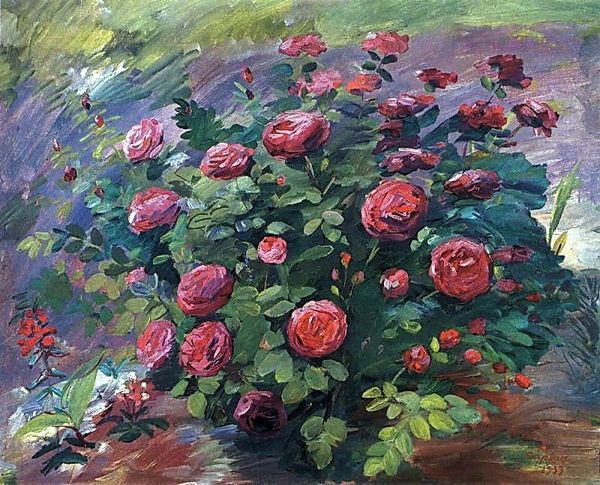
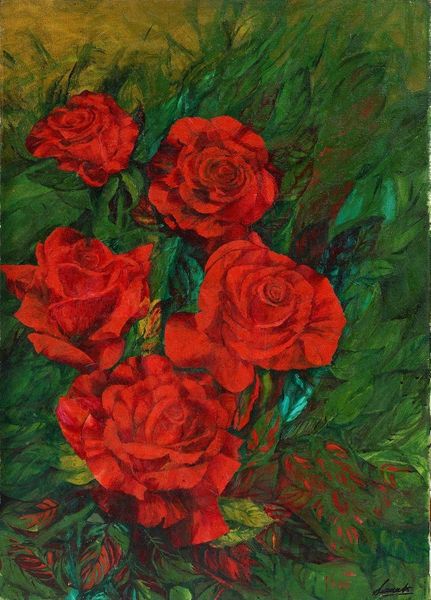
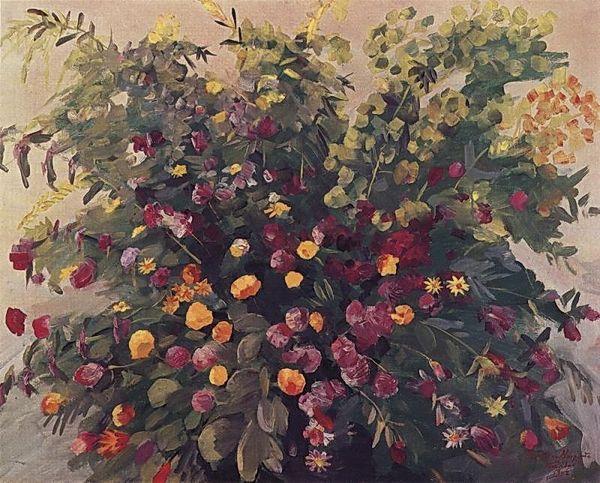
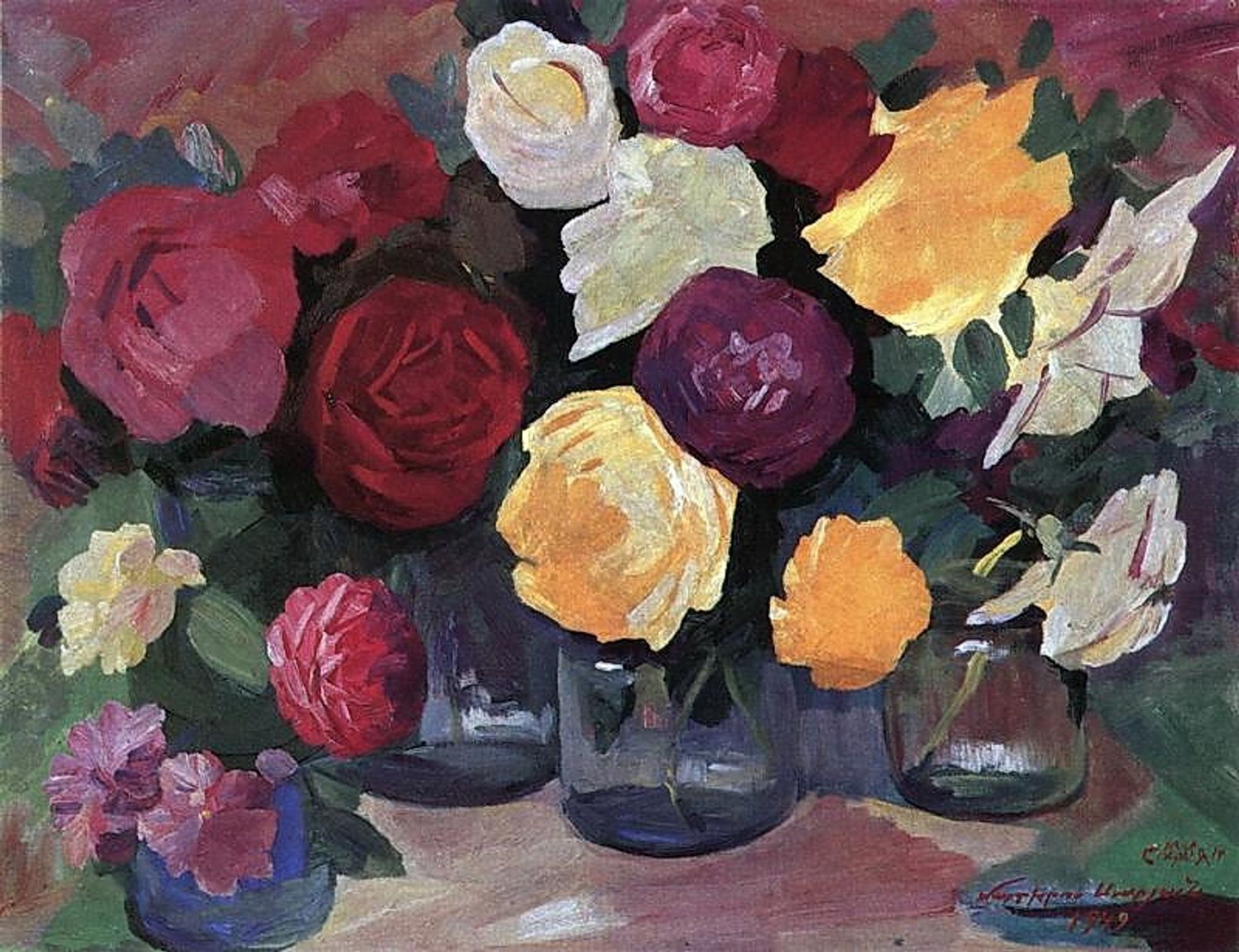
Editor: Here we have Martiros Sarian's "Roses," painted in 1949. It’s an oil painting, a vibrant still life. The way the thick paint is applied gives it such a tangible feel. What strikes you about it? Curator: Look at the density of the paint itself. Sarian wasn't just depicting roses; he was engaging with the very *stuff* of paint. Consider the context of 1949. Post-war, resources were often scarce. Was Sarian perhaps commenting on luxury versus necessity, using a traditionally 'feminine' subject like flowers? Editor: That’s a really interesting point I never considered. So, you're suggesting that the choice of such a thick application of paint could have symbolic weight? Curator: Absolutely. Think about the labor involved. The visible brushstrokes, the sheer volume of oil paint used when others might have been rationing… it all contributes to a statement. How accessible would these materials have been to the average artist, and what does that say about artistic privilege, even in the Soviet context? Editor: So, it is a sign of artistic privilage as the war just ended a few years earlier, as resources for regular people would be hard to obtain, while Sarian was making art from them? Curator: Exactly. Consider who had access to the means of production - paint, canvas, studio space - and what kinds of stories those material conditions allow them to tell. This isn't just about the beautiful flowers; it's about the power dynamics embedded in artistic creation. How does that perspective change how you see the artwork? Editor: It adds a whole new layer. I was initially drawn to the beauty, but now I see it's also a product of a specific time and set of social circumstances related to who and how the artist produced the work using material only available for few. Thank you! Curator: Indeed. Examining the material conditions gives us deeper insights into the art's message and the artist's place in the world.

Artwork details
- Copyright
- Martiros Sarian,Fair Use
Comments
Share your thoughts
About this artwork
Editor: Here we have Martiros Sarian's "Roses," painted in 1949. It’s an oil painting, a vibrant still life. The way the thick paint is applied gives it such a tangible feel. What strikes you about it? Curator: Look at the density of the paint itself. Sarian wasn't just depicting roses; he was engaging with the very *stuff* of paint. Consider the context of 1949. Post-war, resources were often scarce. Was Sarian perhaps commenting on luxury versus necessity, using a traditionally 'feminine' subject like flowers? Editor: That’s a really interesting point I never considered. So, you're suggesting that the choice of such a thick application of paint could have symbolic weight? Curator: Absolutely. Think about the labor involved. The visible brushstrokes, the sheer volume of oil paint used when others might have been rationing… it all contributes to a statement. How accessible would these materials have been to the average artist, and what does that say about artistic privilege, even in the Soviet context? Editor: So, it is a sign of artistic privilage as the war just ended a few years earlier, as resources for regular people would be hard to obtain, while Sarian was making art from them? Curator: Exactly. Consider who had access to the means of production - paint, canvas, studio space - and what kinds of stories those material conditions allow them to tell. This isn't just about the beautiful flowers; it's about the power dynamics embedded in artistic creation. How does that perspective change how you see the artwork? Editor: It adds a whole new layer. I was initially drawn to the beauty, but now I see it's also a product of a specific time and set of social circumstances related to who and how the artist produced the work using material only available for few. Thank you! Curator: Indeed. Examining the material conditions gives us deeper insights into the art's message and the artist's place in the world.
Comments
Share your thoughts