About this artwork
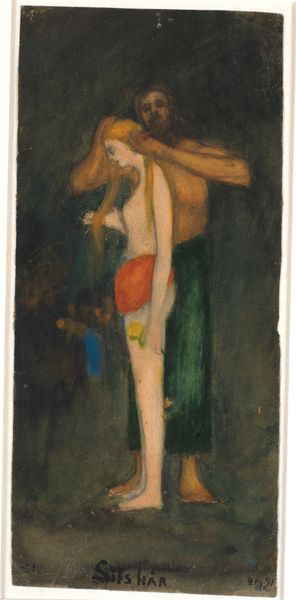
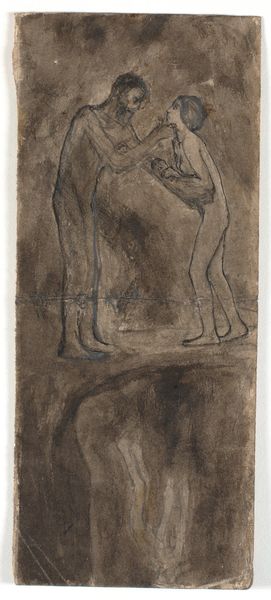
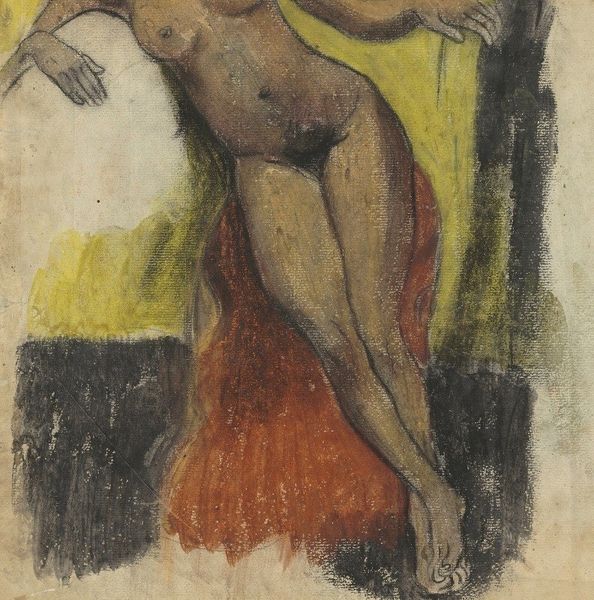
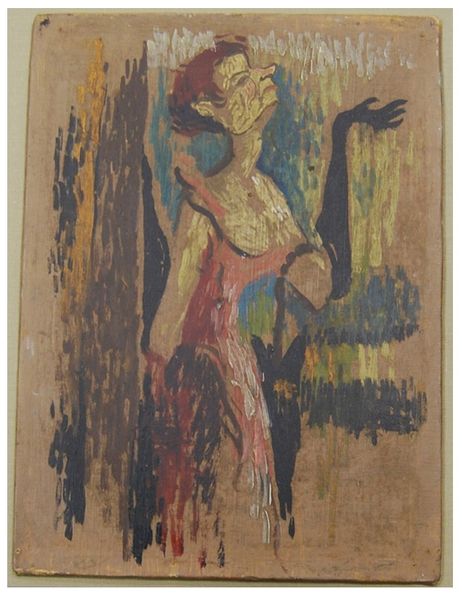
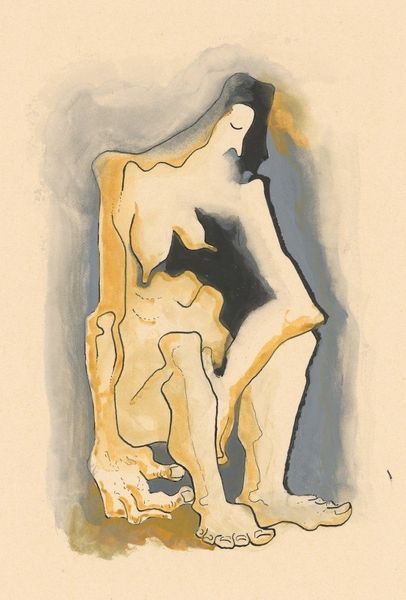
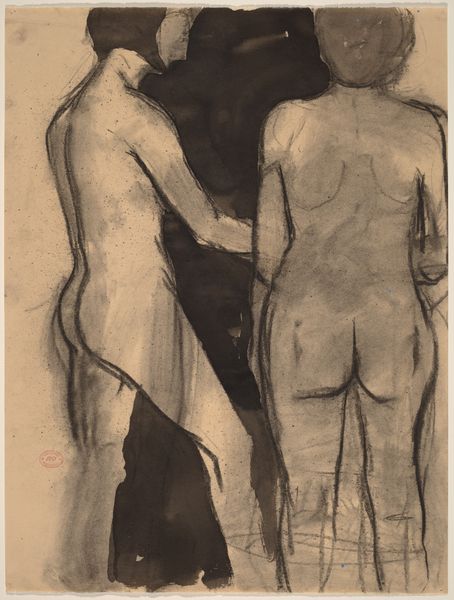
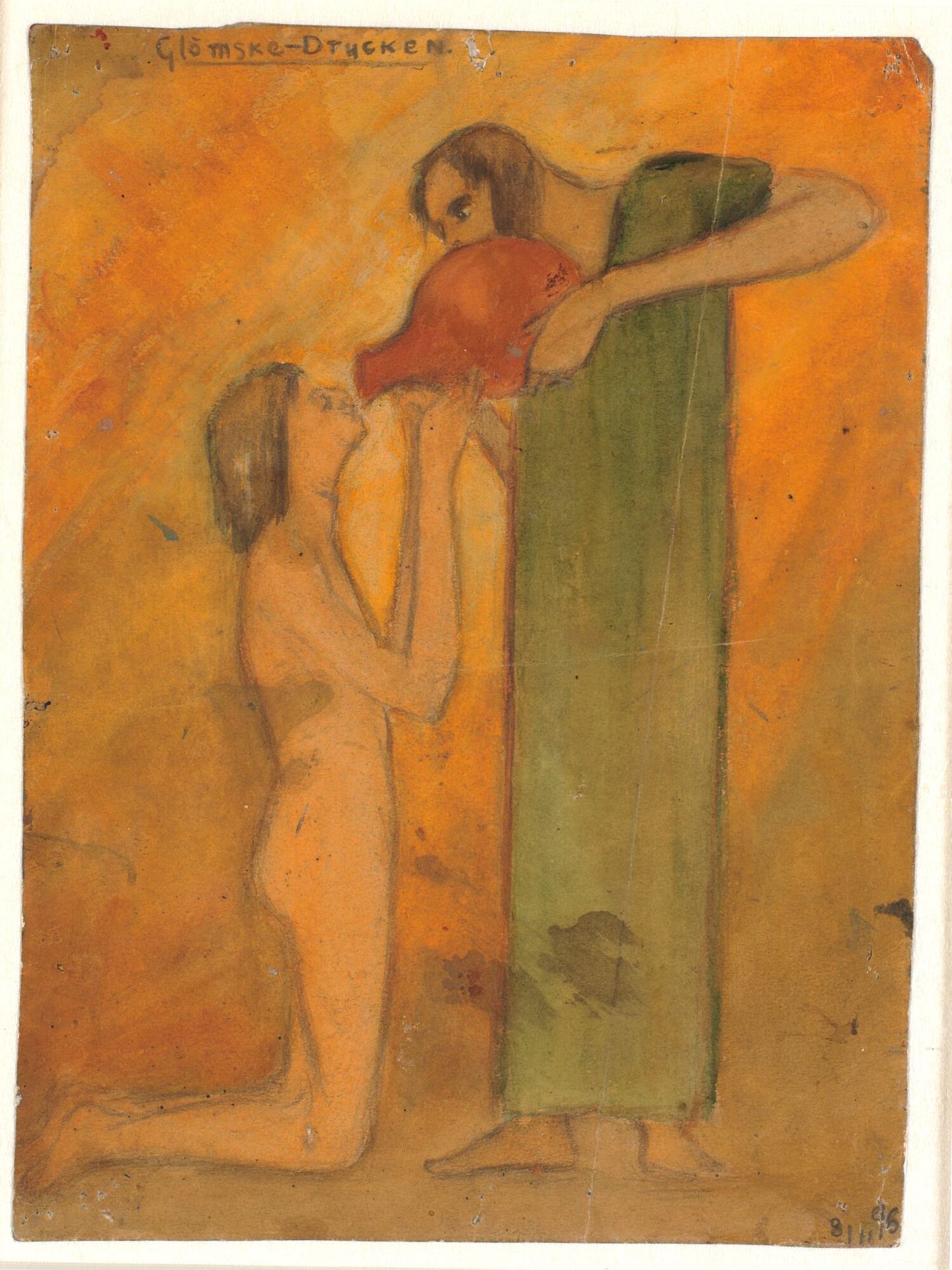
Karl Isakson painted "Glömske-Drycken," or "The Drink of Oblivion," on paper at an unknown date, depicting a scene imbued with potent symbolism. A figure in a green robe pours from a red vessel into the awaiting mouth of a kneeling figure. The act of offering a liquid to induce forgetfulness is an ancient motif. We see echoes of it in classical myths, where Lethe's waters erase memories, or in medieval tales of enchanted potions. Isakson's choice of red for the vessel is striking; red, the color of blood, suggests not just oblivion but perhaps a forceful purging of memory. The kneeling figure, in supplication, raises hands to receive this draught. This pose, though reverent, speaks to a deeper psychological yearning—a desire to escape the burdens of memory. The need to forget is a recurring theme throughout human history, reflecting our complex relationship with the past. Isakson's work touches upon a primal urge, a subconscious desire to shed what weighs us down. The cycle of remembering and forgetting continues, each age finding new ways to grapple with the past.
Glömske-Drycken
1896


Artwork details
- Medium
- drawing, watercolor, pastel
- Dimensions
- 239 mm (height) x 178 mm (width) (bladmaal)
- Location
- SMK - Statens Museum for Kunst
Tags
Comments
Share your thoughts
About this artwork
Karl Isakson painted "Glömske-Drycken," or "The Drink of Oblivion," on paper at an unknown date, depicting a scene imbued with potent symbolism. A figure in a green robe pours from a red vessel into the awaiting mouth of a kneeling figure. The act of offering a liquid to induce forgetfulness is an ancient motif. We see echoes of it in classical myths, where Lethe's waters erase memories, or in medieval tales of enchanted potions. Isakson's choice of red for the vessel is striking; red, the color of blood, suggests not just oblivion but perhaps a forceful purging of memory. The kneeling figure, in supplication, raises hands to receive this draught. This pose, though reverent, speaks to a deeper psychological yearning—a desire to escape the burdens of memory. The need to forget is a recurring theme throughout human history, reflecting our complex relationship with the past. Isakson's work touches upon a primal urge, a subconscious desire to shed what weighs us down. The cycle of remembering and forgetting continues, each age finding new ways to grapple with the past.
Comments
Share your thoughts