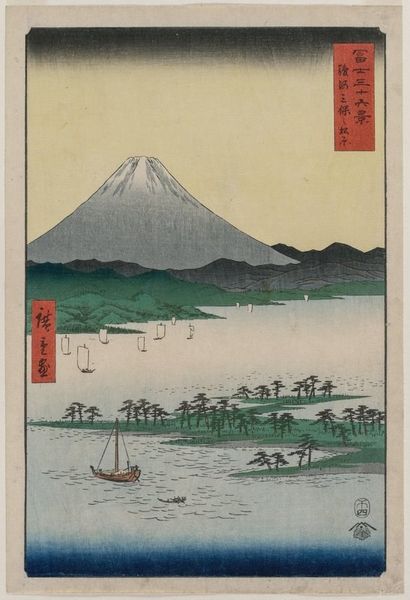
Possibly 1858
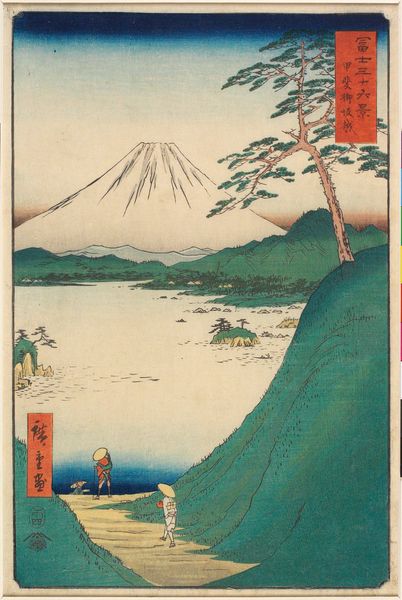
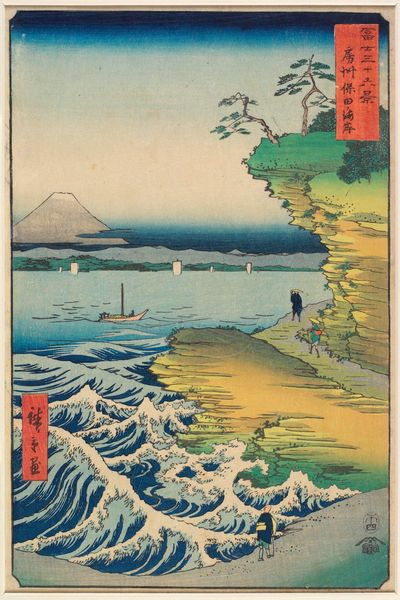
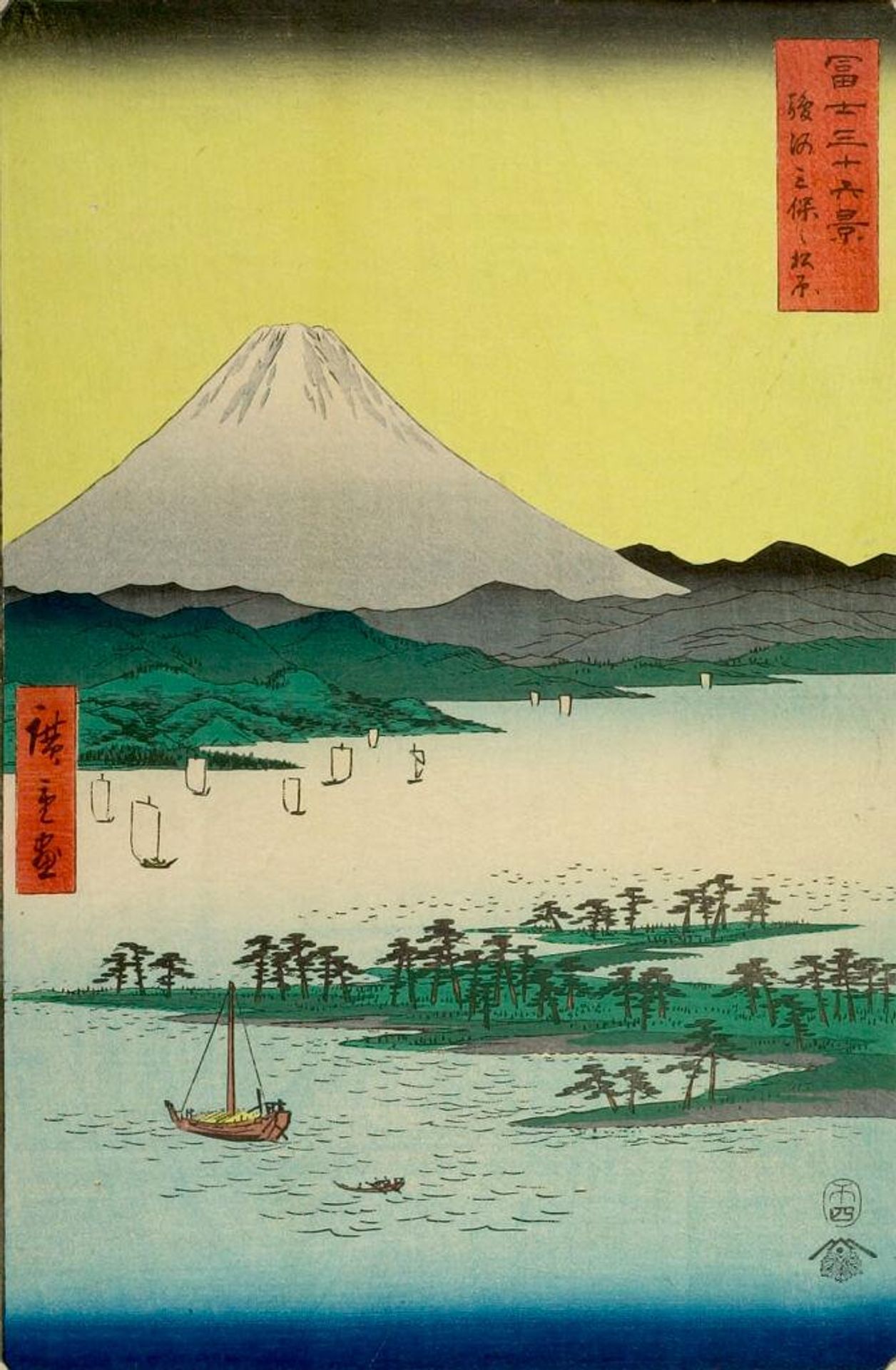
THIRTY-SIX VIEWS OF FUJI =MIO-NO-MATSUBARA"


Listen to curator's interpretation
Curatorial notes
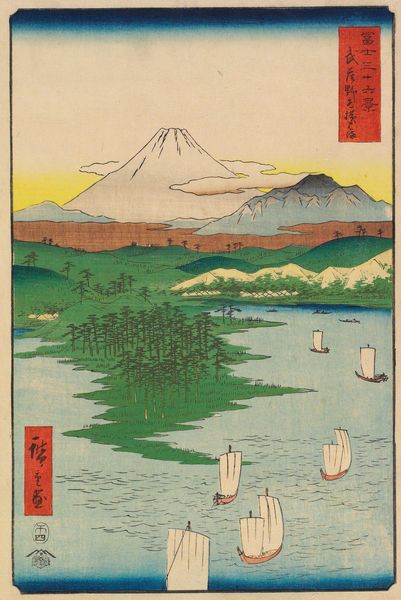
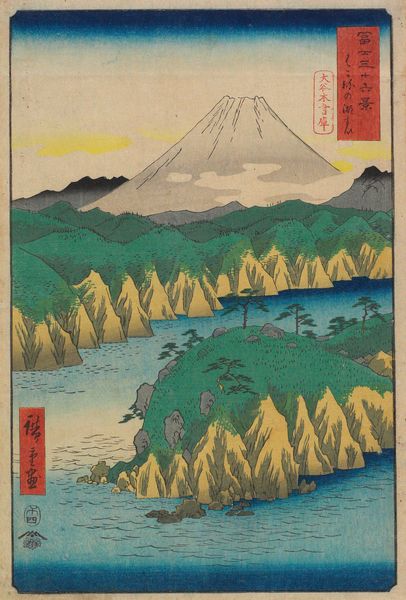
Curator: Let's discuss Utagawa Hiroshige's "THIRTY-SIX VIEWS OF FUJI =MIO-NO-MATSUBARA", residing here at the Harvard Art Museums. Editor: The serenity is striking! The composition, with the mountain's apex balanced by the shoreline, creates such a peaceful, almost meditative mood. Curator: Observe the layering—the solid blue of the water, leading to the patterned land and then the mountain. Notice the structural simplicity, the near-geometric forms. Editor: But it's more than just structure. Mt. Fuji looms large, often seen as a symbol of power and permanence, while the small boats suggest the lives and livelihoods dependent on the landscape. There's a push and pull. Curator: Indeed, that interplay of grand form and minute detail reveals Hiroshige's compositional mastery. It is so very balanced, isn't it? Editor: Balanced perhaps, but the view is also mediated, filtered through the artist's subjectivity and the socio-political currents shaping his vision. Curator: I see. While your contextual reading enriches my own visual analysis, I remain awed by the sheer formal elegance. Editor: And I appreciate how your insights underscore the artwork’s formal elements while prompting us to reflect on what is not immediately visible.