About this artwork
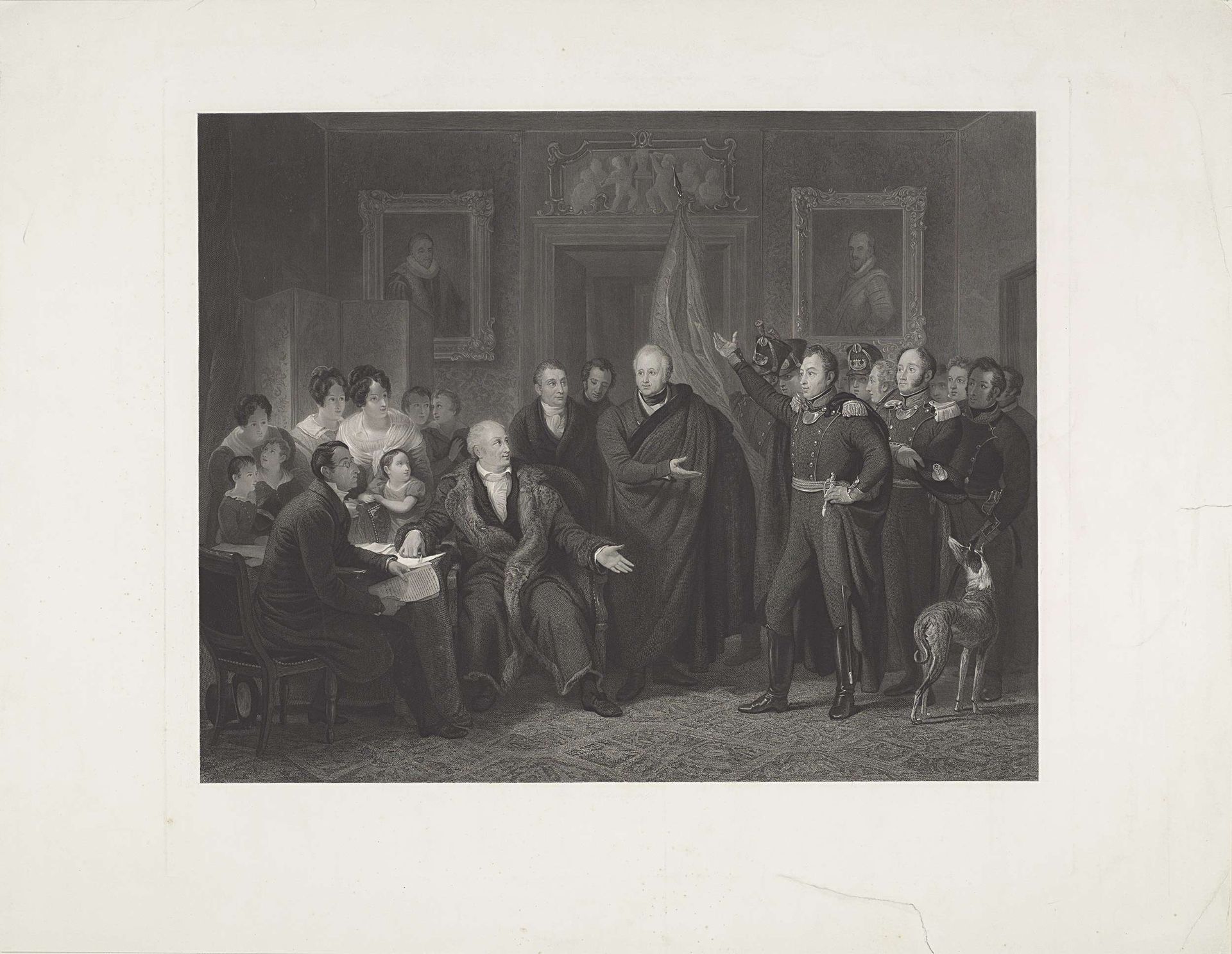
Dirk Jurriaan Sluyter created this print, "The acceptance of the Supreme Government by the Triumvirate in the name of the Prince of Orange, 21 November 1813," sometime between 1811 and 1886. The composition is structured around a clear division between the figures on the left and the dignitaries on the right, creating a dynamic yet formal arrangement. The figures on the left, seemingly caught in a moment of deliberation, contrast sharply with the poised and upright stance of the military figures. Sluyter employs a semiotic system of dress and posture, clearly distinguishing those in power from those observing or participating in the political process. The flag, positioned centrally, acts as a visual signifier of national identity. The high contrast and attention to detail invites a reading of the print as a carefully constructed representation of power and authority. The detailed rendering of textures, from the fabrics to the facial expressions, reflects a broader artistic concern with realism and representation during this period. This piece functions as a cultural artifact, capturing the complex interplay between politics, representation, and national identity in the early 19th century.
De aanvaarding van het Hoog Bewind door het Driemanschap in naam van de prins van Oranje, 21 november 1813
1863

Dirk Jurriaan Sluyter
1811 - 1886Location
RijksmuseumArtwork details
- Medium
- Dimensions
- height 588 mm, width 667 mm
- Location
- Rijksmuseum
- Copyright
- Rijks Museum: Open Domain
Tags
Comments
Share your thoughts
About this artwork
Dirk Jurriaan Sluyter created this print, "The acceptance of the Supreme Government by the Triumvirate in the name of the Prince of Orange, 21 November 1813," sometime between 1811 and 1886. The composition is structured around a clear division between the figures on the left and the dignitaries on the right, creating a dynamic yet formal arrangement. The figures on the left, seemingly caught in a moment of deliberation, contrast sharply with the poised and upright stance of the military figures. Sluyter employs a semiotic system of dress and posture, clearly distinguishing those in power from those observing or participating in the political process. The flag, positioned centrally, acts as a visual signifier of national identity. The high contrast and attention to detail invites a reading of the print as a carefully constructed representation of power and authority. The detailed rendering of textures, from the fabrics to the facial expressions, reflects a broader artistic concern with realism and representation during this period. This piece functions as a cultural artifact, capturing the complex interplay between politics, representation, and national identity in the early 19th century.
Comments
Share your thoughts