About this artwork
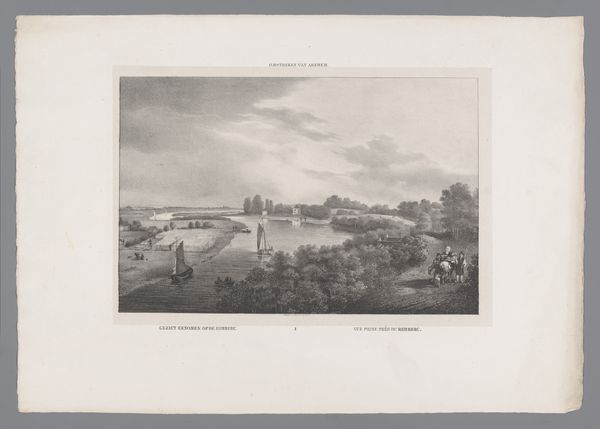
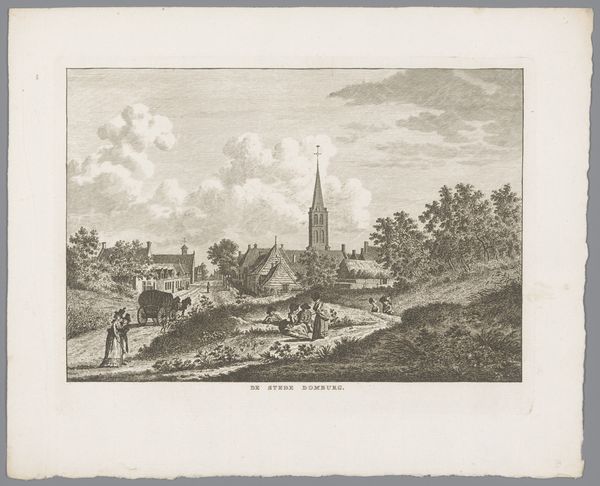
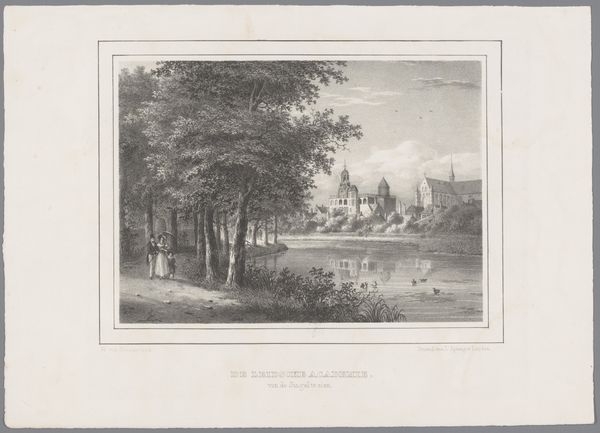
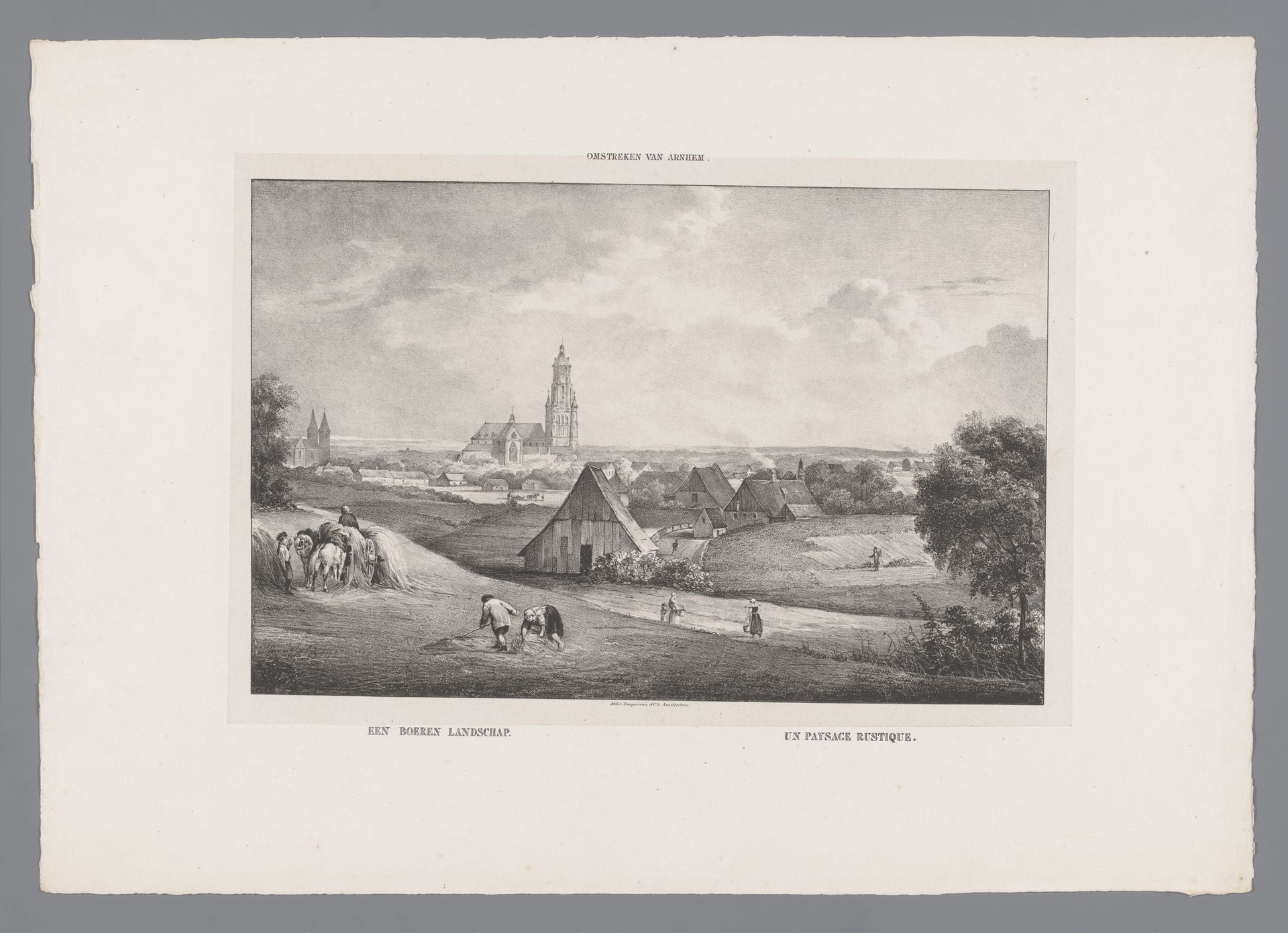
This landscape print depicts a scene dominated by the Eusebiuskerk church, an architectural beacon in the Dutch city of Arnhem. The towering church, with its prominent spire reaching towards the heavens, echoes a deep-seated human desire to connect with the divine, a motif spanning across cultures and epochs. Its form is reminiscent of the Tower of Babel, symbolizing both spiritual ambition and the potential for hubris. This upward-reaching structure can be compared to the minarets of Islamic mosques, or even ancient Egyptian obelisks, all sharing a common impulse to bridge the earthly and the celestial realms. Psychologically, the verticality of the church may act as a symbolic assertion of power and order, a reaction to the unpredictable forces of nature, embodying a collective aspiration for stability. Across time, we observe a continuous negotiation between the sacred and the secular, as such structures resurface, evolve, and take on new meanings in different historical contexts.

Artwork details
- Medium
- print, etching
- Dimensions
- height 340 mm, width 485 mm
- Location
- Rijksmuseum
- Copyright
- Rijks Museum: Open Domain
Tags
Comments
Share your thoughts
About this artwork
This landscape print depicts a scene dominated by the Eusebiuskerk church, an architectural beacon in the Dutch city of Arnhem. The towering church, with its prominent spire reaching towards the heavens, echoes a deep-seated human desire to connect with the divine, a motif spanning across cultures and epochs. Its form is reminiscent of the Tower of Babel, symbolizing both spiritual ambition and the potential for hubris. This upward-reaching structure can be compared to the minarets of Islamic mosques, or even ancient Egyptian obelisks, all sharing a common impulse to bridge the earthly and the celestial realms. Psychologically, the verticality of the church may act as a symbolic assertion of power and order, a reaction to the unpredictable forces of nature, embodying a collective aspiration for stability. Across time, we observe a continuous negotiation between the sacred and the secular, as such structures resurface, evolve, and take on new meanings in different historical contexts.
Comments
Share your thoughts